
Who Invented the Circular Saw – From Mills to Power Tools
In every workshop, the circular saw hums like a heartbeat of craftsmanship. Its spinning blade has shaped homes, furniture, and entire industries for more than two centuries.
But behind that familiar sound lies an extraordinary story of invention and innovation. Few people know exactly who first imagined turning a straight saw into a rotating masterpiece of efficiency.
The origins of the circular saw stretch back to the days when lumber was cut by hand in slow, backbreaking motions. Craftsmen and inventors alike dreamed of a faster, smoother way to split timber.
That dream took shape during the Industrial Revolution, when progress demanded both precision and speed. The circular saw’s birth was not a single moment but a gradual evolution of genius ideas shared across continents.
Even today, debates continue about who truly invented it. Some credit a British engineer, others point to a quiet Shaker woman from America, and many say it was born in the sawmills of Europe.
This article dives deep into the mystery and history of the circular saw. By the end, you will know how this remarkable invention transformed from a wooden mill mechanism into one of the most essential tools of the modern world.
Early Origins of the Circular Saw

Before the circular saw was invented, most woodcutting relied on long pit saws operated by two people. These tools worked, but they were painfully slow and exhausting for large timber production.
As the Industrial Revolution approached, inventors searched for faster mechanical cutting methods. They began experimenting with rotating blades that could slice wood continuously rather than back and forth.
Early European records from the mid-18th century show prototypes of circular-style blades used in sawmills. These machines were often powered by water wheels, a major advancement over manual labor.
In 1777, a British inventor named Samuel Miller patented one of the earliest known circular saw designs. His patent described a metal disk with teeth that rotated continuously to cut wood efficiently.
Miller’s idea was revolutionary because it combined speed with accuracy. His invention reduced friction, saved time, and produced cleaner cuts compared to traditional frame saws.
This milestone marked the first documented step toward the modern circular saw. It laid the foundation for others across Europe and America to refine and expand on his groundbreaking concept.
The First Mill and Sawmill Applications
After Samuel Miller’s early patent, inventors quickly saw the potential of circular motion in industrial sawmills. Water-powered mills across England and Europe became the perfect testing ground for this innovation.
Large rotating blades were soon installed in these mills to replace the slow up-and-down saw frames. This continuous cutting motion increased lumber output dramatically and reduced manual labor.
These saws were massive, often several feet in diameter, and powered by belts or gears linked to waterwheels. Their mechanical rhythm became the soundtrack of early industrial wood processing.
Workers learned that the circular blade not only cut faster but also produced smoother edges. This consistency was vital for shipbuilding, furniture making, and construction.
In America, sawmills began adopting similar designs by the late 1700s. The success of these water-driven machines proved that the circular saw could meet industrial demands for speed and efficiency.
This period established the circular saw as more than just an invention—it became a cornerstone of mass wood production. Its use in mills marked the transition from manual craftsmanship to mechanized woodworking.
Contested Claims – Tabitha Babbitt and Others
While Samuel Miller’s 1777 patent is widely accepted, the story of the circular saw’s invention did not end there. Several individuals later claimed to have created similar designs independently, adding mystery to its true origin.
One of the most famous names in this debate is Tabitha Babbitt, a Shaker woman from Harvard, Massachusetts. Around 1810, she reportedly observed men laboring with a pit saw and imagined a faster, circular alternative.
Babbitt attached a round blade to her spinning wheel to demonstrate her concept. Her idea worked efficiently, but because Shaker communities discouraged personal patents, her invention was never officially registered.
Despite the lack of documentation, Babbitt’s contribution gained legendary status in American history. She became a symbol of ingenuity and the overlooked role of women in early industrial innovation.
Meanwhile, European inventors such as Walter Taylor in England and Gervinus in Germany were developing their own versions. This simultaneous creativity shows that necessity and progress often spark the same idea in different places.
Although historians debate who truly invented the circular saw, most agree that it evolved through collective innovation. Each inventor, from Miller to Babbitt, played a part in shaping the tool we know today.
The Transition to Electric and Handheld Models
As industries modernized in the late 19th and early 20th centuries, technology began shifting from water and steam power to electricity. This transition opened the door for smaller, more portable circular saws.
Early workshops started using belt-driven saws powered by electric motors. These compact machines allowed craftsmen to cut materials faster and with greater precision inside their own shops.
In 1923, Edmond Michel, a French inventor living in New Orleans, created the first handheld circular saw. Partnering with Joseph Sullivan, he founded Skilsaw, a company that would revolutionize woodworking forever.
Their design introduced a lightweight electric motor and a protective guard for safety. It made the circular saw accessible not only to professionals but also to hobbyists and home builders.
The portability of this new tool transformed construction practices worldwide. Carpenters could now carry the power of a mill saw directly to the job site.
From that point forward, the circular saw became a symbol of modern craftsmanship. Its evolution from mill machinery to a handheld powerhouse showed how innovation continuously reshapes even the simplest tools.
Major Milestones and Key Innovators
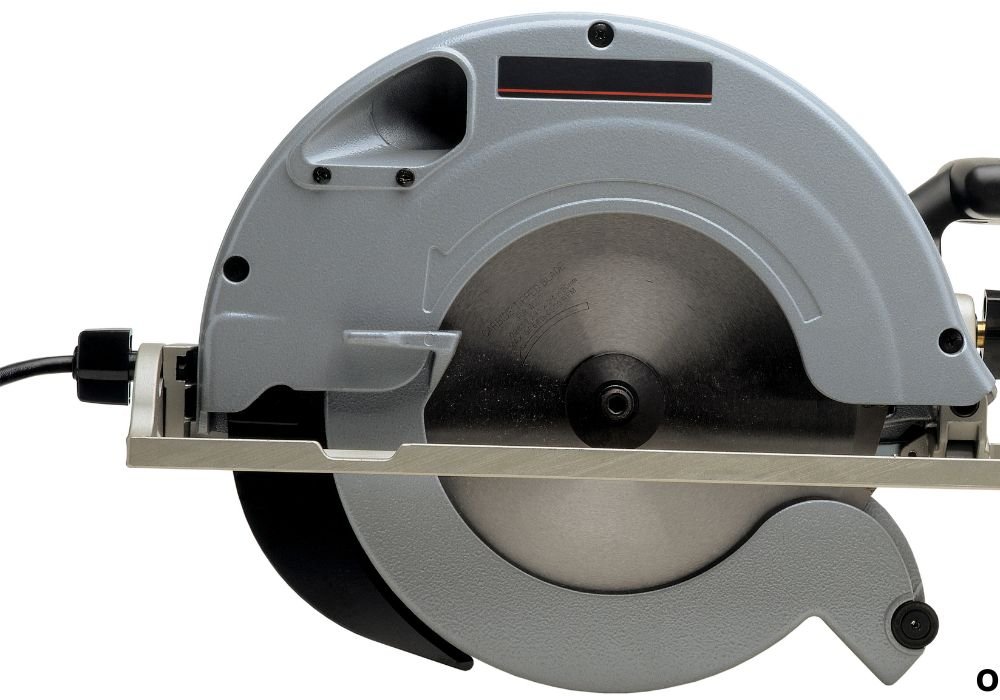
The invention of the circular saw was not a single moment but a timeline filled with innovation and improvement. Each decade brought new materials, safety features, and performance upgrades.
After Samuel Miller’s 1777 patent, several inventors refined the blade design and mounting systems. Their combined efforts made the saw more efficient and reliable in industrial settings.
In the 1810s, Tabitha Babbitt’s concept added a creative spark to the invention’s evolution. Her spinning-wheel-inspired model showed that the idea of circular motion was both practical and powerful.
The 20th century introduced groundbreaking innovations that changed the tool forever. The Skilsaw Model E, launched in 1924, became the world’s first mass-produced handheld circular saw.
Later, brands like Makita, Bosch, and DeWalt advanced electric motor technology, improving balance and safety. Features like electric brakes, depth adjustments, and carbide-tipped blades became standard.
These milestones prove that invention is a collective process, not a single act of genius. The circular saw’s evolution reflects centuries of human curiosity, craftsmanship, and engineering excellence.
Why the Invention Matters Today
The invention of the circular saw did more than speed up woodcutting; it transformed industries and craftsmanship. It bridged the gap between human labor and mechanical efficiency.
Before its creation, large-scale construction and furniture making were painfully slow. The circular saw made it possible to produce timber, flooring, and frames at industrial scale.
Today, nearly every woodworking shop and construction site depends on this tool. From framing homes to crafting fine furniture, the circular saw is a cornerstone of modern productivity.
Its influence extends far beyond carpentry. The same principles of circular motion and continuous cutting are used in metal fabrication, masonry, and even surgical equipment.
This invention also inspired innovation in tool safety and precision engineering. Every feature we take for granted—guards, brakes, and adjustable depth—traces back to centuries of refinement.
Understanding who invented the circular saw helps us appreciate not just its origin but its impact. It remains one of the most important inventions driving craftsmanship and technology forward.
Myths vs Facts – Sorting the Truth
The history of the circular saw is filled with fascinating myths that often overshadow documented facts. Over time, stories blended with truth, creating a puzzle for historians to untangle.
One of the most common myths claims that Tabitha Babbitt single-handedly invented the circular saw. While she did create a working prototype, she never patented her design, leaving her claim unverified.
Another myth is that the saw’s invention happened overnight. In reality, it evolved through decades of innovation, beginning with early mill designs and culminating in handheld electric models.
The historical record confirms that Samuel Miller of England received the first patent in 1777. His detailed documentation remains the most reliable evidence of the tool’s mechanical origin.
That said, crediting only one inventor ignores the contributions of others. Innovation is rarely the result of one mind—it is the product of shared ideas refined over generations.
The truth is that the circular saw was not invented by a single genius but by a chain of innovators. Its story reflects collaboration, curiosity, and the human drive to improve every tool we use.
What We Can Learn from the Tool’s Evolution
The circular saw’s journey teaches us that innovation is never static. Every improvement builds upon the creativity and courage of earlier inventors.
From water-powered mills to cordless models, its evolution reflects centuries of problem-solving. Each generation found new ways to make the tool faster, safer, and more efficient.
The tool’s transformation also shows the importance of accessibility. What began as industrial equipment is now an essential household and DIY item worldwide.
It reminds us that every simple idea can spark global change. A rotating blade, once used to save labor, has become a symbol of craftsmanship and precision.
The invention also highlights how collaboration accelerates progress. Shared knowledge among engineers, craftsmen, and innovators has turned one concept into countless applications.
Ultimately, the circular saw’s story is about persistence and curiosity. It shows that great inventions evolve not just through brilliance, but through generations of people improving one another’s work.
Frequently Asked Questions About the Circular Saw’s Invention
1. Who actually invented the circular saw?
The first recorded patent for a circular saw was granted to Samuel Miller of England in 1777. His design marked the beginning of modern circular saw technology.
2. Did Tabitha Babbitt invent the circular saw?
Tabitha Babbitt, a Shaker woman, demonstrated a spinning-wheel version of the saw around 1810. While she never patented it, her concept influenced later designs.
3. Why is there confusion about who invented it?
Multiple inventors created similar tools in different countries during the late 1700s and early 1800s. Limited records and overlapping timelines caused historical debates.
4. What was the purpose of the first circular saw?
It was designed to speed up lumber production in water-powered sawmills. The rotating blade allowed continuous cutting instead of the slower up-and-down motion.
5. When was the handheld circular saw invented?
The first electric handheld circular saw was created by Edmond Michel in 1923, leading to the foundation of the Skilsaw company with Joseph Sullivan.
6. Was the circular saw invented in America or Europe?
The first patent originated in England, but similar designs appeared in Europe and the U.S. soon after. Innovation happened almost simultaneously across regions.
7. What material were early circular saw blades made from?
Early blades were made of forged steel or iron and often hand-sharpened. Later, carbide-tipped blades became standard for longer-lasting performance.
8. How did circular saws impact woodworking?
They revolutionized lumber production by making cutting faster, smoother, and more precise. This advancement fueled industrial growth and modern carpentry.
9. What power sources were used before electricity?
Before electric motors, circular saws were powered by water wheels, steam engines, and belt-driven systems in large mills.
10. How did the Skilsaw change the tool industry?
The Skilsaw made circular saws portable, lightweight, and affordable, transforming how builders and DIYers worked on-site and at home.
11. Who improved safety features in circular saws?
Manufacturers like DeWalt, Makita, and Bosch developed blade guards, electric brakes, and depth adjustments to improve user safety.
12. Are there other tools inspired by the circular saw’s design?
Yes, tools such as miter saws, table saws, and chop saws all evolved from the same rotating-blade concept introduced by the circular saw.
13. Why is Samuel Miller considered the true inventor?
Because he provided a documented patent describing the mechanical process of continuous circular cutting. This patent is recognized as the foundation of the tool.
14. How did women like Tabitha Babbitt influence invention history?
Babbitt’s idea proved that innovation is not limited by gender or formal recognition. Her story highlights overlooked contributors in early industrial progress.
15. What is the legacy of the circular saw today?
The circular saw represents human ingenuity and progress. It remains one of the most essential tools in woodworking, construction, and manufacturing worldwide.
Conclusion – The Circular Saw’s Legacy
The story of who invented the circular saw reveals more than a list of names and dates. It shows how necessity and innovation worked hand in hand to shape one of history’s most useful tools.
From Samuel Miller’s 1777 patent to Tabitha Babbitt’s inspired idea, every step in its journey added something valuable. Each inventor pushed the design closer to the efficient, powerful machine we use today.
As technology advanced, the circular saw evolved from massive mill blades to lightweight electric handheld tools. This transformation made woodworking faster, safer, and more accessible to everyone.
Its influence continues to ripple through modern engineering. Every rotating blade, from saws to turbines, carries a trace of the same mechanical principle born more than two centuries ago.
The invention reminds us that progress never stops. Even the simplest ideas can become world-changing innovations when curiosity meets craftsmanship.
Today, the circular saw stands not just as a tool but as a symbol of human ingenuity. Its legacy proves that invention is never about one person—it is about the collective spirit to create, refine, and improve.

I’m Michael R. Turner, the founder, lead writer, and passionate DIY enthusiast behind 101diytools.com. With years of hands-on experience in home improvement and power tools, I built this platform to share practical tips, in-depth guides, and honest reviews to help DIYers of all skill levels tackle projects with confidence and the right tools.