Which Power Sander to Use on Walls? Expert Tips
Walls are the canvas of every room, yet over time they collect layers of paint, uneven textures, and imperfections that dull the beauty of a space.
When it’s time to refinish or repaint, the question most DIYers and professionals face is simple but crucial: which power sander to use on walls for the smoothest, safest, and fastest results?
Most people don’t realize that walls are more delicate than floors or furniture surfaces.
Using the wrong sander can leave swirl marks, gouges, or dust clouds that turn a small renovation into a major cleanup project.
According to a 2024 report by Fine Homebuilding, dust from drywall sanding can spread up to 25 feet beyond the working area if not properly controlled — making dust extraction a top priority.
This single factor alone separates an average job from a professional-grade finish.
Choosing the right tool also impacts efficiency and health.
Studies show that modern drywall sanders with vacuum attachments reduce airborne dust by 80–95 percent compared to traditional handheld sanders (OSHA Source).
That means cleaner air, faster cleanup, and fewer respiratory risks during renovation.
But with so many options — orbital, random orbital, drywall, and pole sanders — it’s easy to get confused.
Each serves a different purpose, and the best choice depends on surface type, wall height, and project size.
Selecting the right one ensures a flawless base for painting or wallpapering and saves hours of rework.
In this guide, you’ll learn how to choose the perfect power sander for walls, the features that truly matter, and the expert techniques that turn preparation into perfection.
Understanding the Task – What Does “Which Power Sander to Use on Walls” Really Mean?
Walls aren’t like wooden furniture or metal surfaces — they demand gentleness and precision.
Sanding them isn’t just about stripping paint; it’s about preparing the surface for a flawless new finish.
Whether you’re dealing with drywall, plaster, or previously painted surfaces, the goal is smoothness without damage.
That’s why understanding which power sander to use on walls is the foundation of a successful renovation.
Walls often contain imperfections such as joint compound ridges, small dents, or roller texture left by past paint jobs.
The wrong tool can exaggerate these flaws instead of fixing them.
A belt sander, for instance, might grind too aggressively, while a finishing sander might take too long on large surfaces.
Balancing speed and control is key to achieving a professional-level finish.
Another major factor is dust.
Wall sanding produces fine, airborne dust that easily travels through rooms.
According to Fine Homebuilding’s 2024 Tool Test, uncontrolled sanding dust can increase cleanup time by over 60 percent and affect indoor air quality.
Hence, modern wall sanders now come with vacuum attachments or integrated dust ports that drastically reduce mess.
Choosing the right sander type ensures you save effort, maintain health standards, and achieve a flawless wall ready for primer or paint.
Before jumping into tool options, let’s address some key questions every renovator should consider.
What kinds of surfaces qualify as “walls” in this context?
Drywall, plaster, joint compound, and even textured or painted walls — all need surface refinement before painting or repair.
Why is a standard wood sander not always ideal for walls?
Wood sanders are often too aggressive; they can easily scuff or gouge drywall, leaving uneven patches that show through paint.
What major challenges arise when sanding walls?
Dust management, reaching high spots, maintaining even pressure, and preventing swirl marks are the biggest concerns.
When is it appropriate to use a power sander over hand sanding for walls?
For large rooms, high ceilings, or textured finishes, power sanders save time and ensure uniform results.
Hand sanding is better reserved for corners or patch repairs.
What’s the biggest mistake beginners make when sanding walls?
Using coarse grit without testing — it removes too much material too quickly, causing permanent surface damage.
Key Factors to Consider When Choosing a Wall Sander
Every wall project is unique, and the right sander depends on several critical factors.
Understanding these ensures the best performance, smooth results, and minimal cleanup.
What sander motion type works best for walls?
Random orbital and drywall sanders are best for walls because they deliver controlled motion that prevents swirl marks.
They also distribute pressure evenly across large flat areas.
How important is dust extraction when sanding walls?
Extremely important — drywall dust is harmful and spreads easily.
Modern sanders with vacuum attachments or built-in extraction reduce airborne dust by up to 95 percent (FineHomebuilding).
Should you choose a corded or cordless sander?
Corded sanders offer consistent power for big jobs, while cordless units provide better mobility for smaller or high-reach walls.
Battery capacity and runtime are the deciding factors.
How does grit selection affect results?
Start with 120–150 grit for paint removal and finish with 220–240 grit for smoothness.
Finer grits avoid surface gouging and create a paint-ready texture.
What about handle length and ergonomics?
Choose sanders with extendable poles or lightweight handles to minimize strain and reach ceilings safely.
Comfort improves precision and reduces fatigue during long sessions.
Types of Power Sanders Suitable for Walls
Not all sanders are created equal.
Each type has its purpose — knowing their strengths helps you select the right one for your wall surface.
What is a drywall sander and when is it ideal?
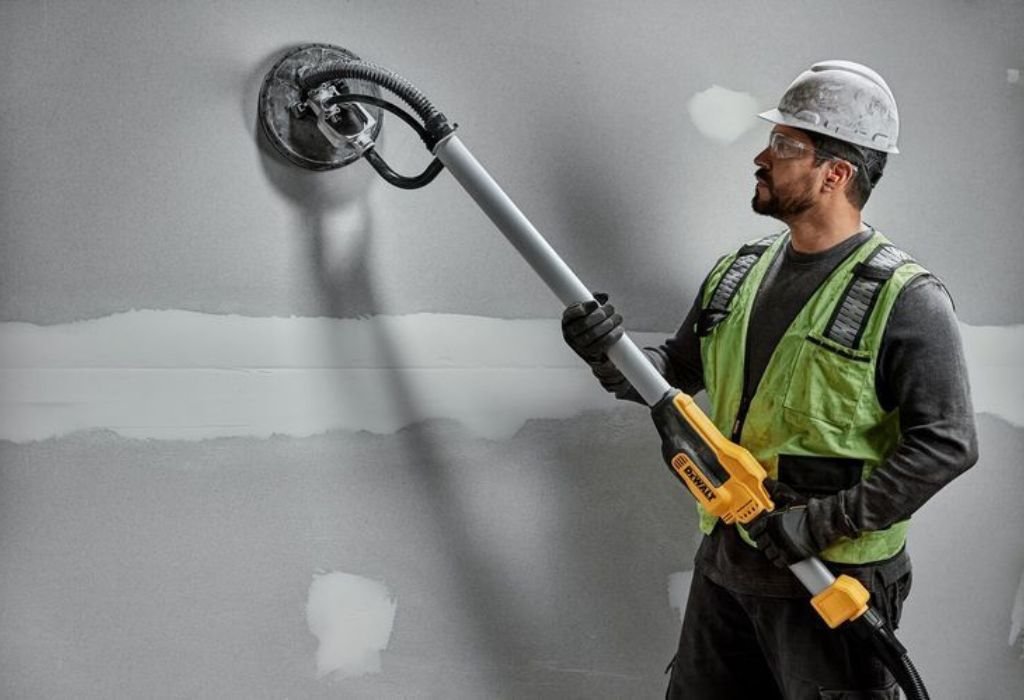
A drywall sander features a large circular head with a vacuum hose and extension pole.
It’s perfect for sanding drywall seams, ceilings, and broad flat walls quickly and cleanly.
Can a random orbital sander be used on walls?
Yes — it’s excellent for smaller sections or finishing after primary sanding.
Its random motion minimizes visible swirl marks on painted or plastered surfaces.
Why avoid belt sanders on walls?
Belt sanders remove material aggressively and can damage drywall or plaster in seconds.
They are meant for wood surfaces, not delicate wall finishes.
Is a finishing or detail sander useful?
Detail sanders are great for tight corners, edges, or decorative molding where large sanders can’t reach.
They offer control but aren’t efficient for full wall coverage.
Are hybrid or multi-head sanders worth it?
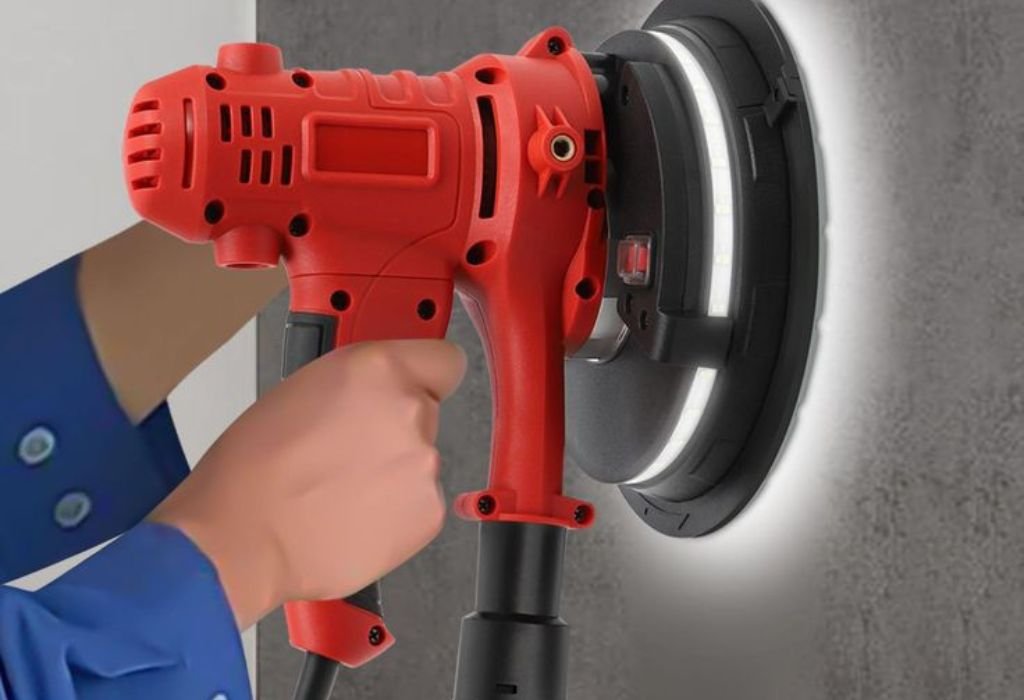
Yes — modern wall/ceiling sanders come with pivoting heads, LED lights, and dust collection.
They provide flexibility and are ideal for professionals tackling varied surfaces.
Step-by-Step Guide to Selecting and Using the Right Power Sander for Walls
Choosing a tool is only the beginning.
How you use it determines the final result — here’s the process every expert follows.
How do you assess the wall before sanding?
Inspect for cracks, uneven plaster, or heavy paint buildup.
Different textures may require separate grit levels or even tool types for best results.
What preparation steps are essential?
Move furniture, cover floors, and tape edges to protect corners.
Ensure good ventilation and proper lighting to spot imperfections early.
What’s the correct sanding technique for walls?
Work in overlapping circular or vertical strokes with light, steady pressure.
Keep the sander flat against the surface to prevent gouging or edge lines.
How do you control dust effectively?
Attach a vacuum hose or use a built-in dust-collection system.
Fine drywall dust can cause respiratory issues, so wearing a respirator is critical.
What are the finishing steps after sanding?
Wipe down walls with a damp cloth, inspect under bright light, and apply primer once fully dry.
This ensures paint adheres evenly and looks flawless.
(Statistic suggestion: OSHA data shows proper dust-control equipment reduces cleanup time by up to 70 percent and prevents silica-related illness.)
Common Mistakes and How to Avoid Them When Sanding Walls
Even seasoned DIYers make errors that compromise finish quality.
Learning these mistakes helps save both time and materials.
What happens if the wrong sander is used?
Too-aggressive sanders like belt models can tear drywall paper or create uneven surfaces.
Always match tool power to material hardness.
Why is using coarse grit on walls a bad idea?
Coarse grit leaves scratches visible after painting.
Start finer, test small areas, and only move coarser if paint buildup is thick.
How does ignoring dust control cause issues?
Dust ruins paint adhesion, creates uneven texture, and poses health risks.
Integrated extraction keeps both walls and air cleaner.
What about hard-to-reach ceilings or corners?
Failing to use an extendable pole causes strain and uneven results.
Pole sanders ensure consistency and safety on tall walls.
Why is skipping inspection before painting a mistake?
Paint magnifies flaws — always inspect under bright light before finishing.
A few minutes of checking saves hours of rework later.
Future Trends and Innovation in Wall Sanding Tools
Tool technology evolves quickly.
The latest advancements make wall sanding faster, cleaner, and more ergonomic.
What new features are shaping modern wall sanders?
Smart digital speed controls, LED-guided heads, and upgraded vacuums are becoming standard.
These additions improve control and reduce dust exposure.
Will cordless sanders dominate the market?
Yes — newer batteries provide longer runtime and near-corded power.
Professionals appreciate their mobility for multi-room projects.
How is dust-extraction technology improving?
Manufacturers now use HEPA-grade filtration and automatic dust-flow sensors.
This minimizes clogs and maintains suction efficiency during long sanding sessions.
Are AI or smart sensors entering wall-sanding tools?
Early prototypes include pressure sensors that maintain even force and avoid gouges.
They adjust speed automatically based on wall resistance.
What ergonomic improvements help users most?
Lightweight magnesium bodies, flexible heads, and vibration dampening reduce fatigue.
These designs allow longer, safer operation without sacrificing performance.
Conclusion
Choosing which power sander to use on walls isn’t just a technical decision — it defines the outcome of your entire project.
A smooth, dust-free surface ensures your paint or wallpaper looks perfect and lasts longer.
The best tools for walls are random orbital or dedicated drywall sanders equipped with dust-extraction systems.
They balance power, control, and cleanliness for professional results every time.
Before starting, assess your wall, pick the right grit, prepare the room, and work patiently with even strokes.
Avoid cheap shortcuts — a well-sanded wall is the secret to every flawless finish.
When you choose the right sander, you save time, breathe cleaner air, and enjoy a result that transforms any space.
Now grab the right tool, follow these tips, and turn your walls into the perfect foundation for your next masterpiece.

I’m Michael R. Turner, the founder, lead writer, and passionate DIY enthusiast behind 101diytools.com. With years of hands-on experience in home improvement and power tools, I built this platform to share practical tips, in-depth guides, and honest reviews to help DIYers of all skill levels tackle projects with confidence and the right tools.