What Type of Air Compressor for Impact Wrench Works
Picture this: you’ve just unboxed a brand-new air impact wrench, ready to rip through seized lug nuts. You connect it to a small pancake compressor, squeeze the trigger—and the tool barely twitches. That’s the moment most DIYers realize that not all compressors are created equal.
Every pneumatic tool depends on two things: steady air pressure (PSI) and consistent airflow (CFM). Without both, even a premium wrench can feel powerless. Many hobbyists focus only on tank size, but it’s the airflow and duty cycle that determine whether your compressor can keep up when torque matters most.
According to tool manufacturers, a ½-inch impact wrench typically needs 4–5 CFM at 90 PSI, while heavy-duty ¾-inch or 1-inch models can demand 8–12 CFM or more. If the compressor can’t deliver this, pressure drops cause loss of torque and constant downtime waiting for the tank to refill.
Choosing what type of air compressor for impact wrench use works best means balancing PSI, CFM, and tank capacity with how you actually work. In this guide, you’ll learn how to read compressor specs, match them to your wrench, avoid common mistakes, and maintain your setup for smooth, powerful performance every time.
Understanding Air Compressors and Impact Wrenches

An air compressor converts electrical energy into compressed air stored in a tank, which is then released through a hose to power pneumatic tools. For impact wrenches, this air becomes rotational torque that loosens or tightens bolts effortlessly.
The two most critical numbers on a compressor spec sheet are PSI and CFM. PSI measures pressure; CFM measures volume. A compressor might reach the right PSI, but if it can’t maintain enough CFM, your wrench will sputter and stall midway through a job.
What is PSI and why does it matter?
PSI (pounds per square inch) represents how much pressure the compressor can deliver. Most impact wrenches operate best around 90–120 PSI.
What is CFM and why is it crucial?
CFM (cubic feet per minute) measures airflow volume. If your wrench requires 5 CFM but the compressor produces only 3 CFM, the tool will lose torque after a few seconds.
Why does tank size matter?
A larger tank stores more air, giving you longer continuous use before the motor kicks in. Small tanks refill frequently, slowing your work.
What is a duty cycle?
It tells how long the compressor can run before resting. A 50% duty cycle means it must rest half the time to prevent overheating.
Understanding these four factors—PSI, CFM, tank size, and duty cycle—lays the groundwork for selecting the perfect compressor for your impact wrench.
What Type of Air Compressor for Impact Wrench Works — Matching Specs
Matching specs between your compressor and wrench is the difference between frustration and flawless power delivery. You can’t rely on “bigger is better” alone; you need a compressor that fits your tool’s airflow demand and your workflow length.
A standard ½-inch impact wrench needs around 4–5 CFM at 90 PSI. If you’re using it only for short bursts, a 20–30-gallon tank can suffice. But for extended use—like removing multiple lug nuts or industrial bolts—you’ll want 60 gallons or more with 10+ CFM capacity.
For a ½-inch drive impact wrench:
Look for compressors delivering 4–5 CFM @ 90 PSI with at least 20 gallons of storage.
For a ¾-inch drive wrench:
Aim for 6–8 CFM @ 90 PSI and a 40–60-gallon tank.
For a 1-inch drive heavy-duty wrench:
You’ll need 10–12 CFM @ 90 PSI and 80+ gallons for continuous work.
Can you use a small compressor for occasional jobs?
Yes, if tasks are brief, but you’ll face frequent pauses while it refills.
Is a high-CFM industrial compressor overkill?
Only if you use light tools occasionally; otherwise, it’s a smart long-term investment.
Should you exceed your wrench’s specs?
Absolutely. Choose a compressor that delivers 25–50% more CFM than required for efficiency and tool longevity.
Key Features and Types of Compressors to Consider
Air compressors come in different styles and each has advantages for powering impact wrenches. The main types are piston (reciprocating) and rotary screw.
Piston compressors are common for DIY and garage use. They compress air through pistons and valves, delivering short bursts ideal for intermittent tool operation. Rotary-screw compressors, meanwhile, offer continuous airflow suitable for professional workshops running multiple tools.
Oil-free vs oil-lubricated:
Oil-free models are maintenance-light and ideal for occasional use. Oil-lubricated compressors handle heat better and last longer for heavy workloads.
Portable vs stationary:
Portable compressors (10–30 gallons) are easy to move but hold less air. Stationary models (60–120 gallons) deliver higher CFM for continuous work.
Hose diameter:
A ⅜-inch hose suits small tools; ½-inch hoses minimize pressure loss for larger wrenches.
Why are these distinctions important?
Because the wrong type leads to inconsistent power or tool strain.
When is a rotary-screw compressor needed?
When you operate multiple impact wrenches or air-hungry tools daily.
Is oil-lubricated worth the upkeep?
Yes, for garages or workshops—it’s quieter and built for longevity.
Choosing the right type ensures your impact wrench always performs at peak torque without starving for air.
Setup, Usage, and Maintenance Best Practices
Even the best compressor can’t perform well if poorly set up. Proper hose selection, regulator adjustment, and maintenance are vital for steady airflow.
Start by checking manufacturer specs for your wrench’s PSI range. Set the regulator about 10% above the rated minimum (for example, 100 PSI for a 90-PSI tool). Use the shortest and widest hose possible to reduce air loss—every extra foot of hose and every fitting adds restriction.
What PSI should the regulator be set to?
Typically between 90 and 120 PSI, depending on the wrench’s torque rating.
How large should the air hose be?
At least ⅜-inch for light wrenches and ½-inch for heavy-duty ones to avoid pressure drop.
How often should you drain the tank?
Daily, especially in humid climates. Moisture corrodes the tank and reduces air quality.
How do you check for leaks?
Apply soapy water to fittings; bubbles indicate leaks wasting airflow and CFM.
Should you lubricate your impact wrench?
Yes, a few drops of air-tool oil before each use prevent rust and maintain internal seals.
Consistent maintenance ensures safe operation, longer tool life, and optimal power delivery every time you work.
Common Mistakes and How to Avoid Them
Many users buy an air compressor first and an impact wrench later—then realize the mismatch. The most common mistake is underestimating CFM requirements, leading to weak performance.
Using too small a tank is another issue. A 6-gallon “pancake” compressor might handle a nail gun but can’t sustain a 5 CFM tool for more than seconds. Ignoring hose diameter also kills performance by starving airflow before it even reaches the wrench.
Why does my impact wrench lose power mid-use?
Because your compressor’s tank empties faster than it refills, lowering PSI below operating range.
Why does the compressor run nonstop?
It’s undersized. Continuous running means it’s working harder than intended and could overheat.
Why are bolts still hard to remove?
Low CFM or high pressure drop from long hoses and small fittings are the likely culprits.
Why is the compressor louder or vibrating excessively?
Poor mounting, cheap materials, or high-RPM small-motor designs cause noise—choose quality for stability.
Avoiding these mistakes prevents downtime, protects your investment, and makes every job smoother.
Budgeting and Selecting Your Compressor — Real-World Recommendations
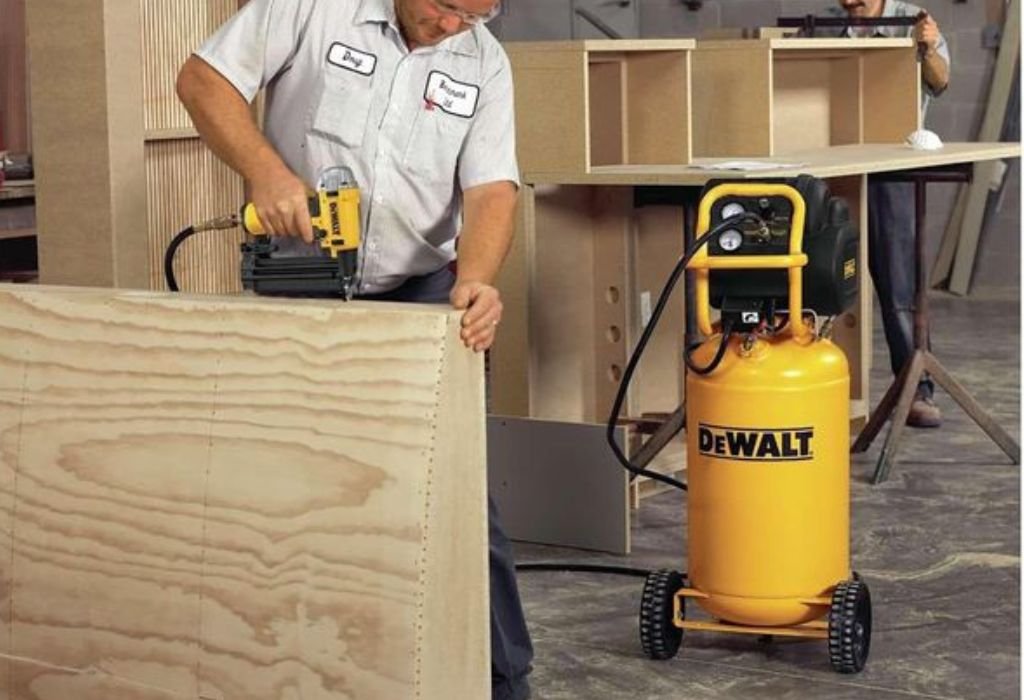
Your budget should reflect your workload. Weekend users can manage with compact compressors, while professionals need heavy-duty, high-CFM setups.
For occasional DIY or tire changes:
A 20–30-gallon tank producing 4–5 CFM @ 90 PSI works fine.
For small garages or auto repair shops:
Go for 60–80 gallons and 10–12 CFM @ 90 PSI.
For industrial or continuous wrenching:
Choose 100+ gallons and 15–20 CFM @ 90 PSI or higher.
Is it okay to buy slightly above spec?
Yes, always aim 25–50% above your wrench’s rated CFM for smoother performance and future tool expansion.
Should you plan for multiple air tools?
Absolutely. Calculate total CFM requirements if you’ll run grinders, ratchets, or spray guns together.
Can you rent a compressor before buying?
Yes, testing different sizes helps gauge noise, refill speed, and output in real conditions.
Spending wisely now saves years of frustration and ensures your setup meets all future needs.
Future Trends and Innovations in Air Compressors
The air-tool industry is evolving rapidly, and compressor technology is keeping pace. Modern designs emphasize efficiency, portability, and noise reduction without sacrificing output.
Variable-speed-drive (VSD) compressors adjust motor speed based on demand, cutting energy use by up to 30%. Quieter oil-lubricated units now reach below 70 dB — perfect for home garages. Portable high-CFM models are shrinking in size while maintaining industrial power thanks to improved pump technology.
What is a variable-speed air compressor?
It automatically changes motor speed to match airflow demand, saving electricity and reducing heat buildup.
Are portable high-CFM units becoming common?
Yes, brands are introducing wheeled, compact compressors with 6–8 CFM @ 90 PSI outputs for field work.
Will cordless impact wrenches replace air tools?
Battery tools are improving, but pneumatic impact wrenches still deliver higher torque for long sessions.
Are smart compressors worth it?
Yes. Models with digital pressure gauges and maintenance alerts make monitoring easy and prevent downtime.
The future promises more intelligent, quieter, and efficient compressors—ideal companions for modern impact wrenches.
Conclusion
So, what type of air compressor for impact wrench truly works? The answer depends on matching the compressor’s CFM, PSI, tank size, and duty cycle to your wrench and workflow. A small 6-gallon pancake compressor won’t cut it for a ½-inch impact wrench that demands 5 CFM at 90 PSI. But a 30- to 60-gallon compressor delivering steady airflow will keep your wrench spinning strong and consistent.
Before you buy, read your tool’s manual, note its air requirements, and choose a compressor that exceeds them by at least 25%. Combine that with proper setup—short hoses, correct fittings, and regular maintenance—and you’ll enjoy uninterrupted torque on every project.
Whether you’re a weekend DIYer or a professional mechanic, the right compressor transforms your air tools from sluggish to unstoppable. Match your equipment wisely, maintain it regularly, and you’ll always have the power you need, exactly when you need it.

I’m Michael R. Turner, the founder, lead writer, and passionate DIY enthusiast behind 101diytools.com. With years of hands-on experience in home improvement and power tools, I built this platform to share practical tips, in-depth guides, and honest reviews to help DIYers of all skill levels tackle projects with confidence and the right tools.