What Nails Does a Nail Gun Use: A Complete Guide
Picture this: you’re finally tackling that DIY project you’ve been dreaming about, a brand-new deck. You’ve got the lumber, the plans, and the excitement. But when you get to the fastening stage, you realize you need to know what nails does a nail gun use. Choosing the right nail type and size is key to a successful build. This guide helps you choose the perfect fasteners. You’ll gain a solid grasp of nail gun terminology, how nail sizes are measured, and the different types of nails available, saving you time, money, and frustration. Prepare for building success, and avoid costly mistakes!
Key Takeaways
- Discover the various nail types compatible with nail guns.
- Learn how to choose the correct nail size for different projects.
- Understand the differences between nail gun angles and their impact.
- Explore common nail materials and their uses.
- Find out about nail gun nail collation options and how they work.
- Get tips on selecting the ideal nail gun and nails for your needs.
Unveiling the World of Nail Gun Nails
Nail guns, also called nailers, are powerful tools designed for driving nails quickly and efficiently. They are a staple for construction professionals and DIY enthusiasts alike. To make the most of your nail gun, you need to use the right nails. This initial section explores the fundamentals of nail gun nails, covering their different types, sizes, and the essential considerations when making your selection. This information will prevent common errors during your building endeavors and help to ensure both your and the work’s safety.
Types of Nails for Nail Guns
Nail guns are not one-size-fits-all tools; they are made to work with specific types of nails. Each type is made for a particular use, ranging from framing to finishing work. Recognizing the different types helps make sure you’re using the correct fasteners for the job. Using the wrong nails can cause project failure, or even personal injury. Several different types of nails are used in nail guns; understanding these types will enable you to pick the right one for your building needs.
-
- Framing Nails: These are bigger and stronger nails, used to attach the structure of buildings and are commonly used in framing nailers. They are generally 2 to 3.5 inches long and are suitable for joining wooden elements.
Framing nails are your go-to when constructing the main structure of a building. They have a thick shank and are designed to withstand significant weight and stress. They are often used in projects like building walls, floors, and roofs. Their robust nature makes them ideal for tasks where structural strength is essential. They are typically available in various gauges and lengths. Using framing nails helps ensure the building’s structural integrity, allowing the building to withstand the elements and provide a secure living space. They are typically collated at an angle of 28 to 34 degrees to fit most framing nailers.
-
- Finishing Nails: These nails have small heads, which are meant to be hidden. Finishing nailers use them for tasks where aesthetics are important, like trim and molding. They are thinner and less obtrusive than framing nails.
Finishing nails are crucial for tasks where aesthetics are just as important as structural integrity. Designed with small heads to be less visible, they are the nail of choice for trim, molding, and decorative elements. These nails, commonly made of steel, are typically available in various gauges and lengths, usually ranging from 1 to 3 inches. They create a clean, refined appearance and ensure that the fine details of your work are highlighted. They are essential to ensure the trim and molding are neatly affixed without visible fasteners. These nails are collated straight or at an angle depending on the nail gun used.
-
- Brad Nails: These are thinner than finishing nails and are also used for finish work. Brad nails leave even smaller holes and are perfect for delicate jobs. They are often used in the installation of trim or small decorative elements.
Brad nails, known for their thin profile, are the ideal choice for more delicate finishing tasks. They are often used for small trim pieces, crafting, and other projects where a less noticeable fastener is required. Their small size helps to reduce the risk of splitting the wood, allowing for a neat, clean finish. Their thin diameter also results in smaller holes, which can be easily filled and concealed. They’re an excellent solution for securing lightweight materials or where the goal is minimal visual impact. Usually ranging from 5/8 inch to 2 inches in length, brad nails offer the precision needed for fine detail work.
-
- Flooring Nails: Made particularly for securing hardwood flooring, these nails have a special design. They are made to create a tight connection to keep the flooring in place. They have a specific shape that provides stability and helps to prevent squeaks.
Flooring nails have a unique design suited for attaching hardwood flooring to subfloors. They’re usually longer than other nail types, ranging from 1.5 to 2.5 inches, to ensure they can penetrate both the flooring and the subfloor effectively. These nails are designed with a specific head shape and shank to provide superior hold and to minimize the risk of the flooring coming loose over time. They are often ring shank nails, which provide added grip. These nails usually come in a specific angle that’s compatible with flooring nail guns. Their specialized design helps deliver a secure and durable flooring installation that can withstand foot traffic and movement.
Nail Sizes and Gauges
Knowing nail sizes and gauges is essential for choosing the right nails for any project. Nail size refers to the length and diameter of the nail, influencing its holding power. The gauge indicates the diameter or thickness of the nail’s shank. Both factors determine the suitability of a nail for different applications. A nail that is too short won’t hold properly, while a nail that is too thick can split the wood. Nail dimensions are standardized, allowing you to easily find the correct fasteners for your construction needs.
-
- Nail Length: Nail length is measured in inches or millimeters. It’s often determined by the material thickness being joined. The general rule is the nail should penetrate the base material by at least twice the thickness of the top material.
The length of the nail directly affects its holding power. When selecting a nail length, consider the combined thickness of the materials being joined and ensure enough nail length penetrates the base material. For example, if you’re attaching a 3/4-inch board to a 1-inch board, your nail should be at least 2 inches long. This standard ensures that the nail has enough grip to provide a strong connection. Nail lengths can range from under an inch for brad nails to over 3 inches for framing nails. Selecting the proper nail length is a must to achieve a strong and safe bond. Using nails that are too short may lead to the materials separating over time.
-
- Nail Gauge: Nail gauge refers to the thickness of the nail’s shank. It is usually expressed in a numerical value. A higher gauge number means a thinner nail. The gauge should be selected based on the type of material and the desired appearance of the final product.
The nail gauge is an important factor. It determines the nail’s diameter. Nail gauges range from the very thin brad nails (18 gauge) used for delicate trim work to the thicker framing nails (8-10 gauge) used for structural components. Thinner nails are less likely to split the wood, making them suitable for finish work. The choice of gauge affects the nail’s holding power. It also affects the final appearance. Thicker nails offer more strength, but they may leave larger nail holes. Always consider the material being fastened when selecting the nail gauge. This ensures the best combination of strength and aesthetics.
-
- Nail Size Charts: Referencing nail size charts is a useful method to ensure accurate selection. Charts usually give size, gauge, and common uses for various nail types. This can assist when choosing the correct nail for your needs.
Nail size charts are very helpful tools. They provide an easy way to compare different nail types, sizes, and gauges. These charts usually show the nail’s length, gauge, and the common applications it’s suited for. This lets you quickly assess what the best nail to use is. Nail charts are useful for DIY enthusiasts and professionals alike. By consulting a nail chart, you eliminate errors, prevent damage to the material, and guarantee a strong and secure connection. These charts are easily accessible online or at your local hardware store, making them a must-have reference for any project.
Nail Gun Angles and Their Influence

Nail gun angles have a big effect on which nails your nail gun can use. The angle refers to how the nails are collated together, influencing the nail gun’s design and compatibility. A deeper understanding of these angles helps you choose the right nail gun and nails for your project. This includes a look at different collation methods and their compatibility with particular types of nail guns. It affects everything from nail capacity to how well the nails fit in the magazine, guaranteeing efficient performance. The right angle enhances accuracy and reduces the risk of jams.
Common Nail Gun Angles
The collation angle is a critical specification when selecting a nail gun. Common nail gun angles dictate the nail gun’s compatibility. Each angle is designed to match a specific nail collation method, influencing the way nails are loaded and fired. Understanding common angles will help you make a suitable decision. This helps to avoid any issues with nail gun performance.
-
- Straight Collation (0 degrees): Nails are aligned in a straight line, parallel to each other. This is common for finish nailers and brad nailers, providing a sleek design.
A straight collation, typically at 0 degrees, means nails are organized in a straight, linear fashion within the magazine. This setup is common in finishing nailers and brad nailers. This allows for a more compact and streamlined tool. These nail guns are favored for detail work because they have a minimal profile. Nails are aligned end-to-end. This is perfect for precision work. Because of this arrangement, these nail guns can usually hold a larger number of nails. This is suitable for jobs where aesthetics are important and the need for frequent reloading is reduced. Straight collation enhances both efficiency and accuracy, perfect for trim work and delicate jobs.
-
- Angled Collation (20-34 degrees): Nails are collated at an angle, such as 21, 28, 30, or 34 degrees. This is common for framing nailers and some finishing nailers, which offer greater nail capacity. Angled nail guns are used for structural framing.
Angled collation, usually from 20 to 34 degrees, is a feature found on many framing nailers and some finish nailers. Angling the nails allows for more nails to be held in the magazine. This reduces the number of reloads required during a project. Angled collation is often preferred in structural framing applications. They offer higher nail capacities for demanding tasks. Nail guns with this angle are used for attaching wall studs, roof supports, and other structural components. Angled collated nails offer a great balance between capacity, performance, and the ability to access tight spaces.
-
- Specific Angle Types (21, 28, 30, 34 degrees): Different angles are often used. 21 and 28-degree angles may be seen in construction, while 30 and 34-degree angles are also used. Ensure nail gun compatibility by choosing the right nails.
Nail guns are made to use specific angles. Nails come collated at different angles, like 21, 28, 30, and 34 degrees. The angle is determined by the nail gun’s magazine design. 21-degree nail guns often offer larger nail capacities, while 30 and 34-degree models often have a narrower profile for accessing tight spaces. Choosing the appropriate angle for your project is important. Incorrect nail collation angles can cause jams, decreasing productivity. Knowing which angles your nail gun is made to use helps to ensure the correct performance and the efficient completion of tasks. Therefore, knowing your nail gun’s specifications is very important before purchasing nails.
Collation Methods and Their Effect on Nail Choice
Nail collation methods describe how nails are held together. They have a direct influence on the type of nails your nail gun can use. The two main collation types are paper tape and plastic. Each method affects how the nails are packaged and how they feed into the nail gun. Knowing the differences helps you pick nails that are compatible with your nail gun and project needs. The collation method impacts nail capacity, nail gun design, and overall performance.
-
- Paper Tape Collation: Nails are held together with paper tape, which is easily broken when the nail is fired. Paper-taped nails are typically collated at an angle, making them suitable for angled nail guns. This is a common method for framing nails.
Paper tape collation uses strips of paper to hold the nails together. The paper is designed to break away as each nail is fired. This collation method is common for angled nail guns, especially framing nailers. Paper-taped nails are often collated at angles such as 21, 28, 30, or 34 degrees, allowing more nails to fit in the magazine. This collation method is an excellent solution, offering good visibility and easier disassembly for maintenance. The paper tape itself is usually biodegradable. So this method is also environmentally friendly. Paper tape collation guarantees a consistent nail feed, improving the tool’s overall performance. It reduces jamming issues and improves efficiency on the job site.
-
- Plastic Collation: Nails are held together using plastic strips, which are stronger. Plastic-collated nails are also used in angled nail guns and may be preferred for their durability. Plastic collation is a durable way to ensure consistent feeding.
Plastic collation uses a plastic strip to secure the nails. It is used in both angled and straight nail guns. This method is often chosen for its durability. The plastic strips are more resistant to breakage compared to paper tape, providing a more rugged option. It also ensures the nails remain aligned during handling and loading. The plastic strips are designed to break apart as each nail is fired. This ensures that the nail can be driven into the material. The plastic collation method is popular, especially in more demanding applications. This includes construction work, where nails are handled frequently and are subject to rough conditions. This collation method is favored for its reliability and its ability to withstand demanding situations.
-
- Differences in Nail Capacity and Performance: The collation method can influence the number of nails a nail gun can hold. Paper tape usually offers a larger capacity, while plastic may be sturdier. Different collation methods will slightly affect performance.
The nail collation method affects both nail gun capacity and the overall performance. Paper-taped nails usually allow for a higher capacity, meaning fewer reloads during a project. Plastic-collated nails, however, are preferred for their durability. Their use is recommended, especially for challenging conditions. The choice between paper and plastic collation should consider the type of work being done and the conditions. Using the correct collation method enhances overall efficiency. This helps reduce downtime and guarantees a smooth workflow. Choosing the right collation method optimizes the efficiency and the success of the work.
Materials and Coatings for Nails
The materials and coatings that nails use affect their strength, durability, and resistance to corrosion. You should choose the nail type and coating to match your project’s needs. This affects the life span of your building project. The materials and coatings can have a big effect on both the structural integrity and appearance of your project. Each type of nail provides different qualities.
Common Nail Materials
Nail materials are important for the nail’s performance. The choice of material affects the nail’s strength, corrosion resistance, and suitability for different applications. Selecting the right material is a critical part of a successful project. Common nail materials include steel, stainless steel, and galvanized steel, each offering specific benefits. Knowing the characteristics of each material is a must for both construction and DIY projects. This ensures that the fasteners will offer both structural integrity and long-term durability.
-
- Steel Nails: These nails are a staple and are known for their strength and versatility. They are commonly used in general construction. Steel nails are readily available and affordable.
Steel nails, made from carbon steel, are known for their great strength and are a great option for a wide range of building projects. They have excellent holding power and are very durable. Steel nails are usually a good choice for tasks where strength is the top priority. They are not very resistant to rust. So, these nails are best used indoors or in projects where moisture is not an issue. The affordable price makes them a popular choice for both construction professionals and DIY enthusiasts. They are available in various sizes and gauges, so you can easily choose the right one for your needs.
-
- Stainless Steel Nails: Known for superior corrosion resistance, these nails are ideal for outdoor use and any project where the fasteners will be exposed to moisture or corrosive elements. Stainless steel nails prevent rust.
Stainless steel nails are a premium choice for projects where rust resistance is essential. These nails are made of an alloy of steel and chromium, offering exceptional resistance to corrosion, even when exposed to harsh environmental conditions. They are ideal for outdoor projects, particularly those exposed to rain, humidity, or saltwater. Stainless steel nails preserve both the structural integrity and the aesthetics of your build over time. These nails are more expensive than standard steel nails. Their added longevity and rust resistance make them a worthwhile investment. This helps to make sure that the construction will last over many years.
-
- Galvanized Steel Nails: These nails are steel nails with a protective zinc coating. The zinc coating gives them increased resistance to rust. They are a good compromise between cost and corrosion resistance.
Galvanized steel nails provide a balance between cost-effectiveness and rust resistance. They have a steel core that is covered with a zinc coating. The zinc coating forms a protective barrier that shields the steel from corrosion. Galvanized nails are a popular choice for outdoor applications, like decks and fences, where moisture is likely. They are less expensive than stainless steel nails, making them a cost-effective option for many projects. While they are more resistant to rust than plain steel nails, their corrosion resistance may be less than that of stainless steel. They are still a good, durable choice for general use.
Nail Coatings
Coatings provide added benefits to nails. They improve performance and durability and are important to consider for specific project needs. Nail coatings improve holding power. They also offer increased resistance to corrosion. It is key to selecting the right coating for your project. This affects the longevity and the performance of your work. Knowing the characteristics of each coating helps make sure the fasteners meet your specific requirements.
-
- Bright Finish: These nails have no coating and are used for indoor applications. They are best for dry environments where corrosion is not a concern. These nails are a cost-effective option for many tasks.
Bright finish nails are the most basic type, with no additional coating. They are suitable for interior construction projects where exposure to moisture or corrosive elements is not a factor. These nails are usually made of steel and offer great strength for joining wood. These nails are a cost-effective choice for general construction. Due to the lack of a protective coating, they can corrode in humid or outdoor settings. They are not the best choice for areas with moisture. They are very useful for projects where the appearance is less important than function.
-
- Galvanized Coating: This coating is a zinc layer added to the steel, providing protection against rust. Galvanized nails are good for exterior applications and wet environments. They come in both hot-dipped and electro-galvanized options.
Galvanized nails have a zinc coating that provides superior protection against rust. They are the go-to option for outdoor applications and in areas where the nails may get wet. The zinc coating is an excellent shield against corrosion, helping to maintain the nails’ integrity over time. Galvanized nails are available in two main types: hot-dipped and electro-galvanized. Hot-dipped galvanized nails have a thicker coating and are better suited for demanding conditions. Electro-galvanized nails are more common for general use. These are useful for decks, fences, and any project that is subject to the elements. They are a great middle-ground choice between bright finish and stainless steel nails.
-
- Other Coatings (Vinyl, Phosphate): Some nails have coatings like vinyl or phosphate, which enhance grip and corrosion resistance. These can be used in certain situations where additional features are needed. They also provide grip to the materials.
Some nails have specialized coatings such as vinyl or phosphate, which offer added benefits beyond standard rust protection. Vinyl-coated nails have an improved grip. They are often chosen for projects where increased holding power is needed. The coating helps to reduce the nail’s chances of backing out over time. Phosphate-coated nails are often used in dry environments to enhance corrosion resistance and improve paint adhesion. These coatings can be useful for specific applications where grip and aesthetics are important. These coatings improve the overall performance and durability of the fasteners. They also help to ensure the project meets specific requirements.
Selecting the Ideal Nail Gun and Nails
Choosing the correct nail gun and the right nails is essential for the success of your building projects. The nail gun’s specifications must match the project needs. This includes considerations like the angle, size of the nails, and the materials used. The right selection helps to improve efficiency. It also prevents errors and guarantees that the outcome will be both secure and visually appealing. Taking the time to pick the right tools and materials will make your project much easier.
Matching the Nail Gun to the Job
The nail gun type should always suit your project. The different kinds of nail guns are made for specific tasks. Consider the kind of work and the kind of nails the gun uses when making your choice. Nail gun selection is a critical step in project planning. Choosing the right nail gun for the job can improve productivity. It can also ensure that the job goes smoothly. Here are some key points to consider when making your selection.
-
-
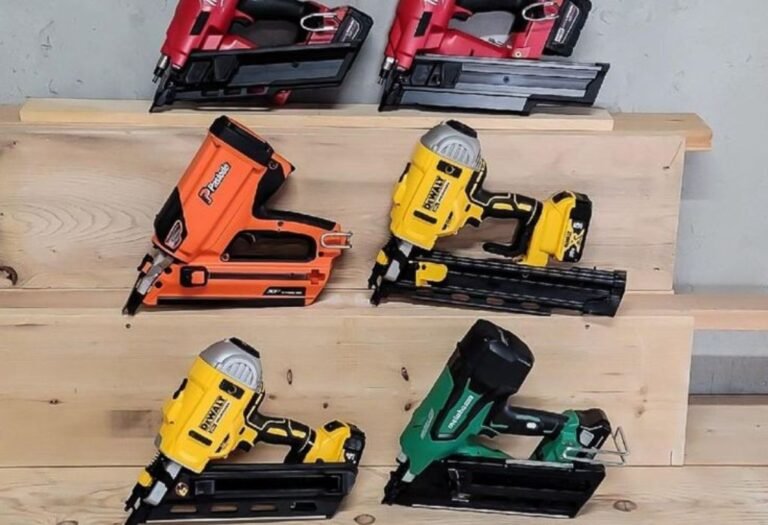
- Framing Nailers: These tools are best for heavy-duty structural work, like framing walls and roofs. They use larger nails and are able to drive them with power. They are known for their power and speed, essential for large building tasks.
-
Framing nailers are made for heavy-duty structural work. These nailers are the workhorses of construction. These nail guns use larger, thicker nails to join the main structural parts of a building. They are mainly used for framing walls, floors, and roofs. Framing nailers are usually angled, allowing for higher nail capacities and improved maneuverability in tight spaces. They are known for their power, making them ideal for tasks where speed and efficiency are key. These nailers are usually powered by air. They also have an increased driving capacity that allows you to complete large projects quickly and easily. They are a must-have for construction professionals.
-
-
- Finishing Nailers: These are ideal for more refined work, like trim, molding, and installing baseboards. These guns use smaller, thinner nails, which leave minimal holes. They are known for their ability to deliver a clean, finished appearance.
-
Finishing nailers are made for tasks where precision and aesthetics are equally important. They’re perfect for trim, molding, and installing baseboards. They use smaller nails. This ensures that the holes left behind are minimal. This helps to achieve a clean, professional look. They are typically lighter than framing nailers. They’re often equipped with features that assist with accuracy and precision, like non-marring tips. Finishing nailers are essential for any job where the finish is as important as the function. This is especially true when working on detailed projects. It guarantees a smooth and refined finish.
-
-
- Brad Nailers: These tools are the best choice for fine detail work and where very small holes are required. They use thin brad nails. These nailers are great for crafting and installing delicate trim pieces.
-
Brad nailers are designed for fine detail work and are ideal for jobs where small holes are needed. They’re used for delicate trim pieces and crafting. They use thin brad nails that minimize damage to the materials. Brad nailers are smaller and lighter than other nail gun types, which improves accuracy and control when working on detailed tasks. They offer ease of use. Brad nailers are the perfect solution for any project where a clean finish is very important. They deliver neat and professional results.
-
-
- Flooring Nailers: Made for installing hardwood floors, these guns are designed to install flooring nails. Flooring nailers provide accurate and reliable flooring. They are made to drive the nails consistently and effectively.
-
Flooring nailers are made for installing hardwood floors. These are specialized tools that drive flooring nails at the right angles. Flooring nailers ensure that the flooring is installed correctly and safely. These nailers are designed to drive the nails consistently and effectively. Flooring nailers usually have a built-in foot or baseplate that allows you to control the depth of the nail. This prevents damage to the floorboards. Their features, such as the ability to work in tight spots and nail at a consistent angle, make them ideal for quick and easy flooring installation. Flooring nailers are essential for hardwood flooring installation. They offer efficiency and precision.
Choosing the Right Nails
Picking the correct nails is just as important as selecting the nail gun. The nail type, size, and material must suit the project’s requirements. This is key to a long-lasting, quality finish. Understanding the various options is essential for optimal results. You’ll avoid problems such as splitting the wood and ensure proper support.
-
-
- Matching Nail Type to Project: Make sure the nail type you choose suits the specific project. Use framing nails for structural work and brad nails for trim. Matching the nail type is vital to project success.
-
Matching the nail type to the project at hand is very important. Framing nails are the go-to for structural work. These include the framing of walls and roofs. Finishing nails are made for detailed work, like installing trim and molding. Brad nails are used for delicate projects. Using the correct nail type guarantees the project’s structural integrity. It helps to prevent damage to the material, while also achieving the desired aesthetic outcome. Selecting the appropriate nail type improves both the structural integrity and the finish quality. This adds to the durability and the aesthetic appeal of the completed project.
-
-
- Considering Nail Size and Gauge: The nail’s size and gauge should be based on the thickness of the materials being joined. Use nail charts to help you pick the right size. Choosing the right nail size is essential to a good, secure connection.
-
Always consider the nail’s size and gauge based on the thickness of the materials being joined. The nail must be long enough to penetrate both pieces, creating a secure hold. Thinner gauge nails are best for finish work. This decreases the risk of splitting the wood. It is always wise to use nail size charts to help you make your selection. These charts give important size and gauge information for various project needs. Using the correct size and gauge is essential to ensure a secure, long-lasting connection. This helps to make sure that the project is both durable and aesthetically pleasing.
-
-
- Evaluating Material and Coating: Choose the nail material and coating based on environmental exposure. Select stainless steel for outdoor use and bright finish for interiors. Evaluating materials is a must for long-term performance.
-
Choosing the nail material and coating based on environmental exposure is key to the project’s long-term performance. Stainless steel nails are perfect for outdoor projects. Their resistance to rust ensures the longevity of the structure. Bright finish nails are suitable for interiors where the nails will not be exposed to moisture. The choice of material and coating affects the nail’s durability and the overall appearance. Knowing these factors helps ensure the project meets its desired functionality. It also adds to the aesthetic appeal and the long-lasting performance of the project.
Frequently Asked Questions
Question: What’s the main difference between framing nails and finishing nails?
Answer: Framing nails are designed for structural work and are thicker, while finishing nails are thinner and used for aesthetics, like trim.
Question: How do I know what nail gauge to use?
Answer: Nail gauge depends on the thickness and the material being joined; thinner gauges are used for more delicate tasks.
Question: What angle nail gun do I need for framing?
Answer: Most framing nailers use angled collation, typically 28 to 34 degrees, for more nails in the magazine.
Question: What does “collated nails” mean?
Answer: Collated nails are held together in strips, either by paper tape or plastic, for use in nail guns.
Question: Can I use any nail in a nail gun?
Answer: No, you must use the specific type and size of nails that are compatible with your nail gun.
Final Thoughts
Knowing what nails does a nail gun use and how to pick the right ones can make a real difference in your building projects. From framing nails to brad nails, knowing the different types, sizes, and coatings is key to success. Choosing the correct nail type for each task ensures that your projects are structurally sound, long-lasting, and aesthetically pleasing. Also, remember to match the nail gun to the job. This helps with efficiency and a clean finish. By taking the time to understand the nuances of nail selection and nail gun operation, you are well on your way to building with confidence. Take your knowledge and turn your ideas into a reality. With the right nails and nail gun, every project will be a success. Start building and creating now!

I’m Michael R. Turner, the founder, lead writer, and passionate DIY enthusiast behind 101diytools.com. With years of hands-on experience in home improvement and power tools, I built this platform to share practical tips, in-depth guides, and honest reviews to help DIYers of all skill levels tackle projects with confidence and the right tools.