What Power Sander Works Best With the Grain
Every woodworker knows the frustration of sanding marks that ruin an otherwise perfect surface. Those faint swirls and cross-grain scratches often appear because the wrong type of power sander was used — or because it didn’t move in harmony with the wood’s natural grain.
Wood grain determines how light reflects across a surface, and sanding against it exaggerates imperfections. That’s why understanding what kind of power sander goes with the grain is key to achieving a smooth, professional finish every time.
According to a Fine Woodworking performance test, sanding with the grain reduced visible scratches by up to 70% compared to random or opposing motion (FineWoodworking.com). Yet many DIYers overlook this simple principle, relying on speed instead of control.
The right power sander doesn’t just save effort — it protects the beauty of the wood. In this guide, you’ll learn why grain direction matters, how different sanders move relative to it, and which models deliver the cleanest, dust-free, grain-friendly finish.
Why “Going With the Grain” Matters When Using a Power Sander
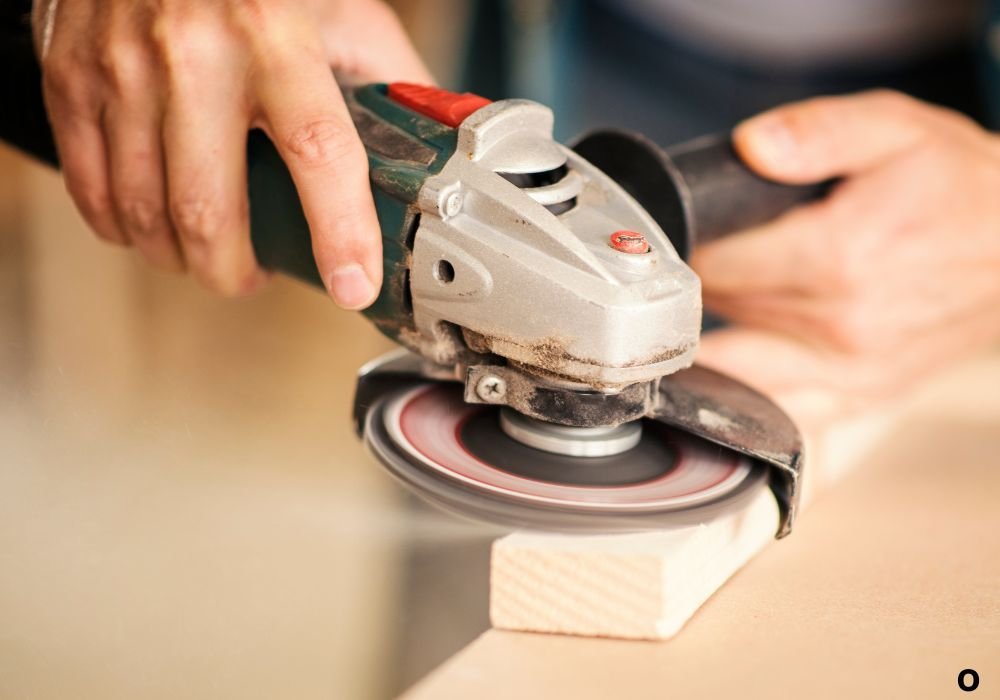
Grain direction is nature’s blueprint in wood fibers. When sanding follows the grain, the abrasive gently levels the surface without tearing or scratching the fibers.
Working against it causes rough streaks that only become visible after staining or varnishing. Even drywall, MDF, and composite materials have “directional” patterns where sanding motion affects surface quality.
What happens when a sander works against the grain?
It creates cross-grain scratches that scatter light and make the surface look uneven after finishing.
How does the pad motion affect the grain?
Linear motion smooths fibers along their direction, while rotary or random motion can cut across and dull natural patterns.
Is “with the grain” important for all materials?
Mostly for wood, but drywall or veneer surfaces also benefit from consistent motion patterns.
Can a random-orbit sander still respect the grain?
Yes — though its motion is random, moving along the grain direction while guiding it minimizes swirl marks.
Why should you care about grain direction at all?
Because sanding with the grain enhances finish clarity and reduces the need for extra coats or fine sanding.
Types of Power Sanders and Their Motion Relative to Grain
Each power sander moves differently, and that motion determines how it interacts with the grain. Understanding this helps you pick the perfect one for your project.
Belt sanders use a continuous loop that moves in a straight line — ideal for flattening large surfaces while following the grain. Orbital sanders move in small circular motions, great for light finishing but can leave marks if pressed too hard. Random-orbit sanders combine rotation and oscillation, reducing swirl marks while still respecting grain direction.
Which sander produces swirl marks when used incorrectly?
Orbital and rotary sanders can cause circular scratches if held too long in one spot.
Is a random-orbit sander good for grain-friendly sanding?
Yes, it’s the most forgiving and versatile for both professionals and DIY users.
When should a belt sander be used with the grain?
When leveling large panels, tabletops, or hardwood floors that require straight-line abrasion.
Are there sanders made specifically for following grain direction?
Yes — linear finish sanders and drum sanders move in direct alignment with wood grain for perfect clarity.
Should surface type affect the choice of sander?
Absolutely — softer woods benefit from gentle motion, while harder surfaces tolerate rotary models.
Key Features to Look For When You Want to Sand “With the Grain”
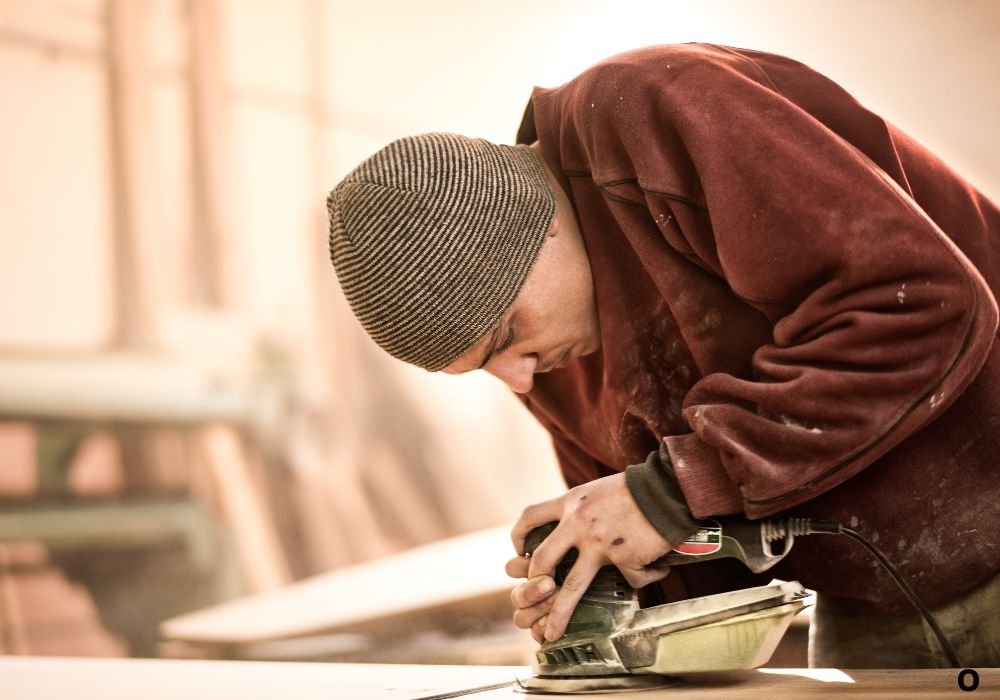
When choosing what kind of power sander goes with the grain, focus on features that control movement, speed, and surface pressure.
Variable speed helps you adapt the tool’s aggressiveness to the wood’s sensitivity, ensuring no fiber tear-out. Dust extraction systems prevent particles from scratching the surface while revealing true finish quality.
Why is variable speed important for working with the grain?
Because slower settings reduce swirl marks and maintain smooth, controlled sanding strokes.
How does pad shape affect grain following?
Rectangular or elongated pads mimic the direction of grain better than circular ones for fine finishing.
Does dust extraction matter for grain sanding?
Yes — cleaner surfaces ensure consistent friction and prevent micro-scratches caused by trapped dust.
What grit size should you use when sanding with the grain?
Start around 100-120 grit for shaping, then finish with 180-220 grit for polish-ready smoothness.
Why does ergonomic design matter?
A comfortable grip and balanced weight help you keep steady pressure along the grain, avoiding uneven sanding.
Matching the Right Power Sander to Your Project’s Grain and Material
Different projects demand different tools — the perfect grain-friendly sander for oak furniture isn’t the same for drywall patches.
For hardwood flooring, use a belt or drum sander to follow the grain across long planks. For cabinetry and finishing work, random-orbit sanders provide precision and prevent swirl marks. For drywall or softwood trim, use a light orbital or drywall sander with fine grit to maintain texture without gouging.
What power sander goes with the grain for hardwood floors?
A belt or drum sander with linear motion is best for straight planks and consistent texture.
What works best for fine woodworking and furniture?
A random-orbit sander gives a scratch-free, smooth finish that still aligns with the wood grain.
Is a budget sander okay for grain-sensitive work?
Yes, if it includes variable speed and quality sanding discs, you can still get great results.
Should you upgrade for professional grain sanding?
If you frequently finish large wooden projects, investing in a dust-extracting sander pays off in time and quality.
Corded or cordless for grain work?
Corded models provide constant power, while cordless ones add flexibility for vertical or tight spaces.
Common Mistakes When Sanding With the Grain and How to Avoid Them
Even with the right sander, simple errors can ruin the surface finish. One of the most common is pressing too hard — pressure creates grooves that cut across the grain instead of smoothing it.
Another mistake is skipping grits or sanding too fast. This leaves hidden scratches that appear under stain or lacquer.
What happens if you ignore the grain?
You’ll see cross-grain scratches that become exaggerated once the finish dries.
Why is starting with too coarse a grit risky?
Because deep scratches are difficult to remove, forcing you to sand longer and risk damaging the surface.
How does poor dust control affect grain finish?
Dust particles get trapped and act like coarse grit, dulling the sheen and scratching the grain.
What’s the danger of sanding too aggressively?
You risk burning through veneers or rounding edges, breaking the wood’s natural pattern.
How can you check if you’re sanding correctly with the grain?
Use angled lighting — if the reflection flows evenly, your sanding direction matches the grain.
Future Trends & Technology in Grain-Friendly Power Sanders

Technology is changing how professionals approach sanding. New smart random-orbit sanders use motion sensors to monitor pad speed and prevent over-sanding.
Cordless models now rival corded versions in power and runtime, making grain-sensitive finishing easier anywhere. Many sanders even integrate LED lighting to highlight wood grain and surface flaws in real time.
What new features improve sanding with the grain?
Active vibration control and auto-speed sensors help maintain even strokes.
Are cordless models reliable for fine finishing now?
Yes — lithium battery systems offer strong, consistent output for precision sanding.
How has dust extraction evolved?
Modern vacuums capture up to 99% of dust, ensuring clean air and clearer visibility (FineHomebuilding).
Will AI or smart features become standard?
Likely — digital sensors may soon adjust speed automatically to match grain density.
How do these innovations help beginners?
They simplify technique, letting users focus on control and finish instead of mechanics.
Conclusion
Sanding with the grain is more than tradition — it’s a science of surface refinement. Choosing what kind of power sander goes with the grain ensures smoother finishes, less damage, and professional-level results with less effort.
Whether you’re refinishing a table or preparing walls, align your sander’s motion with the material’s natural direction. The right tool, speed, and pressure will turn sanding from a chore into a craft — leaving behind only clean, flawless grain.

I’m Michael R. Turner, the founder, lead writer, and passionate DIY enthusiast behind 101diytools.com. With years of hands-on experience in home improvement and power tools, I built this platform to share practical tips, in-depth guides, and honest reviews to help DIYers of all skill levels tackle projects with confidence and the right tools.