Unlock Saw Precision What is the Kerf of a Circular Saw Blade
Kerf is the crucial width of material a circular saw blade removes during a cut, directly impacting your project’s precision and material yield. Understanding this narrow gap is vital for accurate measurements and minimizing waste, as different blade types have varying kerf sizes. Choosing the right kerf ensures optimal power efficiency and a cleaner, more precise result for every cut.
Hey there, fellow makers and DIY enthusiasts! Ever wondered why a perfectly marked line on your wood seems to disappear after you’ve made a cut with your circular saw? Or perhaps you’ve noticed that mysterious pile of sawdust accumulating under your saw, and thought, “There goes my precious lumber!” You’re not alone. This little puzzle points to one of the most fundamental, yet often overlooked, concepts in woodworking: the kerf of a circular saw blade.
Think of it like this: when you walk through a field of tall grass, you leave a path behind you, right? Your saw blade does the exact same thing as it slices through wood. It doesn’t just separate the material; it actually removes a sliver of it to create that separation. That “sliver” is what we call the kerf. Understanding this seemingly small detail can elevate your woodworking from “pretty good” to “precise and professional.” It’s not just about knowing what the kerf is; it’s about knowing how to work with it, around it, and sometimes even against it, to achieve perfect results.
So, grab a cup of coffee, and let’s demystify the kerf of a circular saw blade together. By the end of this post, you’ll not only know exactly what kerf means, but you’ll also have practical tips and insights to make every cut count, minimize waste, and unlock new levels of precision in your projects. Ready to sharpen your woodworking knowledge?
Key Takeaways
- Recognize Kerf: It’s the material removed, vital for precision and planning cuts.
- Factor Kerf into Measurements: Always adjust dimensions for the blade’s cut width.
- Select Kerf Strategically: Choose thin for material yield, full for stability and power.
- Adjust Saw Settings: Precisely position your fence or stops to compensate for kerf.
- Plan for Material Yield: Account for kerf to reduce wood waste effectively.
- Verify Actual Kerf: Measure the cut width on scrap, don’t just trust blade specs.
📑 Table of Contents
What Exactly is “Kerf”? The Sawdust Story
Defining Kerf in Simple Terms
In the simplest terms, the kerf of a circular saw blade is the width of the material that the blade removes during a cut. Imagine tracing a line on a piece of wood. When you cut along that line, the saw blade doesn’t just follow it; it actually consumes a thin strip of wood along that line, turning it into sawdust. That strip is the kerf. It’s the path the blade clears for itself as it travels through the material. This concept applies to any type of saw blade, but it’s particularly important for a circular saw blade due to the range of applications.
Why does it matter? Well, if you need to cut a board exactly 10 inches long, and you don’t account for the kerf, your board will end up slightly shorter than 10 inches because the kerf width was removed from your measurement. It’s a small detail, but in precision woodworking, small details are everything.
Why Does Kerf Exist?
You might wonder, why can’t a saw blade just cut a line without removing material? The answer lies in the design of the saw blade itself, specifically the “set” of its teeth. If the blade body were the same width as the cut, it would bind in the wood, creating massive friction, heat, and potentially a very dangerous situation. To prevent this, saw blades are designed with teeth that alternate slightly to the left and right, making the cutting edge wider than the actual body of the blade.
This “set” allows the blade body to move freely through the cut without rubbing against the wood, which would cause excessive heat, burning, and blade deflection. So, the kerf is not just an unavoidable side effect; it’s a crucial design feature that ensures efficient, safe, and relatively cool operation for your circular saw blade.
The Two Main Types of Kerf: Thin vs. Full
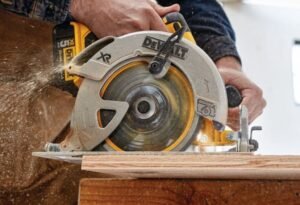
When you’re shopping for a new circular saw blade, you’ll often hear terms like “thin kerf” or “full kerf.” These aren’t just fancy marketing phrases; they refer to the actual width of the cut the blade makes, and understanding the difference is key to choosing the right blade for your project and your saw.
Full-Kerf Blades: The Workhorses
Full-kerf blades are what many professional woodworkers consider the “standard” or “traditional” saw blade. The kerf of these circular saw blades typically measures around 1/8 inch (0.125 inches or 3.2mm). They are robust and built for demanding tasks.
- Pros:
- Stability: Being wider, they are inherently more stable and less prone to deflection (wobbling or bending) during a cut. This results in straighter, more accurate cuts.
- Durability: They generally have thicker steel plates, which helps dissipate heat and makes them more durable and resistant to warping.
- Smoothness: Often provide a smoother cut, especially in hardwoods or when making rip cuts, because of their rigidity.
- Power Handling: Ideal for high-powered saws (like larger table saws) that can easily handle the increased resistance of removing more material.
- Cons:
- Material Waste: They remove more material, which can be a concern with expensive lumber or when needing to maximize yield from a sheet.
- Power Requirement: They demand more power from your saw. Using a full-kerf blade on an underpowered saw can lead to slower cuts, increased motor strain, and potentially poorer cut quality.
- Ideal for: Heavy-duty ripping, professional workshops, situations where stability and durability are paramount, and when working with high-powered equipment.
Thin-Kerf Blades: Precision and Efficiency
Thin-kerf circular saw blades are designed to remove less material. Their kerf typically ranges from 3/32 inch (0.094 inches or 2.4mm) down to even thinner sizes. They’ve become increasingly popular, especially with the rise of cordless tools.
- Pros:
- Less Material Waste: The most obvious benefit is conserving valuable wood, which can add up significantly over a project.
- Less Power Required: Because they remove less material, they require less energy to push through the wood. This is a huge advantage for battery-powered circular saws, extending their run-time and making them more efficient.
- Faster Cuts: With less resistance, thin-kerf blades can often make faster cuts, especially in less dense materials.
- Reduced Strain: Easier on smaller, less powerful saws, reducing motor strain and prolonging tool life.
- Cons:
- Prone to Deflection: The thinner blade body is more susceptible to wobbling or bending if not handled correctly, leading to less accurate or wavy cuts.
- Heat Buildup: While they remove less material, the thinner body can sometimes lead to faster heat buildup if the feed rate isn’t optimal, potentially causing burning.
- Careful Handling: Requires a steadier hand and good technique to maintain straight cuts.
- Ideal for: Cross-cutting, finish work, cordless saws, miter saws, cutting expensive sheet goods, and applications where material conservation is critical.
Why Kerf Matters: Precision, Waste, and Power
Understanding the kerf of your circular saw blade isn’t just a fun fact; it’s a critical piece of knowledge that impacts the accuracy of your cuts, the amount of material you use (or waste), and even the performance of your saw. Let’s dive into why this seemingly small measurement holds such significant weight.
Impact on Measurement and Accuracy
This is where kerf truly becomes vital for any woodworker striving for precision. When you draw a line on your workpiece, that line itself has a tiny width. The kerf of your circular saw blade represents the wood that will *disappear* along that line. If you don’t account for it, your pieces will consistently be undersized.
Imagine you need to cut a 12-inch board into two perfectly equal 6-inch pieces. If you simply cut down the middle of your “6-inch mark,” you’ll find that each piece is slightly less than 6 inches, because the kerf was consumed right there in the middle. The golden rule in woodworking is to “cut on the waste side of the line.” This means if you want a 6-inch piece, you mark 6 inches, and then position your blade so the kerf removes material from the part you don’t want (the “waste” side), leaving your desired piece at exactly 6 inches.
Material Waste Considerations
For small projects, a bit of sawdust might not seem like a big deal. But when you’re working with expensive hardwoods, large sheets of plywood, or tackling a project with many cuts, that kerf width adds up quickly. Using a thin-kerf blade, for instance, can noticeably reduce material waste over the course of a project, saving you money and making your lumber go further. This is especially true when “re-sawing” (cutting a thick board into thinner boards) or when making many repetitive cuts from a single sheet.
Saw Power and Performance
The wider the kerf, the more material your circular saw blade has to remove with each pass. More material removal means more resistance, which directly translates to a greater demand on your saw’s motor. This is why full-kerf blades are generally recommended for more powerful, corded saws or large table saws. Conversely, thin-kerf blades are a perfect match for less powerful saws, like many cordless circular saws, as they allow the saw to work more efficiently, extending battery life and reducing strain on the motor.
How to Measure and Compensate for Kerf
Knowing what kerf is is one thing; consistently accounting for it in your cuts is another. Here’s how you can practically measure the kerf of your circular saw blade and incorporate that knowledge into your cutting techniques.
A Simple Way to Measure Kerf
You don’t need fancy tools to get a good idea of your blade’s kerf. Here’s a straightforward method:
- Grab a scrap piece of wood, preferably similar to what you’ll be cutting for your project.
- Make a straight cut through the scrap piece with the blade you intend to use.
- Carefully measure the width of the slot created by your cut. Use precision calipers if you have them, or even a set of feeler gauges. If you don’t have these, a ruler or tape measure can give you a rough estimate, but for accuracy, invest in a caliper.
- Record this measurement. This is your effective kerf for that specific blade and material.
Alternatively, you can visually inspect your blade and measure the widest point across the teeth (from the tip of a left-set tooth to the tip of a right-set tooth). This will give you the theoretical kerf, which should be very close to your actual cut measurement.
Practical Kerf Compensation Techniques
Once you know your blade’s kerf, here’s how to integrate it into your cutting process:
- Visual Alignment: This is the most common technique for handheld circular saws. When you mark your cut line, decide which side is the “good” side (the part you want to keep) and which is the “waste” side. Always align your blade so the kerf falls entirely on the waste side of your line. Most circular saws have a visual guide or notch on their shoe plate to help with this.
- Fence Adjustments (Table Saws & Track Saws): When using a table saw or a track saw with a fence, you’ll need to factor in the kerf when setting your fence. If you set your fence to, say, 10 inches, and you want your workpiece to be exactly 10 inches wide, you need to ensure the kerf is removed from the offcut side, not the piece you’re keeping. This usually means setting your fence so the inner edge of the blade is exactly 10 inches from the fence.
- The “Sneak Up” Method for Extreme Precision: For cuts where even a fraction of an inch matters, you can use the “sneak up” method. Cut slightly proud (a hair wider) of your final dimension, allowing the kerf to remove most of the waste. Then, make a very shallow, final pass to shave off the last tiny bit, ensuring your final dimension is exact. This is particularly useful for joinery or when fitting pieces tightly.
Beyond the Basics: Blade Types and Kerf Implications
While kerf width is a primary characteristic, it’s also important to remember that different circular saw blades are designed for specific tasks, and their kerf plays a role in their overall performance.
Ripping Blades vs. Cross-Cutting Blades
Even if two blades have the same kerf width, their tooth count and tooth geometry will significantly impact the quality of the cut. A ripping blade typically has fewer teeth (e.g., 24-40 teeth) with a larger gullet (the space between teeth). This design allows for efficient chip removal when cutting along the grain, where the blade is essentially “chiseling” away long fibers. While the kerf width might be standard, the aggressive tooth pattern is optimized for fast material removal.
Cross-cutting blades, on the other hand, have more teeth (e.g., 60-80 teeth) and a different tooth grind (often ATB – Alternate Top Bevel). These blades are designed to make very clean cuts across the grain, minimizing tear-out. The numerous teeth take smaller bites, resulting in a smoother kerf edge, even if the overall width of the kerf is the same as a ripping blade.
Specialty Blades and Their Kerf
The world of circular saw blades offers many specialized options, each with specific kerf considerations:
- Dado Blades: These are a prime example where “kerf” takes on a different meaning. A dado stack is a set of blades and chippers that, when combined, create a much wider slot or groove (a dado or rabbet) in a single pass. You’re not thinking about a thin single kerf here, but a combined, adjustable kerf width.
- Plywood/Melamine Blades: Often designed with a high tooth count and a thin kerf, these blades prioritize minimal tear-out on delicate sheet goods. The thin kerf reduces friction and heat, which is beneficial for materials prone to chipping.
- Fiber Cement Blades: These blades often feature polycrystalline diamond (PCD) teeth. While the kerf width might be similar to standard blades, the material and design are specifically engineered to withstand the extreme abrasiveness of fiber cement, where a standard blade would dull almost instantly.
Common Kerf Sizes and Their Applications
To give you a quick reference, here’s a table summarizing common kerf types, their typical widths, and where they excel:
| Kerf Type | Typical Width (Inches) | Typical Width (mm) | Common Applications | Pros | Cons |
|---|---|---|---|---|---|
| Full Kerf | 0.125″ (1/8″) | 3.2 mm | Heavy ripping, general purpose, professional shops, high-powered saws. | Stable, durable, straighter cuts, better heat dissipation. | More material waste, requires more power. |
| Thin Kerf | 0.094″ (3/32″) | 2.4 mm | Cross-cutting, finish work, cordless saws, valuable materials, joinery. | Less material waste, less power needed, faster cuts, extended battery life. | Prone to deflection, can cause burning if mishandled. |
| Ultra-Thin Kerf | 0.0625″ (1/16″) | 1.6 mm | Specialty finish work, highly valuable materials, extreme precision where minimal waste is paramount. | Maximum material conservation, minimal power draw. | Very prone to deflection, requires very steady hand and optimal feed rate. |
Conclusion
So there you have it! The kerf of a circular saw blade, while a small detail, is a giant concept in the world of woodworking. It’s not just the sawdust that falls to the floor; it’s a fundamental aspect of how your saw cuts, impacting everything from the precision of your measurements to the amount of material you use, and even the strain on your saw’s motor.
By understanding what kerf is, recognizing the differences between thin-kerf and full-kerf blades, and knowing how to measure and compensate for it, you’re not just making a cut; you’re making an informed cut. This knowledge empowers you to choose the right blade for the job, maximize your material, and achieve that level of precision that makes your woodworking projects truly stand out. So, next time you pick up your circular saw, remember the kerf – it’s your key to unlocking greater precision and efficiency in every project!
Frequently Asked Questions
What exactly is the kerf of a circular saw blade?
The kerf of a circular saw blade refers to the width of the cut that the blade makes in a material. It’s essentially the amount of material removed by the blade as it passes through the workpiece, creating a gap. This dimension is slightly wider than the blade’s body due to the “set” or angle of its teeth.
Why is knowing the kerf of a circular saw blade important for my woodworking projects?
Knowing the kerf of a circular saw blade is crucial for achieving precise measurements and accurate cuts. It allows you to correctly position your workpiece and fence, ensuring that your final dimensions match your plans perfectly. Ignoring the kerf can lead to material being cut too short or too narrow, ruining your project.
Does the kerf of a circular saw blade vary, and what causes it to change?
Yes, the kerf of a circular saw blade can vary significantly depending on the blade’s design and purpose. Factors like the thickness of the blade’s body, the amount of “set” on the teeth, and even the type of material being cut can influence the actual kerf width. Different blade types, such as thin kerf or full kerf, are manufactured for specific applications.
How does the kerf of a circular saw blade affect the amount of material waste?
The kerf of a circular saw blade directly dictates the amount of material wasted with each cut. A wider kerf removes more material, leading to greater waste, which can be significant when cutting expensive lumber or multiple pieces. Conversely, a thinner kerf blade minimizes waste, allowing you to get more usable pieces from your stock.
What’s the difference between a standard kerf and a thin kerf circular saw blade?
A standard (or full) kerf circular saw blade typically makes a wider cut, often around 1/8 inch (3.2mm), and is generally more rigid and durable. A thin kerf circular saw blade, however, makes a narrower cut, usually around 3/32 inch (2.4mm) or less, requiring less power to operate. Thin kerf blades are ideal for smaller saws or when conserving material is a priority, but they can sometimes be more prone to deflection if not handled correctly.
How can I accurately account for the kerf of a circular saw blade when making precise cuts?
To accurately account for the kerf of a circular saw blade, you must always factor it into your measurements and blade positioning. When marking your cut line, decide which side of the line the blade’s kerf will fall on (the “waste side”). Always position your blade’s teeth so the kerf removes material from the waste side, leaving your desired dimension intact.

I’m Michael R. Turner, the founder, lead writer, and passionate DIY enthusiast behind 101diytools.com. With years of hands-on experience in home improvement and power tools, I built this platform to share practical tips, in-depth guides, and honest reviews to help DIYers of all skill levels tackle projects with confidence and the right tools.