What Is a Nail Gun And How Does It Work For Beginners?
Picture this: You’re trying to build a birdhouse. You’ve got your wood cut, but hammering those tiny nails in straight is a struggle, and your thumb keeps getting in the way! Frustrating, right? That’s where a nail gun comes in. It’s a tool that makes this process so much easier and faster, turning a potentially frustrating project into a fun one. This post will help you learn the basics of nail guns, their different types, and how to use them safely. By the end, you’ll be well on your way to tackling your own projects with confidence and avoiding any thumb-related mishaps. Get ready to explore the exciting world of nail guns, and learn how they can make your DIY tasks a breeze!
Key Takeaways
- A nail gun is a power tool used to drive nails into wood or other materials quickly.
- There are different types of nail guns, each designed for specific tasks.
- Nail guns use compressed air, electricity, or gas cartridges as their power source.
- Safety is very important when using a nail gun, including eye protection.
- Nail guns have various applications in construction, carpentry, and DIY projects.
- Regular maintenance is important to keep your nail gun functioning correctly.
Unveiling the Essentials What Is a Nail Gun
A nail gun, often called a nailer, is a specialized power tool used to drive nails into a variety of materials, most commonly wood. These tools have revolutionized construction, carpentry, and countless DIY projects, making the process of joining materials significantly faster and more efficient compared to manual hammering. Instead of relying on the swing of a hammer and the often imprecise results, nail guns use a quick, powerful burst to sink nails with precision. They come in various types, each suited for different applications and nail sizes, making them a versatile addition to any toolbox. From framing a house to assembling furniture, nail guns offer an impressive way to fasten materials with speed and accuracy.
Types of Nail Guns Explained
Nail guns aren’t one-size-fits-all; instead, they are designed to perform various tasks with great effectiveness. Different types of nail guns utilize diverse mechanisms and are powered by different sources, from compressed air to electricity and even fuel. This variety allows users to choose the right tool for their specific needs, considering factors like project scope, the materials being used, and the desired level of precision. Explore the primary categories of nail guns to grasp how each tool has unique advantages and is best used for specific tasks. Selecting the appropriate nail gun is an important step to ensure project success and worker safety.
-
- Framing Nailers: These are the workhorses of the construction site, built for heavy-duty tasks like framing walls, floors, and roofs. Framing nailers use larger nails (2-3.5 inches) and are typically powered by compressed air. They provide the power needed to drive nails deep into thick lumber.
Framing nailers are vital tools in the building trade. They can quickly and easily fasten large pieces of wood together, reducing the time it takes to build a house or any other structure. They are usually heavier than other nail guns and are designed for sustained use over long periods. Safety features, such as a contact trip, require the tip of the gun to be pressed against the material before it fires, which decreases the risk of accidental nail firing. Proper training and understanding of these safety elements are important before operating a framing nailer.
-
- Finish Nailers: Finish nailers are used for more delicate work, such as trim, molding, and furniture. They use smaller nails (1-2.5 inches) and often have angled magazines for easier access to tight spaces. These nail guns prioritize precision and leave a minimal mark on the wood.
Finish nailers excel in tasks where aesthetics are just as important as structural integrity. The smaller nails and precise firing mechanisms help prevent splitting the wood, which can ruin the piece. Many finish nailers have adjustable depth settings, allowing users to control how deep the nail is driven into the material. The ability to use different sizes and types of nails makes them perfect for various finish work needs, improving the final appearance of projects such as trim and baseboards.
-
- Brad Nailers: Brad nailers are the most delicate of the nail gun family, using very thin, small-headed nails known as brads. These nails are ideal for holding thin pieces of wood together, such as those used in delicate trim or model-making. Brad nailers are favored for tasks that need a clean finish.
Because they use tiny brads, brad nailers cause minimal damage to the wood, leaving almost no visible nail holes. They are favored in detail work, where any damage could be noticeable. They’re great for tasks like attaching decorative molding, crafting small boxes, or securing delicate trim. The light weight and ease of use make them a favorite for DIYers and professionals doing detail work that needs precision. These nailers often use an electric or compressed air system and usually have safety mechanisms to prevent accidents.
-
- Pin Nailers: Pin nailers use the smallest nails of all: headless pins. These pins are so small that they are virtually invisible after being driven into the material, which makes this nailer perfect for delicate tasks where the fasteners must be concealed. Pin nailers are commonly used in model making and fine woodworking.
Pin nailers are exceptional for tasks where the fastening is almost hidden. Since there is no head on the nail, there is no need for filling nail holes. They are ideal for holding delicate parts together or for detailed work. This tool is often used for tasks such as attaching thin veneers, crafting small boxes, and assembling delicate furniture components. The design of pin nailers makes them very easy to handle, ensuring precision and accuracy in delicate projects.
Power Sources and Mechanisms
Nail guns are powered in a few ways, each with its own benefits and considerations. Understanding how each type of nail gun works is important for choosing the best tool for your project. This includes considerations of power, portability, and convenience. Let’s explore the power sources that make nail guns work so effectively, so you can make informed decisions when you select your tool.
-
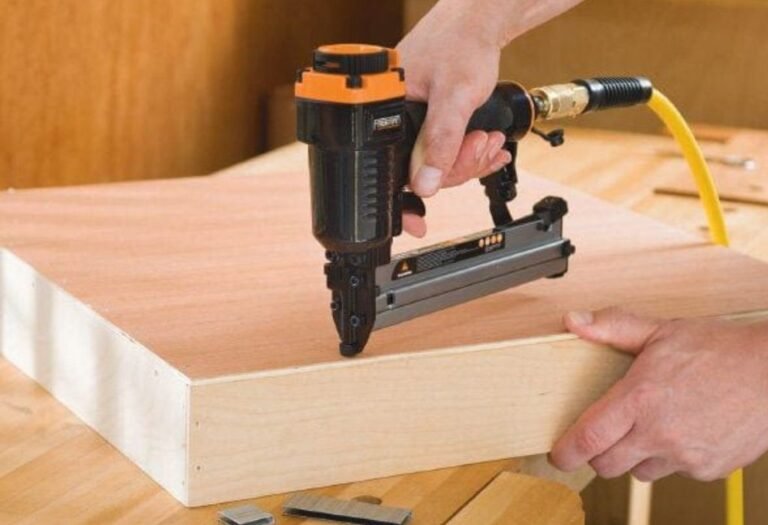
- Pneumatic Nail Guns (Compressed Air): These are very common and reliable. They connect to an air compressor via a hose and use compressed air to drive nails. They’re powerful, consistent, and well-suited for heavy-duty tasks.
Pneumatic nail guns are known for their strong performance and reliability. They’re especially useful for jobs that require prolonged use, such as construction framing. The need for an air compressor does make them less mobile than other options. They offer a good balance of power and efficiency, which is a great benefit for construction workers and dedicated DIYers. Regular maintenance, such as oiling the tool, is important to ensure smooth operation and to extend the life of the nail gun.
-
- Electric Nail Guns: Electric nail guns use electricity to power their mechanism. They can be corded or cordless. Corded models offer constant power, while cordless versions provide great portability. They are a good choice for those who want less setup hassle than with a pneumatic model.
Electric nail guns provide a practical, easy-to-use alternative. They remove the need for an air compressor, making them a great option for smaller projects and environments where an air compressor is impractical. Corded models offer dependable power, while cordless ones provide greater mobility. Electric nail guns are a good choice for beginners and DIY enthusiasts, with their ease of use and often simpler maintenance needs. They’re a valuable addition to any workshop.
-
- Gas-Powered Nail Guns: Gas-powered nail guns use a combination of fuel and battery power. The battery provides the spark for ignition, and the fuel provides the power to drive the nail. They are extremely portable and well-suited for tasks that require going off the grid, without a power outlet or air compressor.
Gas-powered nail guns offer the highest level of portability and are ideal for situations where access to electricity or compressed air is limited. They are often utilized in outdoor construction sites or for remote projects. They can be more expensive than other types and require the purchase of fuel cartridges. Despite the added cost, their mobility and power make them a choice for professionals and serious DIYers.
Safety First Nail Gun Operation
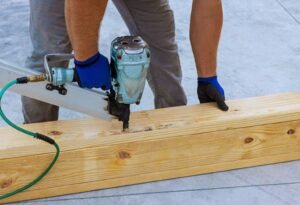
Using a nail gun can be very dangerous if proper safety measures aren’t followed. Before using any nail gun, it’s critical to understand and adhere to the safety guidelines. Neglecting safety can lead to severe injuries, ranging from minor scrapes to critical eye injuries. By keeping safety at the forefront, users can reduce the risk of accidents and ensure that they can work safely and efficiently. Always read the manufacturer’s manual and follow all suggested procedures, and wear suitable protective gear. Remember, a safe work environment is a productive work environment.
Essential Safety Gear
Protecting yourself with the correct gear is vital when working with a nail gun. Simple precautions such as wearing eye protection and appropriate clothing can substantially reduce the risk of injury. Taking the time to acquire and use the correct safety equipment is an easy step that will keep you safe on the job. Safety should always be your top priority, whether you’re a professional or a DIY enthusiast. Below are the basics of safety gear for nail gun use.
-
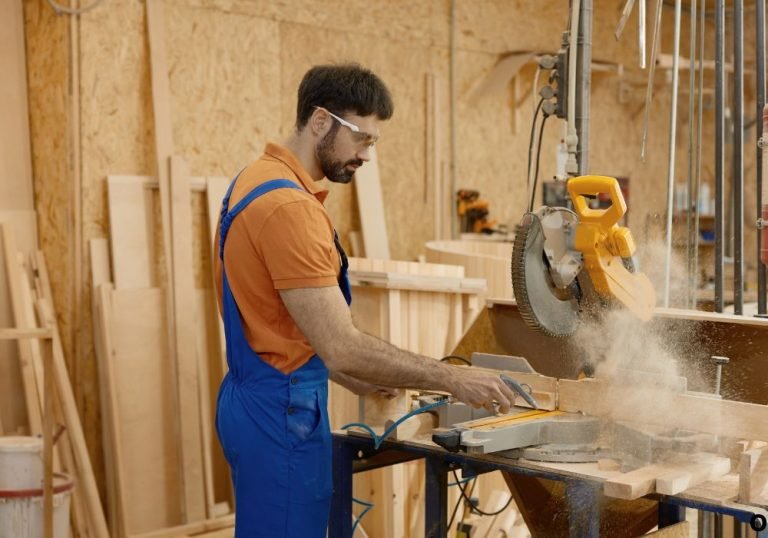
- Eye Protection: Always wear safety glasses or goggles. Nails can be propelled at high speeds, and debris can easily cause serious eye injuries.
Eye protection is a must-have when using a nail gun. Shattered wood or errant nails can cause permanent eye damage, making safety glasses or goggles essential. It’s best to choose eyewear that meets safety standards. Make sure your eye protection is appropriate for the job and offers complete coverage. Wearing eye protection can make a big difference in preventing injuries.
-
- Hearing Protection: Nail guns can be very loud, so ear protection is recommended, especially during prolonged use. This helps prevent hearing damage.
Hearing protection is important when using nail guns because they can create very loud noises, potentially causing hearing damage over time. Hearing protection can range from simple earplugs to more advanced earmuffs, based on the job. Wearing protection is important for your hearing health. If you are doing several projects, make sure to consider your hearing health over time.
-
- Work Gloves: Gloves help you get a good grip on the tool and protect your hands from accidental impacts or splinters.
Work gloves are important for maintaining a good grip on the nail gun and guarding against splinters or abrasions. Choose gloves that are snug and offer good dexterity. Proper gloves will provide comfort and protection, allowing you to focus on the task at hand. The right gloves can improve comfort and safety.
-
- Proper Attire: Avoid loose clothing, jewelry, or anything that could get caught in the nail gun or on the material you are working with.
Wear clothing that is fit for the job and doesn’t impede your movement. Avoid loose clothing, dangling jewelry, and scarves that could get snagged on the tool or workpieces. Proper attire also includes closed-toe shoes to protect your feet from falling objects or accidental nail discharges. Safe attire allows you to work without distractions and reduces the likelihood of accidents.
Safe Operating Techniques
Operating a nail gun safely involves more than just wearing protective gear; it also requires knowing the correct techniques and adhering to safe practices. The way you handle the tool can dramatically reduce the risk of an accident. Using these techniques and following standard safety protocols, you’ll be able to improve your safety while completing your project.
-
- Keep the Trigger Locked When Not in Use: Most nail guns have a safety mechanism that prevents accidental firing when the trigger is not engaged.
Most nail guns have a trigger lock that you should always use when the tool is not in active use. This prevents unintended nail discharge if the trigger is bumped or accidentally pressed. Ensure the nail gun is unplugged or the air supply is disconnected when performing maintenance, clearing jams, or moving the tool from one place to another. Proper trigger use is a good safety habit.
-
- Never Point the Nail Gun at Yourself or Others: This should be obvious, but it is one of the most important rules. Always be aware of where the muzzle is pointed.
Never point a nail gun at any part of your body or at anyone else. This is a basic safety rule that is meant to prevent accidental injuries. This is even more important when clearing a jam or adjusting the gun. Always be aware of the position of the nail gun and of the people around you to prevent injuries. Safe handling is critical to safe use.
-
- Use the Correct Angle and Pressure: Use the right angle and pressure to drive nails straight and prevent them from ricocheting or misfiring.
Using the proper angle and pressure is important for safe and effective nail gun operation. Always place the nail gun perpendicular to the work surface to ensure the nails drive straight. Use the right amount of pressure to ensure the nails are driven flush or to the desired depth. Incorrect angle or pressure can lead to nails that misfire, ricochet, or fail to secure the material properly. Adjust your technique based on the type of material and nail being used to get the best results.
-
- Disconnect the Power Source Before Maintenance: Always disconnect the power supply (unplug the tool or detach the air hose) before performing any maintenance or clearing jams.
Before doing any maintenance or cleaning, always disconnect the nail gun from its power source to avoid unintentional firing. Clearing a jam or performing maintenance with the tool powered on can result in serious injuries. This is a safety precaution that prevents unexpected nail discharge. Routine maintenance, such as clearing jams or cleaning the tool, is easier and safer when the power is off.
Nail Gun Applications
Nail guns are essential for many tasks, improving efficiency and results. The correct nail gun can make tasks faster, more accurate, and less tiring. They are useful for both professionals and DIY enthusiasts. Nail guns have different uses across a range of applications, from framing and finishing to more specialized tasks.
Construction and Framing
Nail guns are invaluable in construction, with the framing nailer being the cornerstone of many building projects. The speed and power that nail guns provide are a significant benefit for constructing walls, floors, and roofs. They improve the speed of the construction process. This improves construction efficiency and reduces the total time required for building.
-
- Framing Walls: Driving nails quickly and accurately into studs, plates, and headers to build the framework of a building.
Framing nailers make it possible to quickly and effectively build the skeletal framework of buildings. These tools can drive nails accurately into the lumber, significantly improving the building process. The speed of framing nailers is a great benefit in large construction projects. Proper nail gun use ensures that all framing elements are secured for a long-lasting and safe structure.
-
- Building Roofs: Fastening rafters, trusses, and sheathing to create a strong and secure roof structure.
Framing nailers are important in building roofs, where precise fastening of rafters, trusses, and sheathing is needed to ensure structural strength. The nail gun’s ability to quickly secure these parts makes the roofing process faster and improves efficiency. Careful nail gun operation is crucial in the building process for roofs that can withstand weather conditions.
-
- Installing Subfloors: Securing plywood or OSB subflooring to floor joists for a solid base for flooring materials.
Nail guns make subfloor installation faster and more effective. Using a nail gun to fasten the subfloor to the floor joists improves construction. The nail gun’s efficiency and accuracy ensure a solid and stable base for further flooring materials, improving the building process. Proper use of the nail gun is essential for creating a smooth and even surface.
Carpentry and Finishing
Carpentry and finishing jobs require precision and finesse, and that is where finish and brad nailers shine. They are used for attaching trim, molding, and decorative elements. These tools let professionals and DIY enthusiasts create clean, professional finishes. They increase the speed of work and improve overall quality in a range of carpentry and finishing applications.
-
- Installing Trim: Attaching baseboards, crown molding, and other decorative trim pieces with precision.
Finish and brad nailers are essential for attaching baseboards, crown molding, and other decorative trim. They provide a precise and clean finish and leave minimal nail holes. This ensures an expert-looking result. When installing trim, using the correct nail size and depth setting can keep the trim snug and ensure the finish is clean and professional.
-
- Building Cabinets and Furniture: Assembling cabinet frames, drawers, and other furniture components with accuracy.
Nail guns are ideal for building cabinets and furniture, where accuracy and a neat appearance are important. Finish nailers and brad nailers are often used to put together cabinet frames, drawers, and other furniture components with precision. The speed and accuracy of the nail gun helps reduce assembly time and improve quality. Careful nail gun operation ensures that the final result is attractive and long-lasting.
-
- Installing Doors and Windows: Securing door and window frames to the wall studs, ensuring proper alignment and stability.
Nail guns are a crucial tool when installing doors and windows, used to secure frames. The accuracy of a nail gun helps get proper alignment, while its speed helps speed up the process. A strong connection is key to keeping the doors and windows secure and safe. Always check for proper fitting and use the right size of nails to prevent problems.
DIY Projects
Nail guns are helpful tools for DIY enthusiasts, allowing them to complete a wide array of projects more efficiently and with greater accuracy. From building simple woodworking projects to doing home renovations, nail guns provide speed and effectiveness. The ability to use the right nail gun for the job makes DIY projects easier and more rewarding.
-
- Building a Deck: Securing deck boards to the joists for a durable and visually appealing outdoor space.
Nail guns are a perfect tool for building a deck, letting users secure deck boards to the joists quickly and accurately. This tool ensures that the deck boards are properly attached. Proper nail gun use makes for a strong and visually appealing outdoor space. Careful selection of the nail size, type, and angle will help create a deck that’s both functional and long-lasting.
-
- Crafting Picture Frames: Assembling picture frames with precision and ease.
Brad nailers are great for assembling picture frames because they can drive small nails precisely. This makes creating picture frames easier and produces clean results. The ability to use the right nails for each project ensures the frames are strong. By using a brad nailer, DIYers can improve their crafting and produce beautiful pieces.
-
- Repairing Furniture: Fixing loose joints or damaged components in furniture.
Nail guns can be useful for repairing furniture. They are especially useful for fixing loose joints or damaged components. This tool makes it easier to repair furniture and fix issues to restore functionality. When repairing furniture, selecting the correct nail size and type is important for maintaining the piece’s look and functionality. Using a nail gun helps extend the lifespan of furniture.
Nail Gun Examples in Action
-
- Building a Shed: Imagine you’re building a small storage shed in your backyard. You’ll need to frame the walls, attach the roof sheathing, and install siding. A framing nailer will be your best friend. With its power and speed, you can quickly frame the walls using 2x4s and 2x6s, ensuring the shed is structurally sound. You can then use the same nailer to secure the roof sheathing, creating a weather-resistant barrier. Finally, a finish nailer can be used to install trim around the doors and windows.
Building a shed from start to finish is a great project to practice your nail gun skills. Use your safety gear! The nail gun helps speed up the construction process. Selecting the right nail size and tool makes the shed safe and long-lasting.
-
- Installing New Kitchen Cabinets: Suppose you’re renovating your kitchen, and part of the project includes installing new kitchen cabinets. First, you’ll need to mount the cabinet boxes to the walls. A framing nailer is the tool for this job, allowing you to secure the cabinets to the studs with ease. Next, you’ll install the cabinet doors and drawers. A finish nailer is ideal for this task, as it will drive small, precise nails, creating a clean finish. You can then use a brad nailer to attach any decorative trim or moldings.
Doing a kitchen renovation will show you how versatile nail guns are. Select the right nail gun for each task, such as framing, finishing, and detail work. Safety gear is essential for this project!
| Feature | Pneumatic Nail Gun | Electric Nail Gun |
|---|---|---|
| Power Source | Compressed air from an air compressor | Electricity (corded or cordless) |
| Portability | Limited by air hose length and the need for an air compressor | Good, particularly with cordless models |
| Power | High; suitable for heavy-duty tasks | Variable; good for lighter to medium-duty tasks |
| Maintenance | Requires regular lubrication | Generally lower maintenance |
| Cost | Lower initial cost, but requires an air compressor | Higher initial cost, but no compressor needed |
Frequently Asked Questions
Question: What is the main difference between a framing nailer and a finish nailer?
Answer: Framing nailers are designed for heavy-duty construction tasks such as framing walls and roofs, using larger nails. Finish nailers are used for more delicate tasks, like trim work, and use smaller nails.
Question: Can I use a nail gun for any type of woodworking project?
Answer: Yes, but the key is to choose the right type of nail gun for the job. Consider the size of the nails needed, the precision required, and the type of wood.
Question: How often should I lubricate my pneumatic nail gun?
Answer: Follow the manufacturer’s instructions, but as a general rule, lubricate your pneumatic nail gun before each use to keep it functioning smoothly and prevent damage.
Question: Are cordless nail guns as powerful as pneumatic nail guns?
Answer: Cordless nail guns have improved greatly, and some offer similar power to pneumatic models, especially those using a gas-powered mechanism. However, they may not be as suitable for continuous, heavy-duty use as pneumatic nail guns.
Question: What safety precautions should I take when using a nail gun?
Answer: Always wear safety glasses or goggles, ear protection, and appropriate work gloves. Never point the nail gun at yourself or others, and always disconnect the power source before performing maintenance.
Final Thoughts
A nail gun is an important tool, and mastering its use can transform your approach to carpentry, construction, and DIY projects. From framing a house to adding the final touches to a piece of furniture, nail guns provide speed, accuracy, and efficiency. They are available in various types, each suited for specific tasks, power sources, and nail sizes. Whether you’re opting for the power of a pneumatic model, the convenience of an electric one, or the mobility of a gas-powered tool, the key to success is understanding your project requirements. Prioritize safety by wearing the correct gear and following operating techniques. With the right nail gun and a commitment to safety, you’ll be prepared to tackle any project with confidence.

I’m Michael R. Turner, the founder, lead writer, and passionate DIY enthusiast behind 101diytools.com. With years of hands-on experience in home improvement and power tools, I built this platform to share practical tips, in-depth guides, and honest reviews to help DIYers of all skill levels tackle projects with confidence and the right tools.