What Are the Parts of a Circular Saw and Their Uses
You press the trigger, and within seconds, a high-pitched hum fills the air as the spinning blade slices cleanly through a wooden board. The motion feels effortless, but behind that smooth cut lies a network of powerful and precisely engineered parts working together in perfect sync. From the motor that drives the blade to the guard that keeps you safe, every component inside a circular saw has a specific purpose.
For many beginners, a circular saw looks like a simple cutting tool. But when you take a closer look, you realize it’s a combination of mechanical balance, electrical energy, and safety design — all working to turn raw power into accuracy. Understanding the individual parts of a circular saw not only helps you use it more efficiently but also improves your ability to maintain, troubleshoot, and explain how it works.
In this detailed guide, we’ll break down what the main parts of a circular saw are and how they function. You’ll learn the role of each component — from the motor and blade to the handle, guard, and bevel adjustment — and see how they all come together to create one of the most effective cutting machines ever built.
1. Motor

The motor is the powerhouse of the circular saw. It’s responsible for converting electrical energy into mechanical motion, which spins the blade at extremely high speeds. Depending on the model, circular saws come with either a corded electric motor or a battery-powered (cordless) motor.
There are two main motor configurations:
- Sidewinder (Direct-Drive) Motor:
In this design, the motor is positioned directly beside the blade, creating a compact and lightweight tool. It delivers high rotational speed (RPM), making it ideal for quick, clean cuts in wood and general materials. - Worm-Drive Motor:
Here, the motor sits behind the blade and uses gears to transfer power at a right angle. This setup produces more torque, which is essential for cutting thick, dense materials like hardwood or beams.
A good motor ensures smooth cutting performance, consistent speed, and long-term reliability. Proper maintenance — such as keeping vents clear and avoiding overload — helps extend its life and prevents overheating.
2. Blade
The blade is the most visible and vital part of a circular saw. It determines what materials you can cut, how smooth the cut will be, and how efficiently the saw operates.
Key Features of a Circular Saw Blade:
- Shape and Design: A flat, round metal disc with sharp teeth around the edge.
- Tooth Count: Fewer teeth (e.g., 24T) cut faster but rougher; more teeth (e.g., 60T or 80T) produce smoother finishes.
- Material Composition:
- High-Speed Steel (HSS) – Durable, general-purpose blades for wood.
- Carbide-Tipped – Stay sharp longer and suitable for wood, metal, or plastic.
- Diamond-Tipped – Designed for cutting masonry, tile, and concrete.
- High-Speed Steel (HSS) – Durable, general-purpose blades for wood.
- Rotation Speed: Usually between 3,000 and 6,000 RPM, depending on the saw type and power.
Choosing the right blade depends on the project. For example, woodworking requires a fine-tooth blade, while framing or demolition may need a coarse, aggressive blade. Always ensure the blade is clean, sharp, and securely attached for safe and accurate cutting.
3. Arbor
The arbor (sometimes called the spindle or shaft) is the metal rod that holds the blade in place and transfers the motor’s power directly to it. When the motor spins, the arbor rotates, causing the blade to spin at the same speed.
Functions of the Arbor:
- Blade Mounting: The arbor secures the blade using an arbor nut and washer to prevent wobbling or slipping.
- Power Transfer: It connects the motor’s rotational force to the blade, ensuring smooth, even cutting.
- Alignment Stability: A properly aligned arbor keeps the blade straight and balanced, reducing vibration and ensuring precise cuts.
Most standard circular saws use a 5/8-inch arbor, though heavy-duty or industrial saws may have larger sizes. Regular inspection of the arbor nut and washer is important — if these components loosen, the blade can vibrate, leading to rough cuts or potential safety hazards.
4. Base Plate (or Shoe)
The base plate, also known as the shoe, is the flat metal or aluminum platform that rests on the surface of the material you are cutting. It plays a crucial role in stability, accuracy, and control during operation.
Functions of the Base Plate:
- Support and Balance: It ensures the saw remains steady and aligned while moving across the work surface.
- Guiding the Cut: The flat design allows users to follow straight or angled lines smoothly.
- Depth Adjustment: The base plate can be raised or lowered to control how deep the blade cuts into the material.
- Bevel Adjustment: Many saws allow the plate to tilt (usually up to 45°) for making angled or bevel cuts.
The base plate often has measurement markings etched or stamped into it, helping users maintain accurate cutting depth and alignment. A clean, flat base plate ensures precision and prevents the saw from wobbling during use.
5. Blade Guard
The blade guard is one of the most important safety features of a circular saw. It shields the user from direct contact with the spinning blade and automatically adjusts during operation.
Types of Blade Guards:
- Upper Guard: Fixed in place, covering the top portion of the blade to protect the motor and user from debris.
- Lower Guard: A spring-loaded cover that retracts automatically when the saw touches the material and returns to its position once the cut is finished.
Functions:
- Prevents accidental contact with the moving blade.
- Shields against flying chips, sawdust, and sparks.
- Helps guide airflow and dust away from the user.
Modern circular saws also include a manual guard lever, allowing users to retract the guard manually for plunge cuts or specialty work. However, the guard should never be removed or disabled, as it’s a vital safety mechanism that prevents serious injury.
6. Handle and Trigger Switch
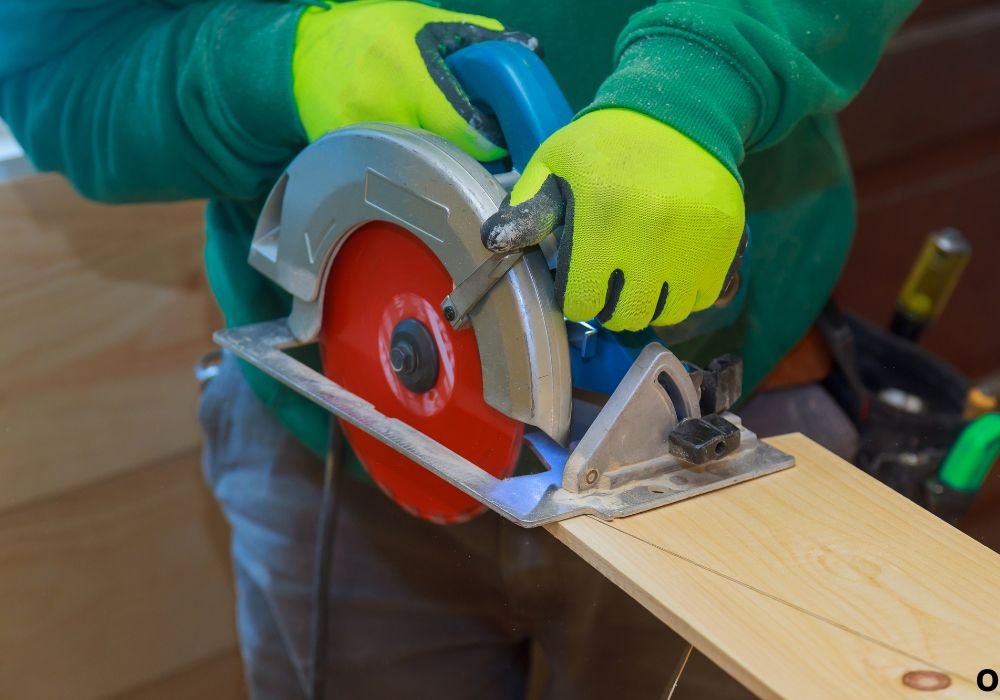
The handle and trigger switch are the main control components of a circular saw. Together, they determine how comfortably and safely the saw can be operated.
Handle Types:
- Rear Handle: Located at the back of the saw for strong, steady control.
- Front Handle (Auxiliary Handle): Positioned near the blade for additional grip and precision.
Most modern saws are ergonomically designed, featuring rubberized grips that reduce vibration and hand fatigue during long cutting sessions.
Trigger Switch Functions:
- Power Control: Activates the motor when pressed.
- Safety Lock: Prevents the saw from starting accidentally.
- Variable Speed Control (on some models): Allows users to adjust blade speed based on material type.
A secure grip on both handles ensures smoother, safer cuts — especially when cutting large or dense materials. Proper handling also reduces kickback and improves accuracy.
7. Depth Adjustment Lever
The depth adjustment lever allows the user to control how deep the circular saw blade cuts into the material. It’s a small but essential component that affects both cutting precision and safety.
Functions of the Depth Adjustment Lever:
- Controls Blade Depth: Adjusts how far the blade extends below the base plate.
- Improves Efficiency: Prevents the blade from cutting deeper than necessary, reducing friction and motor strain.
- Enhances Safety: A properly set depth reduces kickback and helps maintain control of the saw.
Recommended Setting:
For most cuts, the blade should extend about 1/4 inch (6 mm) below the bottom of the material. This ensures a clean, efficient cut without overexerting the saw.
To adjust it, loosen the lever, move the base plate up or down to the desired depth, and then re-tighten it. Keeping this setting accurate helps the saw perform smoother, cleaner cuts and increases blade life.
8. Bevel Adjustment Knob
The bevel adjustment knob enables the circular saw to make angled cuts rather than straight, 90-degree cuts. It tilts the base plate relative to the blade, usually allowing cuts up to 45 degrees.
Functions of the Bevel Adjustment Knob:
- Angle Adjustment: Sets the desired bevel angle for tasks like joining boards or cutting decorative edges.
- Locking Mechanism: Secures the base plate once the correct angle is set.
- Precision Cutting: Helps create tight-fitting joints and smooth angled cuts for framing or carpentry work.
Common Bevel Angles:
- 0°: Standard straight cut.
- 15°–30°: Used for moderate bevels or furniture joints.
- 45°: Common for trim work, miters, and detailed wood projects.
Accurate bevel adjustment ensures professional-quality results and helps the saw cut evenly without binding.
9. Power Cord or Battery Pack
The power source of a circular saw determines how it runs and where it can be used. Circular saws come in two main types — corded and cordless — each with specific advantages.
Corded Circular Saw:
- Power Source: Plugs directly into an electrical outlet.
- Benefits: Provides consistent, high power and unlimited runtime.
- Drawbacks: Limited mobility due to cord length and power source dependency.
- Best For: Heavy-duty, long-duration tasks such as framing, flooring, or cutting thick materials.
Cordless Circular Saw:
- Power Source: Rechargeable lithium-ion batteries (usually 18V or 20V).
- Benefits: Portable, flexible, and easy to use in areas without electricity.
- Drawbacks: Limited battery life and slightly lower torque than corded models.
- Best For: Quick jobs, DIY projects, and outdoor cutting tasks.
Whether corded or cordless, the power source delivers the electrical energy needed to drive the motor and spin the blade. Regularly check cords for damage and keep batteries charged to ensure steady performance.
10. Gears and Drive System
The gears and drive system are responsible for transferring the motor’s rotational power to the saw blade. This system determines the saw’s cutting strength, speed, and torque — the three key factors that define its performance.
Types of Drive Systems:
- Direct Drive (Sidewinder):
- The motor connects directly to the blade’s arbor.
- Offers higher RPM (faster blade speed).
- Ideal for light- to medium-duty work like trimming, panel cutting, and general carpentry.
- The motor connects directly to the blade’s arbor.
- Worm Drive:
- Uses a set of spiral gears to transfer power at a right angle between the motor and blade.
- Produces greater torque, allowing it to cut through dense or thick materials with ease.
- Common in professional construction work where power and durability are essential.
- Uses a set of spiral gears to transfer power at a right angle between the motor and blade.
- Hypoid Drive:
- Similar to a worm drive but uses different gear shapes that run quieter and require less maintenance.
- Often found in heavy-duty circular saws used for framing or masonry work.
- Similar to a worm drive but uses different gear shapes that run quieter and require less maintenance.
Function:
The drive system balances speed and power. While sidewinders prioritize speed, worm drives focus on torque. The right gear setup ensures efficient cutting and reduces strain on the motor during long or tough jobs.
11. Guard Lever or Release Handle
The guard lever or release handle is a small, user-controlled lever that helps manually retract the lower blade guard when making specific cuts. Although the guard usually moves automatically, this lever provides manual control when needed.
Functions of the Guard Lever:
- Manual Retraction: Allows users to lift the guard when starting plunge cuts (cuts that start in the middle of a board).
- Improved Visibility: Provides a clearer view of the blade and cutting line.
- Precision Work: Essential for controlled, custom cuts or angled starts.
When using this lever, it’s important to maintain a firm grip and never remove the guard entirely. The lever is designed to assist — not replace — the automatic safety mechanism.
12. Auxiliary Handle (Front Handle)
The auxiliary handle, also known as the front handle, is located near the blade housing. It provides an additional grip point, allowing the user to guide the saw with both hands for better balance, accuracy, and control.
Functions and Benefits:
- Two-Handed Control: Distributes pressure evenly across the tool, minimizing fatigue.
- Improved Accuracy: Keeps the saw aligned along the cutting line.
- Stability in Heavy Cuts: Especially useful when cutting large panels, plywood sheets, or hardwood.
Design Features:
Most auxiliary handles are ergonomically designed with non-slip rubber grips that absorb vibration and ensure a comfortable hold during long cutting sessions.
Holding both the main and auxiliary handles helps you maintain control, especially when cutting tougher materials or using the saw at an angle.
13. Shoe Scale / Measurement Markings
The shoe scale, also called measurement markings, is a built-in guide on the base plate (shoe) of the circular saw. It helps users make precise cuts without needing a separate measuring tool. These markings are especially useful for professionals who require speed and consistency on job sites.
Functions of the Shoe Scale:
- Guided Cutting: Aligns the saw blade perfectly with the desired cutting line.
- Depth and Angle Indicators: Helps users measure and adjust cutting depth or bevel angle quickly.
- Accuracy and Efficiency: Reduces the need for repeated measurements, improving workflow speed.
Design Features:
The markings are usually etched or stamped on the metal base plate and may include both imperial (inches) and metric (millimeters) scales. Some high-end models also include laser guides or LED indicators that enhance cutting precision.
Keeping the shoe scale clean and visible is essential for maintaining accuracy during repeated cuts.
14. Exhaust and Cooling Vents
The exhaust and cooling vents are designed to regulate temperature and airflow within the circular saw’s motor housing. These openings prevent the motor from overheating during continuous use and help remove sawdust from the interior.
Functions of Cooling and Exhaust Vents:
- Heat Dissipation: Channels hot air away from the motor and electrical components.
- Dust Management: Expels sawdust and debris to prevent internal buildup.
- Motor Protection: Keeps vital parts cool and prolongs overall tool life.
Maintenance Tip:
Always keep the vents free of dust and obstructions. Blocked airflow can cause the motor to overheat, resulting in reduced performance or even damage. Using compressed air to clean these vents after each use helps maintain efficiency and extends the saw’s lifespan.
15. Safety Features
Modern circular saws are equipped with multiple safety mechanisms that protect users from injury and make operation smoother. These features are engineered to minimize risks such as kickback, accidental starts, or blade exposure.
Key Safety Features Include:
- Electric Brake: Instantly stops the blade within seconds after releasing the trigger. This reduces the risk of accidents and allows for faster workflow.
- Safety Lock Button: Prevents the saw from being activated unintentionally. The trigger must be pressed in combination with the safety button to power the tool.
- Anti-Kickback Design: Minimizes the backward force that can occur if the blade binds or pinches during a cut.
- Blade Guard System: Covers the blade automatically when not in use, preventing accidental contact.
- Ergonomic Handles: Provide a secure grip and reduce vibration, keeping the user stable and comfortable during operation.
Frequently Asked Questions (FAQs) About Circular Saw Parts
1. What are the main parts of a circular saw?
The main parts include the motor, blade, arbor, base plate, blade guard, handle, trigger switch, depth and bevel adjustment levers, gears, and safety features.
2. What does the motor do in a circular saw?
The motor converts electrical energy into mechanical energy, spinning the blade at high speed to make clean, precise cuts through various materials.
3. What is the purpose of the blade guard?
The blade guard covers the saw blade when not in use and retracts automatically during cutting. It protects the user from direct contact with the blade and prevents debris from flying out.
4. What is the base plate on a circular saw?
The base plate, or shoe, keeps the saw stable on the material’s surface. It helps guide straight cuts and allows for depth and bevel angle adjustments.
5. What does the arbor do?
The arbor (or spindle) holds the blade securely in place and transfers the motor’s rotational energy to spin the blade efficiently.
6. What is the function of the depth adjustment lever?
It allows you to control how deep the blade cuts into the material. Setting the correct depth improves safety and cutting performance.
7. How does the bevel adjustment work?
The bevel adjustment tilts the base plate, allowing the saw to make angled cuts — usually up to 45 degrees — for joints and trim work.
8. What is the difference between a worm drive and a sidewinder saw?
A worm drive saw uses gears to produce more torque for heavy-duty work, while a sidewinder saw connects the blade directly to the motor for faster blade speed and lighter handling.
9. What kind of blades can be used with a circular saw?
Blades come in types such as carbide-tipped, high-speed steel (HSS), diamond-tipped, and abrasive blades, each suited for cutting wood, metal, plastic, or masonry.
10. How does the electric brake improve safety?
The electric brake quickly stops the blade when you release the trigger, reducing the risk of injury and allowing for quicker handling between cuts.
11. What are the vents for on a circular saw?
Cooling and exhaust vents release heat and dust from the motor housing, preventing overheating and maintaining consistent performance.
12. What is the purpose of the auxiliary handle?
The auxiliary handle provides an additional grip for two-handed operation, increasing control, balance, and precision while cutting.
13. How does the guard lever help in cutting?
The guard lever allows manual retraction of the blade guard for plunge cuts or tight spaces where automatic retraction might be restricted.
14. Why is it important to understand circular saw parts?
Knowing each part helps you use the tool safely, maintain it properly, diagnose problems, and make more accurate and controlled cuts.
15. How often should I clean and maintain my circular saw?
After each use, clean the saw, check the blade, and remove dust from vents and guards. Perform deeper maintenance monthly to ensure smooth performance and longer lifespan.
Conclusion
A circular saw may look like a simple cutting tool, but inside it lies a carefully engineered system of interconnected parts — each with a specific function that contributes to power, precision, and safety. From the motor and blade that drive the cutting force, to the base plate and handles that guide control, and the safety guards and cooling vents that ensure smooth operation, every component works in harmony to create one of the most efficient tools ever made.
Understanding the parts of a circular saw is not only useful for operating it correctly but also for maintaining it safely. When you know how each part functions, you can troubleshoot issues faster, choose the right blades, and extend your tool’s lifespan with proper care.
Whether you’re a professional woodworker or a DIY enthusiast, mastering the anatomy of your circular saw will help you make cleaner, faster, and safer cuts every single time. Knowledge of these components transforms you from simply using the tool to truly understanding the technology behind it.

I’m Michael R. Turner, the founder, lead writer, and passionate DIY enthusiast behind 101diytools.com. With years of hands-on experience in home improvement and power tools, I built this platform to share practical tips, in-depth guides, and honest reviews to help DIYers of all skill levels tackle projects with confidence and the right tools.