Stop Nail Gun Bent Nails Fix Common Jamming Issues Today
Bent nails are a common culprit behind frustrating nail gun jams, leading to inefficiency and project delays. Understanding why nails bend, often due to improper nail type, worn parts, or user error, is crucial for effective prevention and troubleshooting. By addressing these root causes and performing simple maintenance, you can significantly reduce jamming issues and ensure smooth, reliable operation of your nail gun.
Ever been in the middle of a project, the nail gun humming along, and suddenly – thwack! – a nail bends, jams, or just refuses to go where it’s told? It’s a frustrating moment that can stop your momentum dead in its tracks. You pull the trigger, expect a clean, powerful shot, and instead, you’re left with a crumpled piece of metal and a growing sense of annoyance. Trust me, you’re not alone. This is a common hurdle for many DIY enthusiasts and pros alike.
That annoying sound and the sight of a mangled nail isn’t just a minor inconvenience; it can damage your material, slow down your work, and even lead to safety concerns. Whether you’re building a deck, framing a wall, or tackling a trim job, encountering persistent nail gun bent nails can really test your patience. But here’s the good news: most of these issues are easily diagnosed and, more importantly, easily fixed. You don’t need to be a seasoned pro to understand why your nail gun might be misbehaving.
In this post, we’re going to walk through the common culprits behind nail gun bent nails and provide you with actionable steps to get your tool firing straight and true again. Think of this as your friendly guide to troubleshooting those frustrating jams and bends. By the end, you’ll have a much clearer idea of how to prevent future headaches and ensure your projects run smoothly.
Key Takeaways
- Inspect nails: Use only high-quality, undamaged nails of the correct type.
- Adjust pressure: Optimize air pressure settings for your specific nail gun and material.
- Clean regularly: Perform routine cleaning and lubrication to prevent debris buildup.
- Check driver: Examine the driver blade for wear, bending, or any obstructions.
- Maintain angle: Hold the nail gun firmly and perpendicular to the work surface.
- Clear safely: Safely clear any jams by disconnecting air, then following instructions.
- Replace worn parts: Promptly replace any worn or damaged parts to ensure performance.
📑 Table of Contents
Understanding Why Nail Guns Bend Nails
Before we dive into the fixes, let’s get a handle on why nails decide to defy gravity and bend in the first place. It’s often a combination of factors, but understanding the root cause is the first step to preventing those pesky nail gun bent nails.
The Wrong Nail for the Job
One of the most frequent reasons for a nail bending is simply using the wrong nail for the material or the task at hand. Just like you wouldn’t use a screwdriver to hammer a nail, you shouldn’t use a delicate finish nail for heavy-duty framing. Here’s what to consider:
- Nail Gauge: Thinner nails (higher gauge numbers, like 18-gauge brads) are more prone to bending than thicker nails (lower gauge numbers, like 8-gauge framing nails), especially if they encounter resistance.
- Nail Length: Trying to drive a very long nail into a thin piece of wood, or expecting a short nail to hold two thick pieces together, can lead to bending or improper seating.
- Nail Type: Different nails have different purposes. Ring shank nails offer better holding power but might encounter more resistance than smooth shank nails when penetrating dense materials.
Example: Trying to use 2-inch finish nails to secure thick decking boards will almost certainly result in nail gun bent nails because they lack the strength and length for such an application.
Material Matters
The material you’re nailing into plays a huge role. Wood isn’t always uniform, and unexpected obstacles can cause even the toughest nails to buckle.
- Hardness of Wood: Driving a nail into dense hardwoods like oak or maple requires more force and a sturdier nail than softwoods like pine.
- Knots and Grains: Knots are incredibly dense and can act like miniature concrete blocks for your nail. Hitting one head-on is a surefire way to get a bent nail. Irregular grain patterns can also deflect a nail.
- Hidden Obstacles: Sometimes, the problem isn’t the wood itself but what’s inside it – old nails, screws, metal plates, or even dried concrete from a previous pour.
Tip: Always inspect your material for visible knots or previous fasteners. When working with very hard wood, consider pre-drilling pilot holes for critical nails.
Is Your Nail Gun to Blame? Inspecting Your Tool
Sometimes, the issue isn’t the nail or the material, but the tool itself. A properly functioning nail gun is essential for driving nails straight and preventing nail gun bent nails. Let’s look at what could be going wrong with your trusty tool.
Driver Blade Wear and Tear
Inside your nail gun, there’s a component called the driver blade or piston. This is the part that actually strikes the nail head and pushes it into the material. Over time, especially with heavy use, this blade can wear down, become chipped, or lose its perfect alignment.
- Worn Driver Blade: A worn blade might not strike the nail squarely, causing it to push the nail at an angle, leading to bending.
- Chipped Blade: A chip can create an uneven strike, causing the nail to veer off course.
If you’re noticing a lot of nail gun bent nails and other issues, take a moment to visually inspect the driver blade (with the gun disconnected from power/air, of course!).
Dirty or Damaged Magazine
The magazine is where your nails live before they’re loaded into the firing chamber. If the magazine isn’t feeding nails correctly, it can cause problems.
- Debris: Sawdust, dirt, or small pieces of wood can accumulate in the magazine, obstructing the nails’ path and preventing them from loading smoothly.
- Damage: A bent or damaged magazine track can cause nails to misalign before they even reach the driver blade. If the nails aren’t sitting perfectly straight, they’re much more likely to bend upon impact.
Air Pressure Problems (for Pneumatic Guns)
If you’re using a pneumatic nail gun, air pressure is critical. Both too little and too much can cause issues.
- Too Low Pressure: If the air pressure is too low, the driver blade won’t have enough force to fully sink the nail. The nail might get partially driven and then buckle under the remaining resistance.
- Too High Pressure: While less common for bending, excessively high pressure can sometimes cause nails to over-penetrate, splinter the wood, or even bend if they hit something hard and richochet with too much force.
Always check your compressor’s PSI settings against your nail gun’s recommended operating pressure.
User Error and Technique Troubles
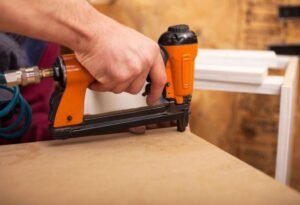
Sometimes, the gun is fine, the nails are right, and the material is clear, but those dreaded nail gun bent nails still appear. This might mean it’s time to look at your technique. Even experienced users can fall into bad habits!
Angle of Attack
This is a big one. For a nail to drive straight, it needs to be struck perfectly perpendicular to the surface you’re nailing into. If you hold the nail gun at an angle, even a slight one, you’re essentially asking the nail to bend as it tries to force its way into the wood.
- Uneven Pressure: Applying uneven pressure to the nose of the gun can tilt it slightly, causing the nail to enter at an angle and quickly deflect.
- Awkward Positions: Working in tight or uncomfortable spaces often leads to holding the nail gun awkwardly, increasing the chances of an angled shot and therefore nail gun bent nails.
Insufficient Workpiece Support
Imagine trying to hammer a nail into a piece of wood that’s floating in mid-air. It would just bounce away, right? While not as extreme, similar principles apply when your workpiece isn’t properly supported.
- Vibration and Movement: If the material you’re nailing into can flex or vibrate, the nail gun’s impact might cause it to shift, leading to a bent or improperly seated nail.
- Splitting Wood: If you’re nailing close to the edge of a board, without proper support or a pilot hole, the wood might split, causing the nail to veer off course.
Rushing the Job
We all want to get the job done quickly, but haste can lead to errors. Rushing your shots or not allowing the nail gun to fully cycle can result in nail gun bent nails.
- Incomplete Cycle: If you lift the nail gun too quickly after firing, the driver blade might not have fully retracted, leading to potential jamming or misfires on the next shot.
- Double Firing: Some bump-fire nail guns can double-fire if held down and moved too quickly, leading to two nails attempting to occupy the same space, often resulting in bent nails.
Practical Fixes for Bent Nails
Alright, now that we’ve pinpointed the common causes of nail gun bent nails, let’s talk solutions. These practical steps will help you get back to efficient, frustration-free nailing.
Choose the Right Nails and Materials
This is perhaps the simplest fix, but it’s often overlooked. Always take a moment to consider the following:
- Match Nail to Material: Ensure the nail gauge and length are appropriate for the thickness and density of the material. Hardwoods require tougher, potentially shorter nails or pre-drilling.
- Inspect Materials: Before nailing, quickly scan your wood for knots, existing fasteners, or obvious defects that could deflect a nail. Plan your shots to avoid these areas.
Here’s a quick reference for common nail types and their ideal uses:
| Nail Type | Common Uses | Potential for Bending (if misused) |
|---|---|---|
| Framing Nails (e.g., 2″-3.5″ full round head) | Framing, Sheathing, Decking | High if used in thin trim or very dense/metal-laden material. |
| Finish Nails (e.g., 1″-2.5″ brads, finish) | Trim, Moldings, Cabinets | High if used in structural applications or very hard/knotted wood without pre-drilling. |
| Roofing Nails (e.g., 1″-1.75″ coil) | Asphalt Shingles, Tar Paper | Low, as they are designed for softer materials; high if driven into structural wood repeatedly. |
| Siding Nails (e.g., 1.5″-2.5″ ring shank) | Siding, Fencing | Moderate if driven into dense knots or misaligned. |
Regular Nail Gun Maintenance
Just like any tool, your nail gun needs a little love to perform its best.
- Clean Your Gun: Regularly clean out the magazine and nosepiece. Dust and debris are common culprits for jams and nail gun bent nails.
- Lubricate: If you have a pneumatic nail gun, ensure you’re adding a few drops of pneumatic tool oil into the air inlet before each use. This keeps the internal components, including the driver blade, moving smoothly.
- Inspect the Driver Blade: Periodically check the driver blade for wear, chips, or damage. Replacing a worn driver blade can make a huge difference in preventing nail gun bent nails.
- Check Air Pressure: For pneumatic guns, always verify your air compressor’s PSI matches the manufacturer’s recommendations for your specific nail gun. Too much or too little can cause issues.
Master Your Technique
Good technique is your best friend in preventing nail gun bent nails.
- Hold it Square: Always strive to hold the nail gun perfectly perpendicular to the surface. Apply firm, even pressure to the nosepiece.
- Support Your Work: Ensure your workpiece is stable and well-supported to minimize movement during firing. Clamps or a solid workbench can make a big difference.
- Patience is Key: Don’t rush. Allow the nail gun to fully cycle after each shot. This means waiting a brief moment for the driver blade to retract before lifting the gun.
When to Seek Professional Help or Replace
While many nail gun bent nails issues can be resolved with DIY fixes, there comes a point when the problem might be beyond simple maintenance. Knowing when to call in the experts or consider a new tool can save you time, money, and a lot of frustration.
Persistent Issues
If you’ve tried all the troubleshooting steps – you’ve checked the nails, inspected the material, cleaned and oiled your gun, and perfected your technique – yet you’re still consistently getting nail gun bent nails, it might indicate a deeper problem. This is especially true if the issue is recurring across different types of nails and materials.
Signs of Major Damage
Sometimes, the signs are more obvious. If you notice any of these, it’s definitely time to get a professional opinion or think about a replacement:
- Visible Damage to Housing: Cracks, significant dents, or breaks in the gun’s housing can affect its internal alignment.
- Severely Damaged Driver Blade: If the driver blade is heavily chipped, bent, or simply doesn’t retract fully, it’s a major functional problem.
- Air Leaks (for Pneumatic Guns): Hissing sounds or a noticeable drop in air pressure from the gun itself (not the compressor hose) can indicate internal seal failures.
- Motor Problems (for Cordless Guns): If your cordless nailer is struggling to build pressure, making unusual grinding noises, or simply not firing with its usual power despite a full battery, the motor or internal mechanism might be failing.
Remember, a professional repair might be cost-effective for a high-end or frequently used tool. However, for older, budget-friendly models, the cost of repair might outweigh the cost of a new, more reliable nail gun.
Conclusion
Dealing with nail gun bent nails can be incredibly frustrating, but as we’ve seen, it’s a common problem with a range of identifiable causes and straightforward solutions. From choosing the right nail for your material to maintaining your tool and refining your technique, each step contributes to smoother, more efficient work. No one wants their project derailed by a stubborn bent nail!
Next time you hear that disheartening thwack, take a breath, and systematically go through these troubleshooting steps. You’ll likely find the culprit and fix it without much fuss. With a little attention to detail and regular maintenance, you’ll be driving nails straight and true, enjoying the satisfaction of a job well done. Happy nailing!
Frequently Asked Questions
Why does my nail gun keep bending nails?
This is a very common issue! It can be caused by several factors, including incorrect air pressure, using the wrong type of nails for the material, or even a worn-out driver blade in your nail gun. Understanding the root cause is the first step to a solution.
What are the most common causes of nail gun bent nails?
The most frequent culprits behind nail gun bent nails include insufficient air pressure, which prevents the nail from being driven fully, and the wood being too hard for the specific nail gauge. Additionally, striking a knot in the wood or using a dull driver blade in your tool can easily cause nails to deflect and bend.
How can I prevent my nail gun from bending nails in the future?
To prevent your nail gun from bending nails, always ensure your air compressor is set to the recommended PSI for your tool and application. Also, select the correct nail gauge and length for the material you are fastening, and make sure your tool’s depth adjustment is properly set. Regular maintenance, like cleaning the nosepiece, can also help.
Can incorrect air pressure lead to nail gun bent nails?
Yes, absolutely. Both too low and too high air pressure can contribute to nail gun bent nails. Low pressure doesn’t provide enough force to drive the nail straight, causing it to buckle, while excessively high pressure can sometimes cause the nail to deflect if it hits dense material too forcefully.
Is there a specific type of nail or material I should use to avoid bent nails?
Using the right nail for the job is crucial to avoid bent nails. Always match the nail gauge and length to the density and type of wood you’re working with, and consider coated nails for better penetration. Harder woods often require thicker gauge nails or those with sharper points to prevent bending upon impact.
My nail gun keeps bending nails, even after checking pressure and nails. What else could be wrong?
If you’ve checked air pressure and nail types and your nail gun still keeps bending nails, the issue might be internal. A worn or damaged driver blade, a dirty nosepiece, or even internal component wear in the nail gun itself could be the problem. Consider a thorough cleaning or professional servicing of your tool.

I’m Michael R. Turner, the founder, lead writer, and passionate DIY enthusiast behind 101diytools.com. With years of hands-on experience in home improvement and power tools, I built this platform to share practical tips, in-depth guides, and honest reviews to help DIYers of all skill levels tackle projects with confidence and the right tools.