How to Make Air Impact Wrench More Powerful
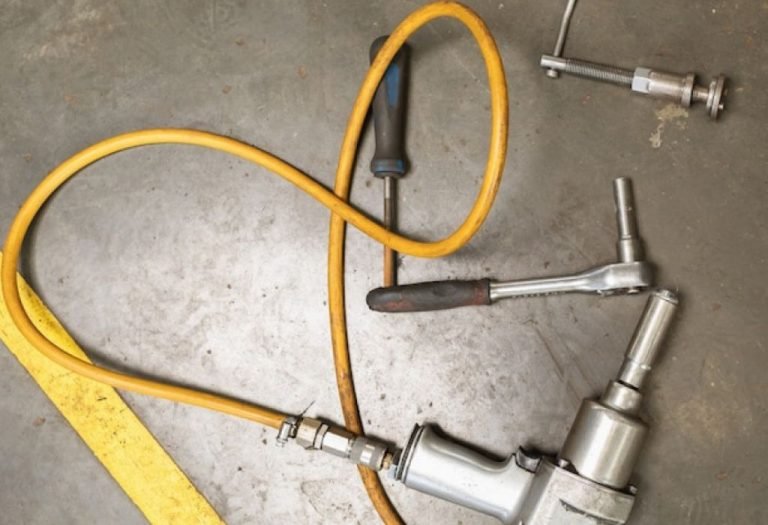
Imagine a moment in the garage when an air impact wrench rattles furiously, yet the stubborn lug nut refuses to budge.
The compressor shows perfect pressure, but the wrench feels weaker than ever. This is one of the most common frustrations faced by both DIY mechanics and professionals.
The truth is that an air impact wrench rarely loses power because of the tool itself. In most cases, it’s the airflow, hose size, pressure regulation, or maintenance habits that secretly steal its strength.
A small drop in pressure or a clogged line can reduce torque by as much as 25–30% source.
Pneumatic tools depend on one simple equation: consistent air volume plus correct pressure equals maximum torque.
When either side of that equation fails, performance drops dramatically. Even a slightly undersized hose or cheap coupler can restrict air supply, cutting torque without warning.
According to Grand View Research, the global pneumatic tools market was valued at over $8 billion in 2023 and continues to grow as professionals favor air-driven efficiency source.
With millions of air tools in use worldwide, maintaining peak performance saves both time and money.
This guide explains exactly how to make an air impact wrench more powerful by improving airflow, optimizing pressure, and maintaining internal parts.
From upgrading hoses and fittings to using the right oil and filters, every detail plays a role in restoring factory-level torque. By following these proven methods, your air impact wrench can hit harder, last longer, and perform like new again.
Understand What Limits Power in an Air Impact Wrench
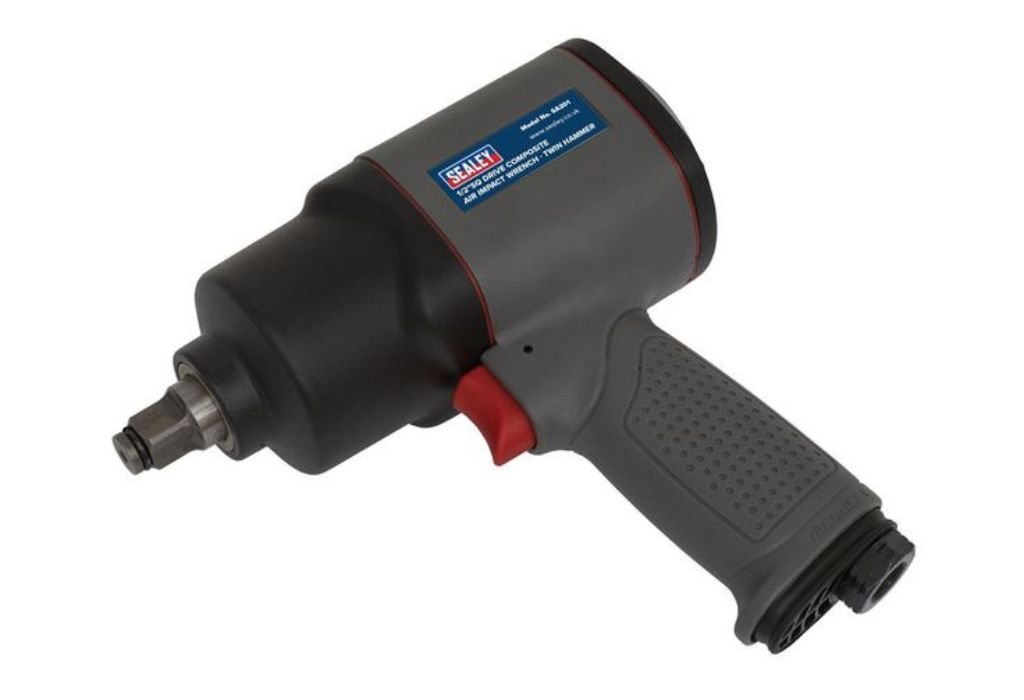
Air impact wrenches rely on airflow, not just pressure. Even with 120 PSI at the tank, torque falls fast if airflow can’t keep up with the tool’s demand.
A dirty filter, narrow fitting, or long hose can drop power without you realizing it. Knowing these hidden limits helps diagnose weak performance.
Why does my air impact wrench feel weak?
Restricted airflow or low CFM delivery causes torque loss.
Does higher PSI always mean more torque?
No, torque plateaus once the tool’s rated pressure is reached.
What causes torque loss over time?
Worn vanes, dirty hammer housing, or dried lubrication.
Is compressor distance important?
Yes, longer hoses cause pressure drop before reaching the tool.
Can improper lubrication reduce torque?
Yes, dry hammer mechanisms create drag inside the wrench.
Verify Compressor Performance First
Before changing anything on the wrench, confirm the compressor can deliver enough air. Many owners focus on PSI but ignore CFM—the real power factor.
A ½″ air impact wrench typically needs around 5–6 CFM at 90 PSI, while heavy-duty models may require 10+ CFM.
What compressor specs matter most?
CFM at 90 PSI and consistent tank recovery rate.
What if the compressor is undersized?
The tool will pulse and lose torque quickly.
Does tank size affect power?
Yes, larger tanks provide stable airflow during bursts.
Can two compressors be linked?
Yes, connecting in parallel boosts total CFM output.
Should pressure be tested under flow?
Yes, run the tool while checking pressure at the outlet gauge.
Optimize Hose Diameter, Length, and Fittings
Airflow restriction in hoses is the most common reason for weak impact performance. Even a short but narrow hose can cut CFM drastically.
Choose at least a ⅜″ hose for medium impacts and a ½″ hose for larger tools.
What hose size is ideal?
⅜″ for most impacts; ½″ for heavy-duty wrenches.
Do longer hoses reduce torque?
Yes, friction in the hose lowers pressure before it reaches the wrench.
Can small couplers choke power?
Yes, replace ¼″ fittings with high-flow quick-connects.
Are quick-connect fittings all equal?
No, internal diameters differ and affect airflow.
Should the regulator be near the tool?
Yes, close placement minimizes loss.
Adjust and Test Regulator Pressure at the Tool
Set the regulator based on the actual pressure reaching the tool—not the compressor gauge. Many setups show 120 PSI at the tank but only 80 PSI at the handle.
Using an inline pressure gauge gives a real reading under load.
How much PSI should reach the tool?
About 90 PSI while the trigger is pressed.
Can 110 PSI improve torque safely?
Slightly, but exceeding 120 PSI risks damaging seals.
Why does the gauge show high pressure yet tool is weak?
Flow restrictions lower working pressure during operation.
Should I use an inline gauge?
Yes, it confirms true working conditions.
How to adjust correctly?
Increase regulator output until 90 PSI is maintained at the tool under load.
Maintain and Lubricate the Impact Wrench
Internal friction kills power faster than most users realize. A dry hammer cage or vanes coated with dust will drop RPM and torque dramatically.
Add 2–3 drops of pneumatic oil into the air inlet before each use and after long storage.
How often should oil be added?
Before every use or daily for frequent work.
What oil type is best?
Use air tool oil—never motor or synthetic engine oil.
Can I use an inline lubricator?
Yes, it ensures consistent lubrication during operation.
Why does dry operation weaken impact?
Friction slows hammer movement and wastes air energy.
Should vanes be replaced periodically?
Yes, worn vanes lower rotational efficiency.
Clean or Replace Air Filters and Lines
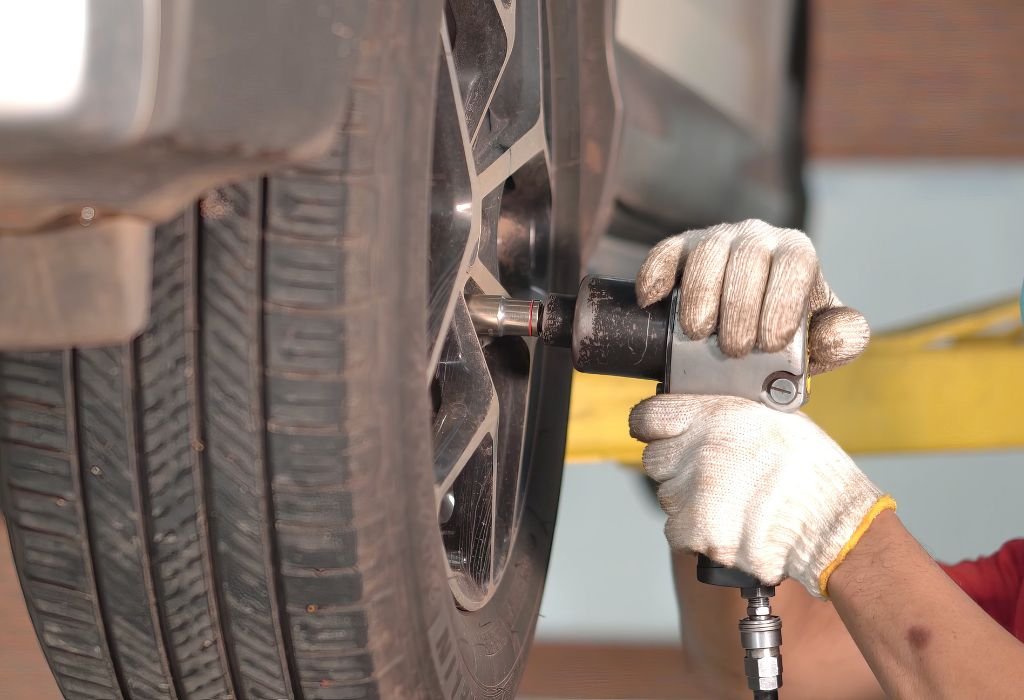
Dirty air filters and oil buildup cause resistance in the airline. Over time, that reduces available CFM and shortens tool life.
Use moisture traps and clean filters monthly for steady airflow.
How often to clean filters?
Every month under heavy use or every season for light users.
Do clogged filters affect torque?
Yes, they restrict airflow to the hammer mechanism.
Should moisture traps be installed?
Yes, to prevent water and rust inside the tool.
Is Teflon tape necessary on joints?
Yes, to prevent micro-leaks in threaded fittings.
When to replace hoses?
Immediately if cracks or leaks are visible.
Use Proper Air Tool Accessories
Cheap fittings and low-grade adapters often cause unseen losses in airflow. Always match accessories to your wrench’s demand.
Avoid thin extensions or non-impact-rated fittings.
Do extensions reduce power?
Yes, longer extensions absorb some impact energy.
Should I use impact-rated fittings?
Yes, they withstand vibration and flow better.
Can universal joints lower torque?
Yes, each joint flexes and reduces transmitted force.
Are swivels and filters useful?
Yes, but choose high-flow models only.
Do torque sticks increase power?
No, they control tightening, not torque output.
Upgrade or Tune the Impact Wrench
Regular internal maintenance restores factory performance. Cleaning and replacing worn parts can revive lost torque.
A rebuild kit from the manufacturer includes seals, vanes, and gaskets for easy restoration.
When should a rebuild be done?
After noticeable drop in RPM or torque.
Can aftermarket vanes boost power?
Yes, if designed to match OEM dimensions.
Is cleaning the hammer mechanism safe?
Yes, if re-lubricated afterward with tool oil.
Are performance-tuned impacts worth it?
For professionals, yes—they deliver higher torque cycles.
Should air grinders share compressor lines?
No, shared use reduces available airflow for the impact wrench.
Check Socket Type and Condition
Old, cracked, or chrome sockets can absorb or reflect the hammer force unevenly. Always use impact-rated sockets designed for pneumatic tools.
A damaged socket also risks injury during operation.
Are chrome sockets safe for impacts?
No, they can shatter under vibration.
Do extensions reduce torque?
Yes, especially flexible or long ones.
Can rusted sockets affect performance?
Yes, friction between bit and nut increases.
How to maintain sockets?
Keep clean and oil lightly after use.
Do thin-wall sockets weaken torque?
They flex slightly and absorb part of the impact.
Improve Compressor Setup for Maximum Output
Fine-tuning the compressor setup can transform performance. Keep hose runs short, connections tight, and regulators set accurately.
Adding an auxiliary tank near the workstation stabilizes air delivery during continuous use.
Should the compressor have a short hose run?
Yes, shorter lines maintain pressure better.
Can a secondary tank help?
Yes, it acts as a pressure buffer for bursts.
Is draining the tank necessary?
Yes, water buildup reduces efficiency and can rust valves.
Do dual outlets improve performance?
Yes, for multitool setups with sufficient CFM.
What line materials are best?
Steel or high-quality rubber hoses outperform PVC.
Diagnose Air Leaks and Pressure Drops
Even tiny air leaks can waste several CFM and cut power noticeably. Regular leak testing ensures consistent performance.
Apply soapy water to joints and observe bubbles to detect leaks.
How to find small leaks?
Spray soapy solution on fittings under pressure.
Do leaks near the handle matter?
Yes, they reduce working pressure immediately.
Should fittings be replaced often?
Annually or when air hissing is heard.
Are T-connectors prone to loss?
Yes, every extra junction lowers efficiency.
Is tape repair a long-term solution?
No, replace worn fittings permanently.
Advanced Tips to Make Air Impact Wrench More Powerful
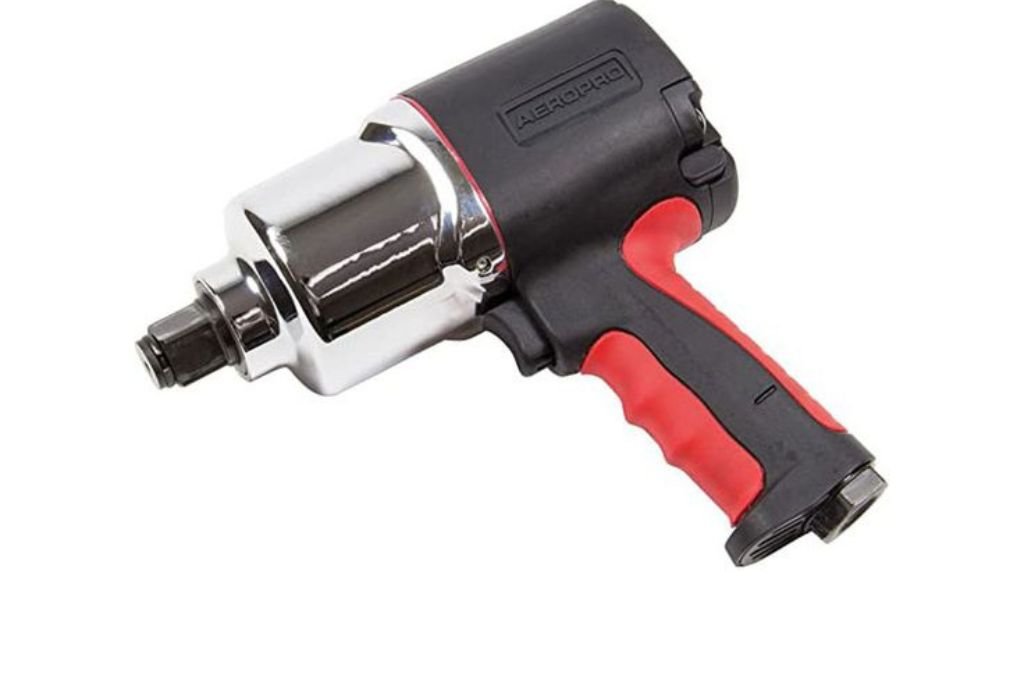
Once airflow and maintenance are optimized, a few tuning habits can add extra punch. Always stay within manufacturer safety limits.
These fine-tuning steps improve torque response and reliability.
Can regulator PSI be slightly increased?
Yes, within safe range (under 120 PSI).
Does warming the tool help?
Yes, short dry runs spread oil and stabilize operation.
Should tools rest between heavy jobs?
Yes, prevents overheating and air starvation.
Is synthetic pneumatic oil better?
Yes, it resists thinning under heat.
What’s the real power formula?
CFM + clean air + correct pressure + proper lubrication = full torque.
Common Mistakes That Reduce Power
Even good tools perform poorly when maintenance and setup are neglected. Avoiding these errors keeps your impact wrench working at peak efficiency.
A few simple corrections can instantly boost torque.
Using hoses that are too small?
Biggest cause of weak power delivery.
Over-oiling the tool?
Causes clogging and sticky vanes.
Skipping filters or dryers?
Leads to corrosion and inconsistent airflow.
Neglecting to drain compressor tanks?
Moisture lowers air quality and power.
Ignoring small leaks?
Constantly wastes air pressure and energy.
Conclusion
Learning how to make an air impact wrench more powerful is not about pushing pressure limits—it’s about efficient airflow and proper care.
By ensuring clean lines, correct hose sizing, and consistent lubrication, you can restore full-rated torque safely. Regular maintenance, upgraded couplers, and leak checks keep the system running at peak efficiency.
When your wrench receives the air it was designed for, it delivers the torque you paid for. Treat it like a precision tool, and it will reward you with years of reliable, powerful service on every project.

I’m Michael R. Turner, the founder, lead writer, and passionate DIY enthusiast behind 101diytools.com. With years of hands-on experience in home improvement and power tools, I built this platform to share practical tips, in-depth guides, and honest reviews to help DIYers of all skill levels tackle projects with confidence and the right tools.