
How to Cut 4×4 with a Circular Saw Safely and Straight
It starts with a simple weekend plan. You’re standing in your backyard with a few 4×4 posts ready for a fence or deck project. The wood looks sturdy, the design is clear in your head, and your circular saw sits on the bench waiting. You switch it on, lower the blade, and begin the cut—only to realize halfway through that it doesn’t slice all the way down. The wood binds, the saw slows, and the once-straight line begins to drift off course.
This is the moment most DIYers realize that cutting a 4×4 isn’t as easy as it looks. The blade depth of a standard circular saw simply can’t reach through the full thickness of the post in a single pass. That doesn’t mean it’s impossible, though—it just means you need the right method, a steady hand, and a bit of patience.
According to woodworking surveys, more than 70% of first-time builders who cut 4×4 posts with a circular saw make uneven or incomplete cuts on their first try. The good news is that this can be easily fixed with proper marking, the right blade, and controlled cutting.
In this guide, you’ll learn exactly how to cut 4×4 posts safely, straight, and efficiently using your circular saw. Whether you’re building a deck, a pergola, or a garden frame, this step-by-step approach will help you get clean, professional-looking results every time.
Understanding Why Cutting 4×4 Posts Is Challenging

A 4×4 piece of lumber measures roughly 3½ by 3½ inches after milling. Most standard circular saws come with a 7¼-inch blade, which only cuts to a maximum depth of about 2½ inches. That means the blade cannot pass through the entire post in one motion.
Because of this limitation, you’ll need to make multiple passes from different sides. This requires accurate marking and alignment to keep the cuts straight and avoid uneven edges.
The thickness of 4×4 wood also increases cutting resistance. The more surface area the blade meets, the higher the friction and chance of binding. A saw with low power or a dull blade will struggle to maintain smooth rotation through the dense fibers.
Wood density is another factor. Pressure-treated lumber, commonly used for outdoor posts, is harder than untreated pine. This extra density makes clean cuts more difficult and wears out blades faster.
Even the weight of the wood can cause problems. A 4×4 is heavier than typical boards, so keeping it steady while cutting is essential. If it shifts or vibrates during the process, the cut will veer off line.
Blade alignment also affects the final outcome. A tilted or loose blade can dig deeper on one side, leaving rough or slanted edges that require sanding later.
Temperature and moisture content of the wood add complexity. Wet wood can bind against the blade and generate steam or burn marks, making it hard to follow the cut line.
Finally, the user’s cutting angle matters. Holding the saw slightly off-center or pushing too fast can cause kickback. This is one of the most common safety risks when cutting thick lumber.
Understanding these challenges allows you to prepare properly—using sharp blades, marking precisely, and maintaining a stable cutting surface. Once you know why the process is tricky, mastering it becomes much easier.
Choosing the Right Circular Saw and Blade
The first step toward clean 4×4 cuts is picking the right saw and blade combination. A standard 7¼-inch saw can handle most cuts, but if you plan to cut many thick posts, a 10¼-inch circular saw or worm drive saw is ideal. These models offer deeper cutting capacity and higher torque.
Blade selection is equally critical. Choose a carbide-tipped wood-cutting blade with at least 24 teeth for fast, rough cuts or 40 teeth for smooth finishes. A sharp blade ensures less resistance, reducing the chance of burning or chipping the wood.
Corded saws are usually better for cutting 4x4s because they deliver consistent power. Cordless models can do the job, but they may lose torque midway through thicker cuts, especially if the battery is low.
Make sure the saw includes essential safety features like a blade guard, stable base plate, and ergonomic handles. Comfortable grip and control matter more than raw power when working on heavy wood pieces.
Before starting, always check that the blade is tightly secured and spins freely. Any wobble or misalignment can ruin your cut or create a safety hazard.
Lastly, consider your workspace. If you plan to work outdoors or in tight areas, a lighter cordless saw might be more convenient. For workshop use, a heavier corded saw provides power and precision that will handle the job efficiently.
How to Cut a 4×4 with a Circular Saw – Step-by-Step
Start by marking your cutting line clearly on all four sides of the 4×4. Use a carpenter’s square to ensure perfect alignment. The accuracy of this marking step determines how straight your final cut will be.
Next, set the blade depth on your circular saw. Lower it until it barely extends below the surface of the wood. Too shallow, and it won’t cut deep enough; too deep, and it may bind or strain the motor.
Place the 4×4 securely on a stable sawhorse or workbench. Clamp it tightly so it doesn’t move. A shifting post can cause uneven cuts or kickback.
Begin your cut by aligning the blade with the marked line. Power on the saw and guide it slowly and steadily through the wood. Don’t force it—let the blade do the work. Stop when you’ve cut as deep as the saw allows.
Turn off the saw and rotate the post 90 degrees. Align the blade again with your mark and repeat the process. After four cuts, each meeting in the center, the post should separate cleanly.
If the cuts don’t meet perfectly, use a hand saw to finish the middle section. This ensures a smooth, complete cut without overcutting any side.
You can also use a guide rail or clamp-on fence to maintain perfectly straight lines. These accessories help prevent blade wandering and improve accuracy.
After the cut, sand the edges lightly to remove splinters. Smooth edges not only look better but are also safer to handle.
This four-side cutting method may take more time, but it guarantees precision. With a bit of practice, you’ll get seamless, professional-looking cuts every time.
Alternative Cutting Methods for a 4×4
If you find circular saw cuts too time-consuming, several alternatives can make the job faster. The most popular option is using a compound miter saw. A 10-inch miter saw can almost cut through a 4×4 in one pass, and a 12-inch model can handle it effortlessly.
A reciprocating saw is another option. It’s slower but can complete cuts in awkward angles or tight spaces. Use a long wood-cutting blade and move slowly for the best results.
For outdoor or rough work, a chainsaw offers the fastest method. It easily slices through thick posts, but precision is harder to maintain. Chainsaws are best for cutting fence posts or trimming large lumber pieces.
If you only have basic tools, a hand saw still works fine. It takes more effort but provides great control and clean edges. This method is ideal when power tools aren’t available or for a single small project.
You can also use a circular saw for partial cuts and finish the rest with another tool. This hybrid method saves time while ensuring straight lines.
Each alternative comes with trade-offs. Miter saws deliver perfect accuracy but are less portable. Chainsaws are fast but rough. Hand saws are precise but slow. Choose the method that best fits your tools and project size.
Safety Tips When Cutting 4×4 Lumber
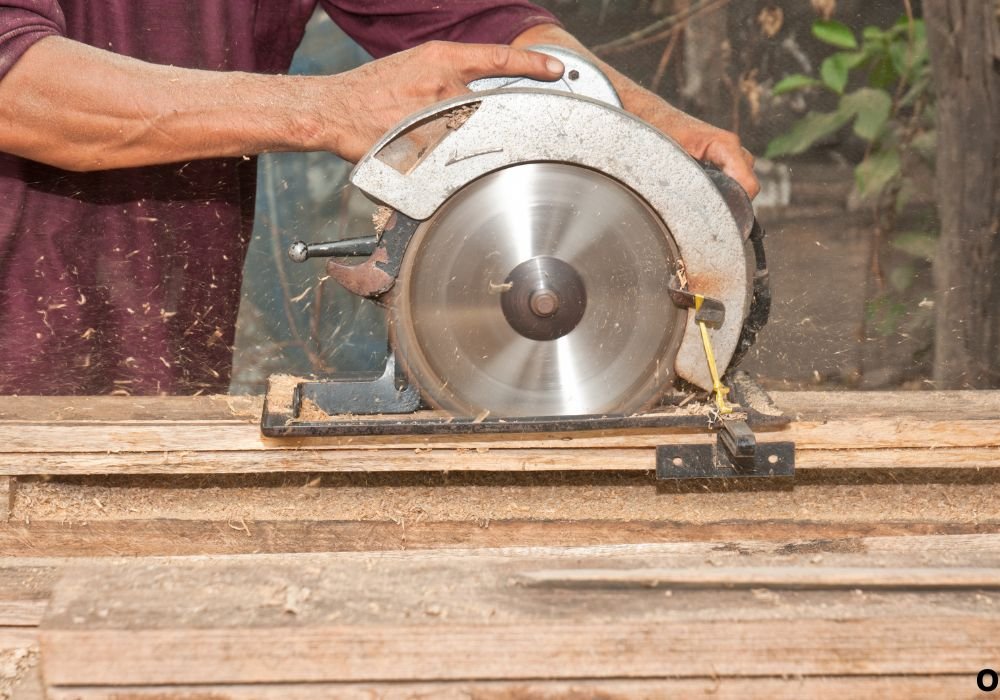
Safety should always come first. Cutting thick wood increases the risk of kickback, blade binding, and tool vibration. Wearing the right gear makes all the difference.
Always wear safety goggles to protect your eyes from sawdust and wood chips. Hearing protection is also essential since circular saws can be loud during long cuts.
Use gloves with good grip, but avoid thick ones that could limit your control. Keep sleeves tight and jewelry off to prevent anything from catching on the blade.
Secure your 4×4 firmly before cutting. A stable base prevents the wood from moving, reducing the chance of blade binding or jerking.
Keep your hands at a safe distance from the blade at all times. Follow the rule: one hand on the saw, one on the wood, never crossing the cutting line.
Never cut freehand while holding the post. Always place it on a sawhorse or work surface.
Avoid cutting wet or dirty wood, as moisture or grit can dull the blade and cause smoke or kickback.
Unplug or remove the battery before changing blades. Many accidents happen during blade swaps because users forget this step.
Stay patient and let the saw do the work. Forcing the blade increases friction and can lead to dangerous slipping or kickback.
Safety isn’t just a checklist—it’s the foundation for accuracy, confidence, and long tool life.
Common Mistakes to Avoid
Many beginners push the saw too fast. This causes the blade to bind and may burn the wood surface. Always move at a steady, moderate speed.
Another common error is failing to mark all four sides of the 4×4 before cutting. Without continuous reference lines, the cuts won’t align when flipping the post.
Using a dull blade is another major mistake. A worn-out blade tears through fibers instead of slicing cleanly, leaving jagged edges.
Incorrect blade depth setting can also cause issues. Too shallow, and you’ll struggle to reach the center; too deep, and the motor will overheat.
Skipping safety gear is a dangerous oversight. Wood chips travel fast enough to injure eyes or skin. Always use protective equipment.
Some users forget to support both sides of the cut. If one side falls mid-cut, it can pinch the blade and damage the saw.
Overreliance on one-hand cutting leads to instability. Always maintain a balanced stance and two-hand control.
Failing to check alignment before flipping the wood can result in uneven angles. Take a moment to ensure your cut meets perfectly on all sides.
Lastly, many forget to sand or finish the edges after cutting. Rough corners can splinter later and affect the appearance of the final project.
Avoiding these mistakes keeps your cuts accurate, safe, and smooth every time.
Pro Tips for Cleaner and Faster Cuts
Use a carpenter’s square or speed square as a guide to mark accurate cutting lines. A perfect mark means a perfect cut.
Score the line lightly before making the full cut. This small groove helps the blade stay on track and reduces surface chipping.
Keep a consistent feed rate—don’t rush, but don’t pause too long either. Smooth motion produces cleaner cuts.
Inspect your blade frequently for buildup or dullness. Cleaning it with a soft brush can restore performance instantly.
Use clamps to hold the 4×4 securely, preventing movement mid-cut. Movement causes uneven edges and can damage your saw.
Maintain the same pressure throughout the cut. Pressing harder doesn’t speed things up; it only strains the motor.
If possible, cut slightly outside your marked line, then sand down to the exact measurement for precision.
A guide rail or fence improves accuracy, especially for longer cuts. It ensures perfect alignment from start to finish.
Keep extra blades nearby. Switching to a fresh one halfway through multiple cuts saves time and keeps results consistent.
Finally, finish each project by checking for splinters or burrs. A quick sand gives your work a clean, professional finish.
FAQ – Cutting 4×4 with Circular Saw
Can a 7¼-inch saw cut through a 4×4 in one pass?
No, it can only reach about 2½ inches deep, so you’ll need to flip the post and cut from both sides.
What’s the best blade for cutting 4×4 posts?
A sharp carbide-tipped wood-cutting blade with 24 to 40 teeth works best for clean results.
Should I use a guide when cutting 4x4s?
Yes, a square or guide rail ensures straight lines and prevents blade wandering.
Can I use a cordless circular saw for 4×4 wood?
Yes, but make sure it has enough torque and a fully charged battery for consistent power.
How do I prevent splintering?
Score the line lightly before cutting and use a sharp blade with more teeth for smoother edges.
What if my cuts don’t meet perfectly in the middle?
Use a handsaw to clean up the center section for a flawless finish.
Can I cut pressure-treated 4x4s the same way?
Yes, but wear a mask and work outdoors to avoid inhaling chemical-treated dust.
Do I need to sand after cutting?
It’s recommended to smooth the edges to remove rough fibers and improve appearance.
What’s the safest position for cutting 4x4s?
Secure the post horizontally on a sawhorse with the cut line clearly visible and both hands on the saw.
Is it worth buying a bigger saw for 4×4 cuts?
If you often cut thick lumber, a 10-inch or 12-inch circular saw saves time and improves accuracy.
Conclusion
Cutting a 4×4 with a circular saw may seem tricky, but the right technique makes it simple and precise. By marking all sides, setting the correct blade depth, and flipping the wood carefully, you can achieve smooth, even cuts every time.
Choosing the right saw, maintaining blade sharpness, and following safety steps are just as important as the cut itself. With patience and practice, your circular saw can handle even the thickest posts confidently.
Whether you’re building a fence, deck, or wooden frame, mastering this skill ensures your projects look clean, strong, and professional. The key is steady hands, sharp tools, and the right mindset—because perfect cuts start with proper preparation.
ChatGPT can make mistake

I’m Michael R. Turner, the founder, lead writer, and passionate DIY enthusiast behind 101diytools.com. With years of hands-on experience in home improvement and power tools, I built this platform to share practical tips, in-depth guides, and honest reviews to help DIYers of all skill levels tackle projects with confidence and the right tools.