How to Choose Laser Safety Glasses Properly
A lab technician prepares to align a green laser at 532 nm. The beam appears harmless, but within milliseconds it could cause permanent vision loss.
The wrong choice of eyewear in this scenario can change a career forever.
Many believe that any dark glasses will block laser light. In truth, laser safety glasses are designed for specific wavelengths and optical densities.
A pair that protects against red light at 650 nm offers no defense against infrared beams at 1064 nm.
The risk is higher than most imagine. The American Academy of Ophthalmology reports that thousands of people suffer preventable eye injuries every year, with lasers a growing cause (AAO).
Even small, handheld systems sold for hobby or classroom use can exceed safe limits and cause retinal burns.
Overprotection is another challenge. Glasses with extremely high optical density block the laser but also reduce visibility.
Low visible light transmission makes it harder to work safely, leading some to remove the glasses altogether.
This guide explains how to choose laser safety glasses properly. It covers the science of wavelength and optical density, explains international standards, and outlines a simple step-by-step process.
By the end, you will know how to select glasses that balance protection, comfort, and compliance.
Laser Basics — Why Eyewear Choice Matters
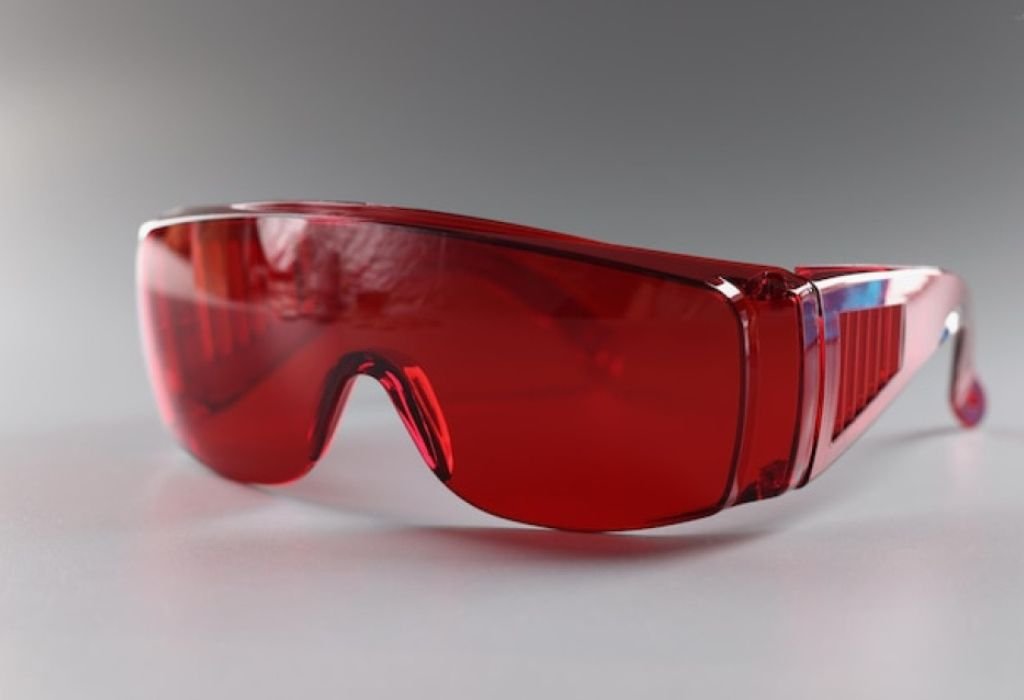
Lasers are concentrated beams of light with unique risks compared to ordinary light sources. Their energy can be focused on the retina or cornea, causing instant and irreversible damage. Proper eyewear is the first line of defense.
Class 3B and Class 4 lasers present the highest danger. These systems can blind an operator in less than one second. Even reflections from shiny surfaces can be hazardous.
Wavelength defines the type of injury. The visible and near-infrared range (400–1400 nm) mainly threatens the retina. Ultraviolet and far-infrared wavelengths damage the cornea or lens. Each hazard demands glasses rated for that exact range.
Do all lasers need safety glasses?
No. Lower classes (1 and 2) are usually safe, but Class 3B and 4 always require eyewear.
Why does wavelength matter more than color?
Glasses are built to block specific nanometer ranges, not just shades of visible color.
What happens if multiple wavelengths are present?
Protection must cover all wavelengths generated by the system.
Who ensures compliance at work?
A Laser Safety Officer (LSO) oversees eyewear selection and safety programs.
Step-1 — Identify Laser Wavelength(s) and Mode
The first step in choosing laser safety glasses is identifying the exact wavelength. This information is listed on the laser’s label, specification sheet, or user manual. Without this detail, no glasses can be chosen safely.
Some systems operate with more than one wavelength. An Nd:YAG laser may emit both 1064 nm and its green 532 nm harmonic. Diode systems can cover wide bands, such as 445–450 nm or 808–980 nm.
Operating mode is equally important. Continuous-wave (CW) beams differ from pulsed beams, and international standards use different codes to rate protection. Each marking corresponds to a mode requirement.
Where is wavelength listed?
It appears on the laser label, manual, or technical datasheet.
What if multiple wavelengths are emitted?
Eyewear must block each wavelength at the required optical density.
Does pulse mode change eyewear needs?
Yes, eyewear markings reflect CW, long-pulse, Q-switched, or ultrafast modes.
Why consider alignment beams?
Even secondary lasers must be covered by the eyewear.
Step-2 — Understand Optical Density (OD)
Optical density is the measure of how effectively glasses reduce laser light. It is expressed logarithmically, meaning each step up provides ten times greater protection. For example, OD 5 reduces transmission to just 0.001%.
OD must match the laser’s wavelength. A pair marked OD 7 at 532 nm offers no guaranteed protection at 1064 nm. This is why checking wavelength-specific OD is critical before making a purchase.
Choosing too low an OD risks injury, while excessively high OD reduces visible light transmission and makes work harder. Balance is the goal: strong enough to protect, light enough to allow safe visibility.
Is OD the same across wavelengths?
No. OD is wavelength-specific and only valid in the labeled range.
Does OD 7 always beat OD 5?
Yes, but it may darken visibility too much for precise work.
What does “OD 7+ @ 532 & 1064 nm” mean?
It blocks those specific wavelengths to at least OD 7.
How is OD calculated?
OD = −log₁₀(transmission). OD 5 = 0.001% transmission.
Step-3 — Decode Standards and Markings
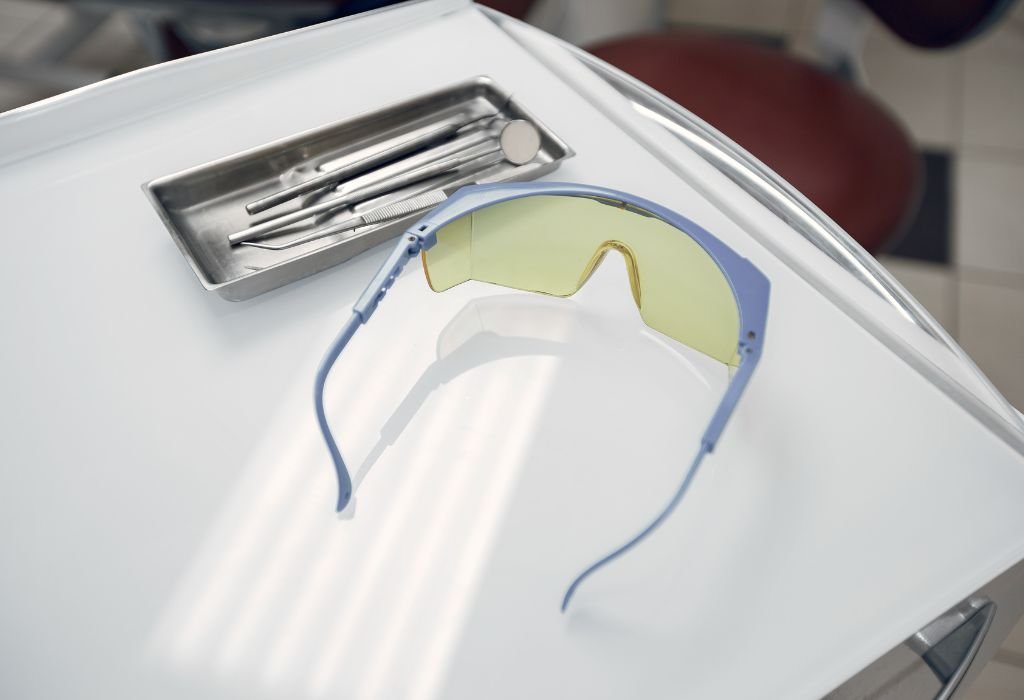
Different regions follow different standards for laser eyewear. In the U.S., ANSI Z136 sets guidelines, while Europe uses EN 207 and EN 208. Glasses must meet at least one recognized standard.
EN 207 introduces LB ratings with codes like D, I, R, or M. These letters specify whether the protection applies to continuous, long-pulse, Q-switched, or mode-locked lasers. EN 208 applies to alignment eyewear that transmits limited laser light safely.
Markings on the frame or lens should include OD, wavelength coverage, standard compliance, and manufacturer details. Missing or vague markings are a red flag.
What is an LB rating?
It is the EN 207 code showing the protection level for specific modes.
What is the difference between EN 207 and EN 208?
EN 207 is for protection during exposure, EN 208 is for alignment use.
Do all U.S. glasses have LB ratings?
No. U.S. labeling typically lists OD and wavelength ranges.
What if eyewear has no standard marking?
It should be avoided, as it may not be tested.
Step-4 — Balance Protection with Visibility and Usability
While safety comes first, comfort and usability cannot be ignored. Glasses that are too dark or heavy make tasks more difficult. Operators may remove them, creating unsafe conditions.
Visible light transmission (VLT) describes how much normal light passes through. Too little VLT reduces clarity and increases fatigue. The right choice balances adequate OD with comfortable visibility.
Lens material matters as well. Polycarbonate is light and affordable, while glass provides broader wavelength coverage and higher durability. Each option suits different applications.
What VLT is best?
Enough to allow safe visibility without compromising protection.
Can prescription users be protected?
Yes, frames exist for over-prescription or with RX inserts.
Are green lenses always for green lasers?
No. Lens color does not equal wavelength protection.
Is comfort important?
Yes, uncomfortable eyewear increases the risk of non-use.
Step-5 — Choose by Laser Type
Different lasers demand different eyewear. A one-size-fits-all approach is rarely effective. Each system must be matched with specific OD and wavelength ranges.
445–450 nm Blue Diode
These lasers are common in engraving and hobby setups. Proper eyewear typically provides OD 4–6+ within the 430–470 nm range. Some alignment glasses allow limited transmission.
What OD is recommended?
OD 4–6+ in the 430–470 nm range.
Can alignment glasses be used here?
Yes, but only when the risk of exposure is controlled.
Are cheap glasses reliable?
Not without markings and certification.
532 nm Green and 1064 nm Nd:YAG
Many lasers produce both 532 nm and 1064 nm lines. Eyewear often carries markings such as OD 7+ at both wavelengths. Q-switched YAG systems demand higher ratings.
Why cover two wavelengths?
Because both are present in many YAG setups.
What markings confirm safety?
Look for OD 7+ at 532 and 1064 nm.
Does pulsed mode matter?
Yes, higher pulse energies need specific EN 207 ratings.
808–980 nm IR Diode
These infrared lasers are invisible but highly dangerous. Filters block these nm bands while maintaining workable VLT.
Why are they dangerous if invisible?
Because invisible beams can still cause retinal burns.
Is VLT lower for IR glasses?
Often yes, since IR filters tend to be darker.
10.6 μm CO₂
CO₂ lasers damage the cornea rather than the retina. Specialized filters protect against this far-infrared wavelength.
What is unique about CO₂ protection?
It targets corneal hazards, not retinal ones.
Do standard polycarbonate lenses work?
No, special materials are needed.
Step-6 — Verify Certification and Avoid Counterfeits
Certification is essential to trust laser safety glasses. Always check for OD, wavelength coverage, and compliance markings etched directly into the lens or frame.
Buy only from reputable suppliers. Cheap online options often lack testing or exaggerate protection levels. Counterfeit glasses may look convincing but fail to block dangerous wavelengths.
Request documentation from vendors. Certificates of testing and compliance with ANSI or EN standards ensure authenticity.
Is a CE mark alone enough?
No, always check for EN 207 or EN 208 compliance.
Are cheap online goggles safe?
Not if they lack verified markings and documentation.
How to confirm authenticity?
Buy from established vendors and request test reports.
Step-7 — Maintenance and Service Life
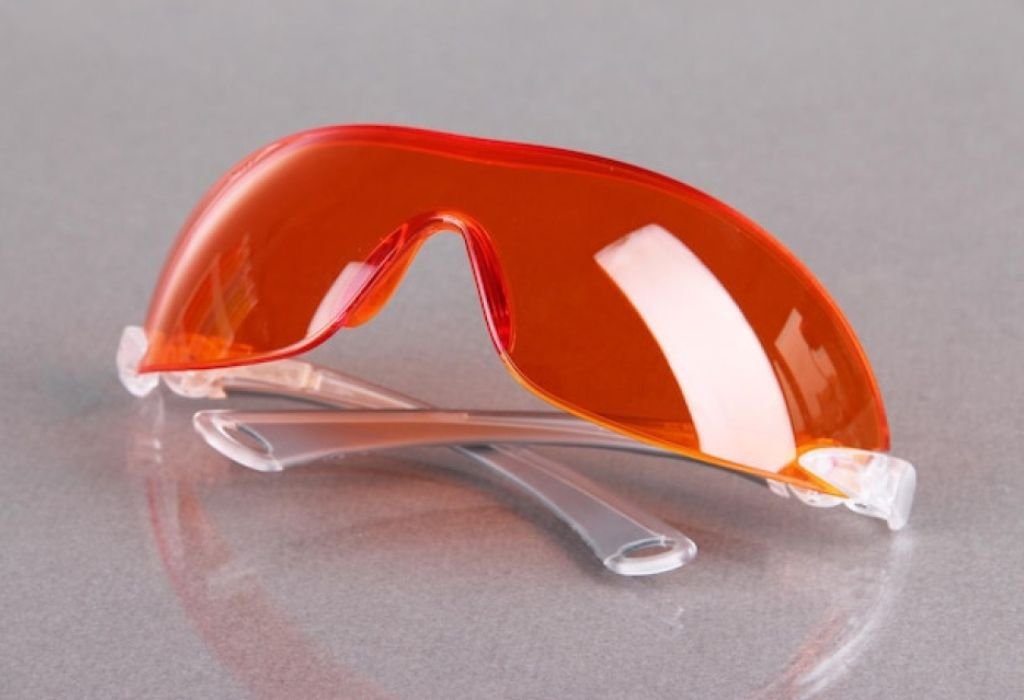
Even certified glasses must be maintained. Scratches, cracks, or delamination reduce their protective performance. Damaged eyewear should be replaced immediately.
Store glasses in protective cases to avoid surface damage. Clean with approved methods that do not weaken coatings.
Review glasses periodically against the current laser inventory. New systems or wavelengths may require new eyewear.
Do scratches affect safety?
Yes, they reduce optical density and should not be ignored.
How often should glasses be inspected?
Before each use and during safety audits.
Can coatings be reapplied?
No, damaged lenses must be replaced.
Quick Buying Checklist
- Identify all wavelengths and operating modes.
- Determine the required OD based on beam parameters.
- Verify ANSI Z136 or EN 207/208 compliance.
- Check lens markings for nm coverage and OD rating.
- Balance OD with visible light transmission.
- Ensure proper fit and prescription compatibility.
- Buy only from certified suppliers with documentation.
What is the most important factor?
Matching wavelength and OD exactly.
Is one pair enough for all lasers?
Rarely—each wavelength needs specific coverage.
Why balance OD with VLT?
To see clearly while staying protected.
Conclusion
Choosing laser safety glasses properly is not about color or style. It is about matching wavelength, optical density, and compliance with recognized standards.
The process begins by identifying the exact laser wavelength and operating mode. Next, confirm the required OD, balance visibility with safety, and verify certification before purchase.
With the right eyewear, laser operators can work safely, comfortably, and in full compliance. Every choice protects not only eyesight but also long-term productivity and peace of mind.

I’m Michael R. Turner, the founder, lead writer, and passionate DIY enthusiast behind 101diytools.com. With years of hands-on experience in home improvement and power tools, I built this platform to share practical tips, in-depth guides, and honest reviews to help DIYers of all skill levels tackle projects with confidence and the right tools.