How Thick Is a Circular Saw Blade? Full Guide Explained
You set up your circular saw, align the blade perfectly, and start cutting a piece of hardwood. When the blade finishes, you notice that the cut is slightly wider than your marking. You measure again and realize your saw has removed more wood than expected.
This happens because every circular saw blade has a specific thickness, known as kerf. The kerf determines how much material the blade removes as it cuts. For precise woodworking, this detail matters more than you think.
Many beginners overlook blade thickness when choosing tools. They assume all blades are the same, but even a small difference in width can affect accuracy and efficiency. A thicker blade cuts slower but provides stability, while a thinner blade cuts faster but may flex or vibrate.
Understanding how blade thickness works helps you make accurate cuts and extend the life of your saw. Whether you’re a DIYer or a professional woodworker, knowing your blade’s thickness is essential for cleaner, straighter results.
In this guide, you’ll learn what kerf means, the standard thickness of circular saw blades, how it affects performance, and how to choose the right one for your next project.
Let’s start by breaking down what blade thickness really means and how it affects your saw’s performance.
What Does Blade Thickness or Kerf Mean
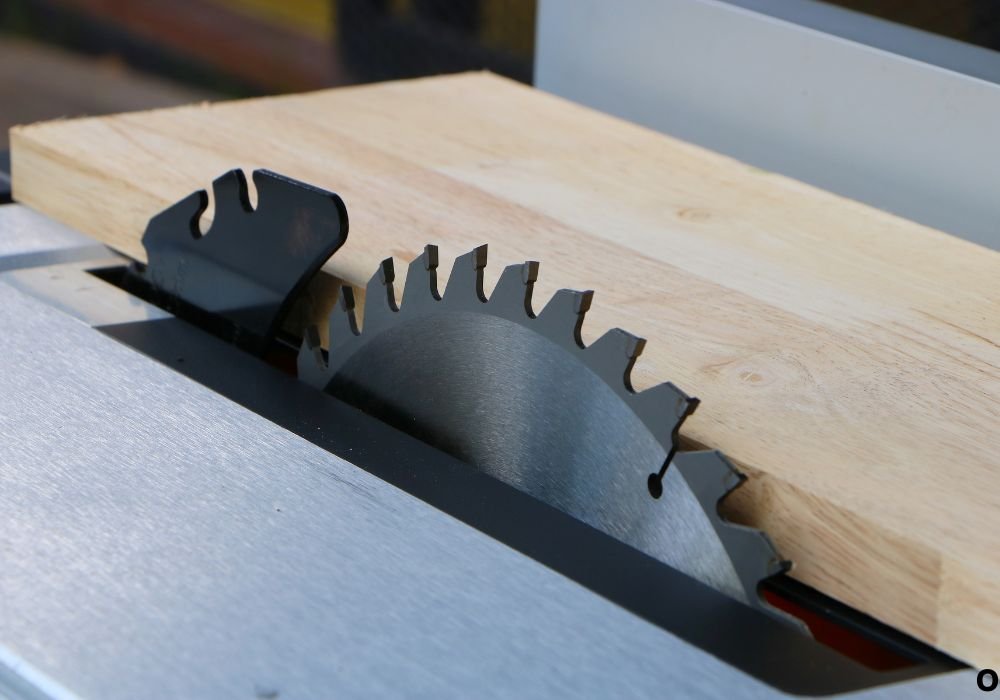
The term kerf refers to the width of the material that a saw blade removes while cutting. It’s not just about the metal’s physical thickness but also the width of the cut created by the blade teeth.
Every circular saw blade has two measurements — the plate thickness (the steel body) and the kerf (the width of the tooth line). The kerf is usually slightly wider than the plate itself.
For example, a blade may have a 1.6 mm plate thickness but a 2.2 mm kerf. The extra width comes from the blade’s tooth design, allowing room for the blade to move freely through wood without binding.
Kerf width is essential for precision work like furniture making or cabinetry. A wider kerf removes more material and can affect measurement accuracy if not accounted for.
In contrast, a narrow kerf blade reduces waste and requires less motor power. That’s why many cordless or compact saws are paired with thin-kerf blades.
If you measure your cuts precisely, always include the kerf width in your markings. This ensures your final piece matches your design dimensions.
The kerf also affects how much effort your saw motor needs to maintain speed. A thick kerf blade increases load, while a thin one runs lighter.
By understanding the difference between plate thickness and kerf, you can select the right blade for both accuracy and efficiency.
Standard Thickness of Circular Saw Blades
Circular saw blades come in several standard thickness categories. Each is designed for specific cutting styles and tool power levels.
Thin-kerf blades typically measure between 1.5 mm and 2.0 mm (0.059 to 0.079 inches). These are ideal for battery-powered or lightweight circular saws that have limited torque.
Standard-kerf blades range from 2.2 mm to 2.8 mm (0.087 to 0.110 inches). These are used in most corded saws and table saws for general-purpose woodworking.
Full-kerf or heavy-duty blades are about 3.0 mm or more (0.118 inches). They are used in industrial saws or high-powered setups where stability is more important than speed.
Thicker blades produce straighter cuts because they resist bending. However, they remove more material and demand more power.
For small saws (under 15 amps), thin-kerf blades are the better choice. They put less strain on the motor and extend battery life.
In woodworking shops, most professionals prefer standard-kerf blades because they balance speed, strength, and precision.
When choosing a blade, check your saw’s manual for maximum recommended kerf size. Using an overly thick blade on a low-powered saw can slow cutting and overheat the motor.
Each saw type — from hand-held circular saws to panel saws — has its ideal blade range. Matching the two ensures smooth, accurate cuts without stressing the tool.
Thin-Kerf vs. Full-Kerf Blades
The debate between thin-kerf and full-kerf blades comes down to trade-offs between power efficiency and stability.
Thin-kerf blades remove less material, which means they require less force to cut. They’re perfect for compact or cordless circular saws.
Their biggest advantage is energy efficiency — less material removed equals faster, smoother cuts. This reduces wear on both the motor and the blade.
However, thin blades are more flexible. Under heavy pressure or during long cuts, they may wobble slightly and cause rough edges.
Full-kerf blades, on the other hand, are thicker and stiffer. They’re designed for stationary saws or high-powered models.
They produce perfectly straight cuts, even in dense hardwoods, and resist warping or deflection. The trade-off is that they cut slower and generate more resistance.
Full-kerf blades are preferred for professional woodworking and precision joinery. Their rigidity ensures accurate angles and clean joints.
If you’re working mostly on plywood or light material, thin-kerf blades save both time and energy.
But for consistent depth and precision in furniture or flooring work, full-kerf blades provide better reliability.
Choosing between the two depends on your saw’s power and the type of material you cut most often.
How Blade Thickness Affects Cutting Performance

Blade thickness directly impacts how your saw performs under pressure. It influences everything from speed to cut quality.
A thinner blade requires less force and cuts faster because it removes less material. This is ideal for lightweight tasks and battery-powered tools.
However, thin blades can flex slightly during long cuts, especially when cutting hardwoods or thick boards. This leads to wavy or uneven lines.
Thicker blades, on the other hand, stay rigid and maintain a straight line. They deliver smoother, cleaner cuts but require more motor torque.
If your saw is underpowered, a thick blade can cause strain or even burn marks from excessive friction.
The ideal balance comes from pairing blade thickness with saw capacity. A 15-amp circular saw can easily handle a 2.6 mm blade, while compact 10-amp models do better with 1.8 mm.
Blade stiffness also affects vibration. Thicker blades vibrate less, reducing noise and improving accuracy.
A smooth, low-vibration cut not only looks better but also reduces user fatigue.
By understanding how thickness affects cutting dynamics, you can optimize both speed and finish quality for any project.
Measuring Circular Saw Blade Thickness
Knowing how to measure your blade thickness helps you select replacements and plan accurate cuts.
The easiest method is using a digital caliper or micrometer. Measure both the plate thickness (the flat body) and the tooth width (the kerf).
Hold the caliper tips against the blade’s steel body, avoiding the carbide tips. Note that number — this is your plate thickness.
Next, measure the widest point across two opposite teeth. This gives you the kerf width.
Many manufacturers print these numbers directly on the blade, such as “1.6 mm / 2.2 mm.” The first is the plate; the second is the kerf.
If your blade doesn’t show it, manual measurement ensures accuracy. Even small differences can change your cut precision.
Always measure at room temperature — heat expansion can affect readings slightly.
Record your blade’s kerf in your project notes when planning detailed joinery. It helps maintain perfect alignment in multi-piece builds.
Accurate measurement ensures consistent results and avoids costly mistakes in material sizing.
Blade Thickness and Material Type
Not all materials react the same way to blade thickness. Wood, plastic, and metal each have unique requirements.
For softwoods and plywood, thinner blades are sufficient. They cut quickly and cleanly with minimal resistance.
Hardwoods like oak or maple need thicker blades to prevent bending and burning. A full-kerf blade ensures straight, stable cuts.
When cutting laminate or melamine, thin blades with high tooth counts work best. They reduce chip-out and create smooth edges.
Metal-cutting blades are much thicker, usually around 2.5–3.2 mm. Their rigidity handles the dense structure of steel or aluminum.
Plastic and acrylic materials require thinner blades with modified teeth to prevent melting from heat buildup.
Matching the blade thickness to your material minimizes waste and wear. A mismatched setup leads to poor finish or tool strain.
Always check blade specifications to confirm they’re designed for the material you’re working with.
Proper pairing guarantees smoother operation and longer tool life.
How Motor Power Relates to Blade Thickness
Your circular saw’s motor power determines what blade thickness it can handle effectively.
Lower-powered saws (under 10 amps or cordless models) perform best with thin-kerf blades. These blades reduce load and keep cutting speeds consistent.
High-powered saws (12–15 amps) can easily run full-kerf blades without strain. Their torque maintains blade speed even under heavy load.
Using a thick blade on a weak motor causes overheating and premature wear. The motor has to work harder, consuming more energy.
Conversely, using an ultra-thin blade on a powerful saw may lead to excessive vibration. The blade can flex or chatter against the wood.
Manufacturers design saws with specific blade thickness ranges in mind. Always match your blade to your saw’s power rating.
For cordless saws, a thin-kerf blade can extend battery life by up to 30%. Less friction means less energy demand.
Motor compatibility ensures not only clean cuts but also safe and efficient tool performance.
A properly matched system delivers speed, stability, and longevity in every project.
Common Mistakes When Choosing Blade Thickness
One of the most common mistakes is ignoring the saw’s power rating. Using a heavy blade on a low-torque saw causes poor performance.
Another frequent error is focusing only on tooth count while ignoring kerf width. Tooth design matters, but so does blade thickness.
People often buy cheap blades that flex after minimal use. Poor steel quality leads to wavy cuts and dangerous vibrations.
Many beginners forget to check arbor compatibility. A blade too thick or thin for the arbor washer can cause imbalance.
Some users assume thicker blades are always better. But for light saws, thinner blades actually give better results.
Overlooking kerf width also causes measurement errors in woodworking projects. Always include the kerf in your cut calculations.
Another issue is using thick blades for delicate materials like melamine or veneer. They tear fragile surfaces easily.
Proper blade selection prevents frustration, wasted materials, and tool wear.
Avoid these mistakes, and you’ll notice a huge improvement in both precision and control.
Tips for Selecting the Right Blade for Your Project
Always match your blade type with your material and tool power. Start by checking your saw’s user manual for blade size limits.
If your saw is cordless or low-power, choose a thin-kerf blade for efficiency. It cuts faster with less effort.
For heavy-duty or precision work, opt for a full-kerf blade to maintain rigidity. It ensures straighter lines under pressure.
Pay attention to tooth design — ATB blades are best for wood, while TCG designs work better for laminate or metal.
Choose blades from trusted brands like Freud, Diablo, or Makita for consistent quality.
Check the blade’s label for kerf size, arbor hole diameter, and tooth count. These specs affect performance directly.
Keep spare blades for different materials instead of using one for all tasks. Specialized blades last longer and cut cleaner.
Clean your blades regularly to remove pitch or resin buildup. A clean blade cuts cooler and stays sharper longer.
The right blade makes your saw safer, quieter, and more efficient — saving both time and materials.
Safety Considerations When Handling Circular Saw Blades
Safety is as important as precision when working with circular saws. Always treat blades with respect, whether installed or loose.
Before changing a blade, unplug the saw or remove the battery. Power-off checks prevent accidental startups.
Wear cut-resistant gloves when handling or cleaning blades. The carbide tips are extremely sharp.
Use proper wrenches to secure or remove the arbor nut — never use pliers or makeshift tools.
Check that the blade guard operates smoothly before cutting. A stuck guard is a major hazard.
Ensure your saw’s base plate is flat and stable before every session. Uneven setups cause kickbacks.
Never exceed the blade’s maximum RPM rating printed on its surface. Overspeeding can shatter the blade.
Avoid touching the blade immediately after cutting. Friction generates intense heat that can cause burns.
Store unused blades in a dry, padded case to prevent corrosion or tip damage.
Following these safety steps keeps both your tools and your hands safe on every job.
Frequently Asked Questions
How thick is a standard circular saw blade?
Most standard circular saw blades are between 2.2 mm and 2.8 mm thick, offering a balance between precision and strength.
What does “kerf” mean in a saw blade?
Kerf refers to the width of material a blade removes during a cut, which is usually slightly wider than the blade plate.
Is a thin-kerf blade better than a full-kerf blade?
It depends. Thin-kerf blades are faster and easier on smaller saws, while full-kerf blades offer superior stability for heavy-duty work.
Can I use a thin-kerf blade on a table saw?
Yes, as long as your saw’s riving knife matches the kerf width. Otherwise, it may cause binding or unsafe operation.
Does blade thickness affect accuracy?
Yes, thicker blades track straighter, while thinner ones may flex slightly under pressure.
How do I measure my blade’s thickness?
Use a digital caliper to measure both the steel plate and the widest tooth point for the kerf.
Are thinner blades safer to use?
They’re safe if used correctly, but can flex more easily. Proper support and feed rate are crucial.
Do thicker blades last longer?
Generally, yes. Their rigidity and wider teeth resist bending and wear better over time.
What happens if I use the wrong thickness blade?
An incorrect blade can cause overheating, rough cuts, or even damage to your saw motor.
Should I always match blade thickness to material type?
Absolutely. Hardwoods and metals need thicker blades, while plywood and laminate cut best with thinner ones.
Conclusion
Blade thickness might seem like a minor detail, but it has a major impact on cutting quality and precision. The kerf determines how much material your saw removes and how your final piece fits together.
Choosing the right thickness helps prevent overheating, reduce waste, and maintain accurate cuts. Thin-kerf blades suit lightweight saws and fast jobs, while full-kerf blades excel in heavy-duty applications.
Always match your blade to your saw’s power rating and the material you’re cutting. This simple rule ensures safety, smoothness, and long tool life.
Understanding the difference between blade plate and kerf gives you full control over your projects. You’ll get cleaner finishes, tighter joints, and professional-grade accuracy every time.
Next time you pick up your saw, check the blade’s thickness before making the first cut. Precision starts long before the saw touches the wood — it begins with choosing the right blade.

I’m Michael R. Turner, the founder, lead writer, and passionate DIY enthusiast behind 101diytools.com. With years of hands-on experience in home improvement and power tools, I built this platform to share practical tips, in-depth guides, and honest reviews to help DIYers of all skill levels tackle projects with confidence and the right tools.