How Do Circular Saws Stay Balanced During Precise Cuts
A slight wobble in a circular saw blade can turn a clean cut into a dangerous kickback. Yet even at over 5,000 revolutions per minute, these saws glide through wood with calm precision. How do circular saws stay balanced during cutting despite the massive speed and force at play?
Imagine a thin metal disk spinning faster than a car engine crankshaft. At such speed, even the smallest misalignment can cause vibration, noise, or uneven cuts. Still, professional-grade saws remain steady thanks to advanced engineering, symmetric blade design, and precision weight distribution.
Research in woodworking safety suggests that more than 80% of cutting accuracy depends on blade balance and motor alignment. Manufacturers use laser-cut blades, vibration-dampening materials, and electronic stabilization to keep every rotation controlled. Behind every smooth cut is the science of balance — where physics meets craftsmanship.
Whether cutting hardwood, sheet metal, or plastic, a balanced circular saw ensures accuracy, safety, and longer tool life. Let’s uncover the mechanisms and design principles that keep these high-speed tools perfectly steady.
Understanding How Circular Saws Work
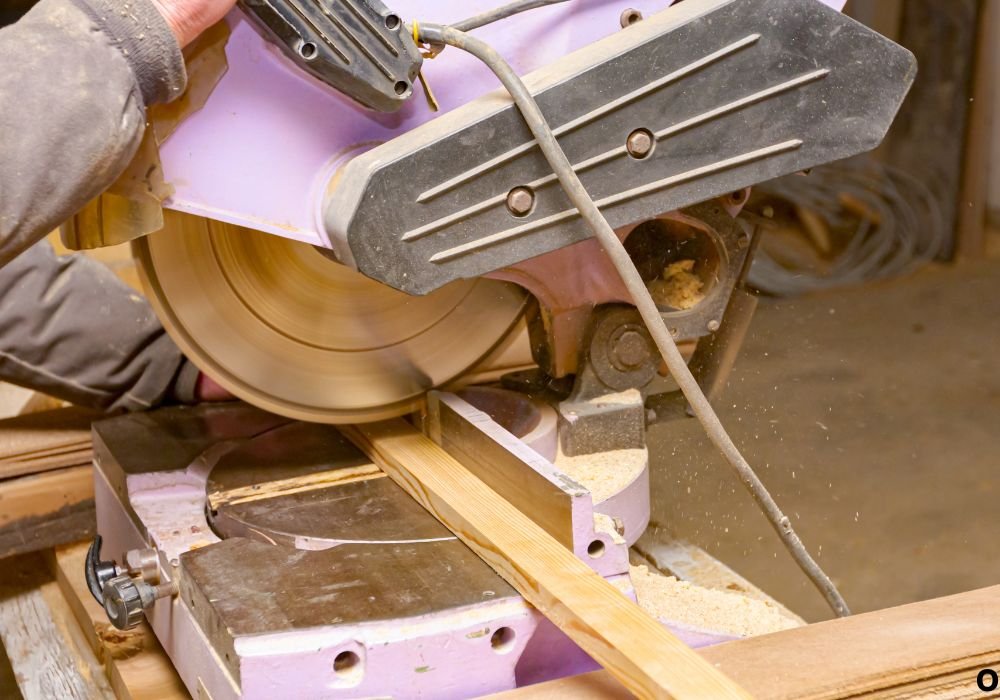
Circular saws are simple in concept yet complex in design. The spinning blade cuts material through high-speed rotation, powered by an electric or battery-driven motor. Balance begins with the motor shaft — the central axis that transfers motion to the blade.
The rotating motion generates centrifugal force, which pushes outward equally in all directions if the blade is balanced. When this equilibrium holds, the saw runs smoothly. If the distribution of mass is uneven, the saw vibrates, creating unstable cuts and mechanical wear.
Precision manufacturing ensures that the blade’s center hole fits tightly over the arbor, preventing side wobble. The motor’s speed consistency also affects stability — if RPM fluctuates, balance shifts mid-cut. Therefore, most modern circular saws use speed-regulated motors that deliver consistent torque even under load.
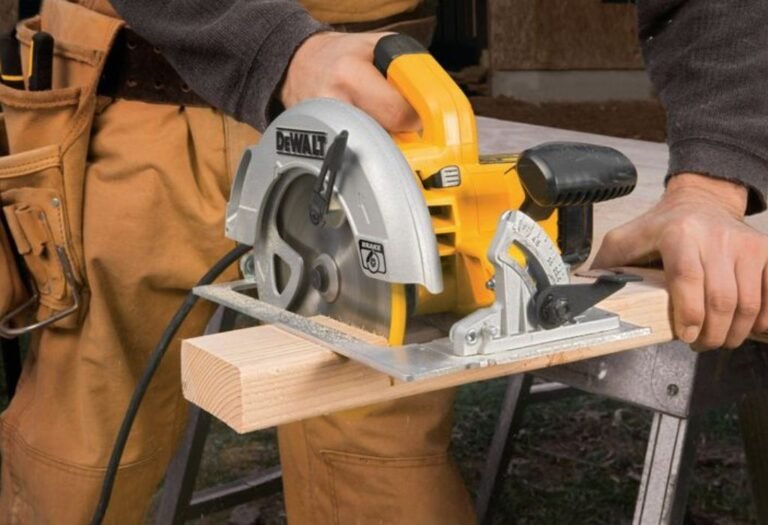
The body of the saw, including the shoe plate and handle alignment, adds weight distribution to counterbalance the spinning motion. Together, these design elements keep the saw centered and stable throughout its operation.
The Science Behind Circular Saw Balance
Physics plays a crucial role in understanding why circular saws remain steady. As the blade spins, centrifugal force pushes outward evenly when the blade is balanced, but uneven mass causes oscillations. Engineers use principles of moment of inertia to predict how the blade will behave under high-speed rotation.
Each blade’s weight distribution is measured precisely before assembly. If even a fraction of an ounce is uneven, the imbalance can produce vibration. To correct this, manufacturers employ dynamic balancing machines that spin test blades and detect tiny variations.
Another critical factor is bearing alignment. Bearings reduce friction and support the rotating shaft. If they wear unevenly, balance is compromised. The arbor and motor shaft work together as a single axis to maintain this delicate equilibrium.
When balance is maintained, less energy is lost to vibration. That means smoother cuts, less fatigue, and extended motor life. Essentially, physics ensures that stability equals efficiency.
How Manufacturers Calibrate Blades for Balance
Every circular saw blade undergoes rigorous calibration. During manufacturing, laser-cutting technology is used to achieve perfect symmetry. Some high-end blades are cut within 0.01 mm tolerance to ensure every tooth is identical in weight and spacing.
After cutting, blades are tested in spinning chambers that measure vibration. If imbalance is detected, the manufacturer either adds or removes material from specific spots. The process is similar to balancing a car tire, only more precise.
This meticulous calibration prevents wobbling at high speed and guarantees uniform performance across all blades from the same batch.
What Happens When a Circular Saw Goes Off Balance
When a circular saw loses its balance, you’ll feel it immediately. The saw begins to vibrate, whine, or wander off the cut line. The most common causes include:
- Warped or bent blade
- Dust or resin buildup around the arbor
- Loose flange or arbor nut
- Motor bearing wear
Imbalance not only affects cut quality but also increases the risk of kickback — when the blade binds and propels the saw backward. Regular cleaning, inspection, and tightening of blade mounts prevent most of these issues.
Key Components That Keep Circular Saws Balanced
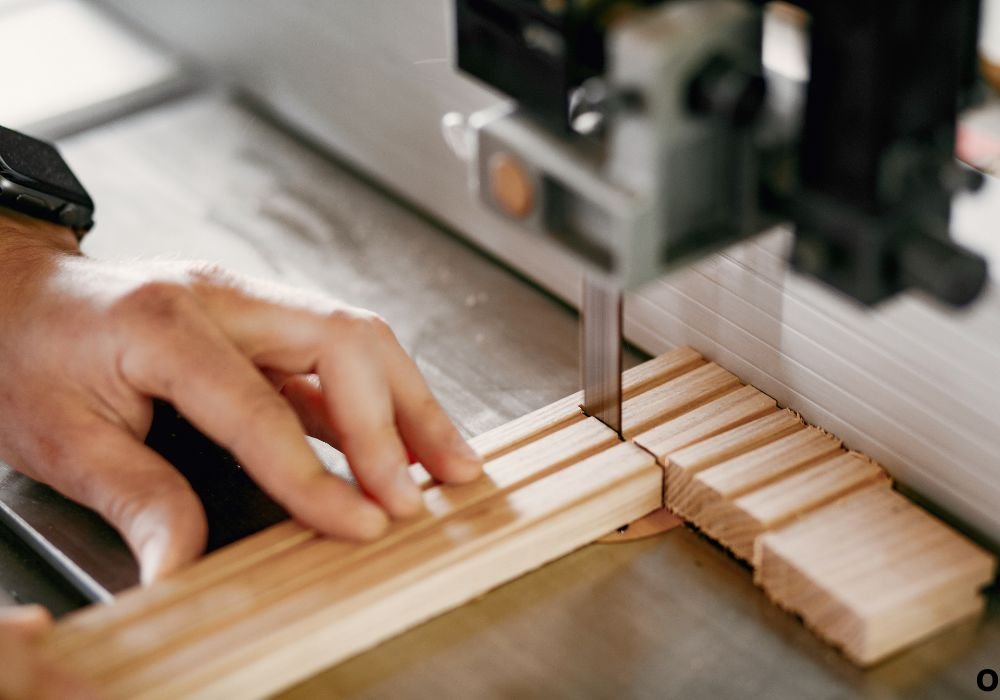
A circular saw’s stability depends on more than the blade. Every component contributes to its steady performance:
- Motor Mount & Gear Alignment – The motor’s shaft and gears are aligned perfectly to keep rotational motion centered. Any misalignment transfers vibration to the blade.
- Base Plate (Shoe) – A flat, rigid shoe keeps the saw level on the material. It also provides balance by counteracting the torque generated by the motor.
- Handle Ergonomics – Properly positioned handles help the user distribute pressure evenly, preventing tilt during operation.
- Blade Stiffeners – Thin blades often include stiffening plates that reinforce the structure and reduce flex.
These features ensure that balance is maintained both internally (mechanical alignment) and externally (user control).
How the Arbor and Flange Secure the Blade
The arbor is the central shaft that holds the blade, and the flange clamps it tightly. Together, they ensure that the blade spins without deviation.
Proper torque when tightening the flange nut is crucial. Over-tightening can distort the blade, while under-tightening allows slippage. A perfectly secured blade spins true, keeping every tooth aligned along the same cutting path.
This connection between the arbor and blade forms the heart of circular saw balance.
The Role of Blade Design and Material
Blade design is the single most influential factor in maintaining balance. Manufacturers design circular saw blades with symmetry, tooth spacing, and material distribution in mind.
- Tooth Count: Higher tooth counts generally mean smoother cuts but also more friction. Each tooth must be equally spaced to maintain rhythm and reduce vibration.
- Carbide Tips: These add durability and weight uniformity, minimizing imbalance during heavy-duty cuts.
- Body Material: High-quality steel with uniform hardness resists bending or deformation at high speed.
Precision design ensures the blade acts like a gyroscope — stable even when spinning rapidly.
How Blade Thickness and Diameter Influence Stability
A thicker blade offers more rigidity, reducing flexing during cutting. However, too much thickness can increase friction. For this reason, thin-kerf blades are engineered to balance flexibility with stiffness.
The diameter also plays a role. Larger blades tend to be more stable because of their greater inertia, but they require more power. Engineers calculate the ideal combination of diameter, thickness, and tooth geometry to achieve a vibration-free experience.
Vibration Control and Safety Mechanisms
Balance goes hand in hand with vibration control. Even a perfectly balanced saw can develop vibration from environmental factors, such as dense material or uneven pressure. That’s why modern circular saws include several built-in safety mechanisms:
- Anti-vibration slots: These are laser-cut grooves in the blade body that expand during heat buildup, absorbing stress.
- Rubber dampers: Found inside the motor housing to reduce resonance.
- Blade guards: They stabilize the saw by controlling airflow and blade motion when not in contact with material.
By combining mechanical balance with vibration damping, saws maintain steady performance even in tough conditions.
How Modern Circular Saws Use Electronic Stabilization
Some high-end circular saws now feature electronic feedback systems. These sensors monitor motor speed and automatically adjust torque to maintain consistent RPM. When cutting through dense wood, the system increases power; when resistance drops, it eases output to prevent surging.
Additionally, electronic brakes stop the blade faster, reducing post-cut vibration and enhancing user safety. Together, these smart systems make modern circular saws more stable and predictable than ever before.
Proper Usage to Keep Circular Saws Balanced
Even the best-engineered tool depends on proper handling. Users play a vital role in maintaining saw balance.
- Steady Grip: Hold both handles firmly without forcing the saw. Let the blade do the work.
- Material Support: Ensure the material is clamped securely. Unsupported pieces cause blade binding and vibration.
- Cutting Angle: Keep the saw flat on its base; tilting introduces imbalance.
- Speed Control: Avoid starting cuts at full depth; gradually lower the blade to maintain even engagement.
Balanced operation isn’t just a design feature — it’s a user practice.
Maintenance Tips to Preserve Balance
Routine maintenance prevents small issues from turning into big problems. Follow these key tips:
- Clean Regularly: Remove resin, sawdust, and pitch buildup that can unbalance the blade.
- Inspect Bearings: Replace any that show signs of wear or grinding noise.
- Check Blade Runout: Use a dial gauge to ensure the blade’s edge doesn’t wobble more than a fraction of a millimeter.
- Store Properly: Hang blades flat to avoid warping from uneven pressure.
- Lubricate Moving Parts: A lightly oiled arbor reduces friction and helps maintain rotational symmetry.
A well-maintained saw stays balanced longer and performs safer cuts.
Advanced Engineering in Modern Circular Saws
Modern saws are marvels of precision. Engineers rely on computer simulations to predict how components interact at high speeds. Here’s how technology has advanced saw balance:
- Brushless Motors: Deliver smooth torque with fewer vibrations and longer lifespan.
- CNC Machining: Ensures perfect alignment of internal components down to microns.
- CAD Modeling: Allows engineers to test balance virtually before production.
- High-Grade Alloys: Lightweight yet rigid, these materials improve structural balance.
Some premium brands perform vibration tests under full load, measuring acoustic signatures to fine-tune performance before shipment. The result: blades that feel weightless and cut effortlessly.
FAQ Section
How do I know if my circular saw is unbalanced?
You’ll feel excessive vibration, hear irregular noise, or notice uneven cuts. A well-balanced saw runs quietly and smoothly.
Can an unbalanced blade damage the motor?
Yes. Continuous vibration strains the bearings and shortens motor life.
What materials make blades more stable?
High-carbon steel and carbide-tipped teeth maintain rigidity at high temperatures, keeping balance intact.
Do corded and cordless saws differ in balance?
Cordless saws are slightly heavier at the handle due to the battery, but both types are designed for even weight distribution.
Why does my saw vibrate when cutting plywood?
Uneven glue layers or voids in plywood can cause resistance fluctuations, leading to temporary imbalance.
How often should I check blade alignment?
After every 20–30 hours of cutting, or sooner if vibration appears.
Can I balance a saw blade myself?
Minor balance issues can be corrected by cleaning or tightening the arbor, but professional balancing is best for warped blades.
How to store blades to avoid warping?
Lay them flat or hang them vertically in a dry area away from moisture and heat.
What’s the ideal RPM for balanced cutting?
Between 4,000 and 5,800 RPM for most 7-¼ inch blades, depending on material hardness.
Does a dull blade affect balance and accuracy?
Yes. Dull teeth cause uneven resistance and vibration, making cuts rough and unstable.
Why are laser-cut blades more stable?
Laser cutting maintains perfect symmetry and relieves internal stress, minimizing wobble during rotation.
Are thin-kerf blades less balanced than standard ones?
Not necessarily. Quality thin-kerf blades use tension rings to offset flexibility issues.
How do anti-vibration slots work exactly?
They allow controlled expansion and contraction, reducing heat-induced distortion.
What’s the best way to reduce kickback risk?
Keep the saw aligned, use sharp blades, and never force the cut faster than the blade speed.
How do manufacturers test for blade runout?
They spin blades on precision shafts and measure lateral movement with micrometer-level sensors.
Conclusion – Precision and Balance in Every Cut
A circular saw’s perfect cut is not just about sharp teeth; it’s about harmony between motion, weight, and control. Every balanced blade is a product of physics, precision engineering, and proper handling.
By understanding how circular saws stay balanced during cutting, users can achieve cleaner results, extend tool life, and ensure safer operation. Regular maintenance, correct posture, and awareness of balance dynamics transform an ordinary saw into a precision instrument.
When balance meets craftsmanship, every cut becomes effortless — a seamless blend of power and perfection.

I’m Michael R. Turner, the founder, lead writer, and passionate DIY enthusiast behind 101diytools.com. With years of hands-on experience in home improvement and power tools, I built this platform to share practical tips, in-depth guides, and honest reviews to help DIYers of all skill levels tackle projects with confidence and the right tools.