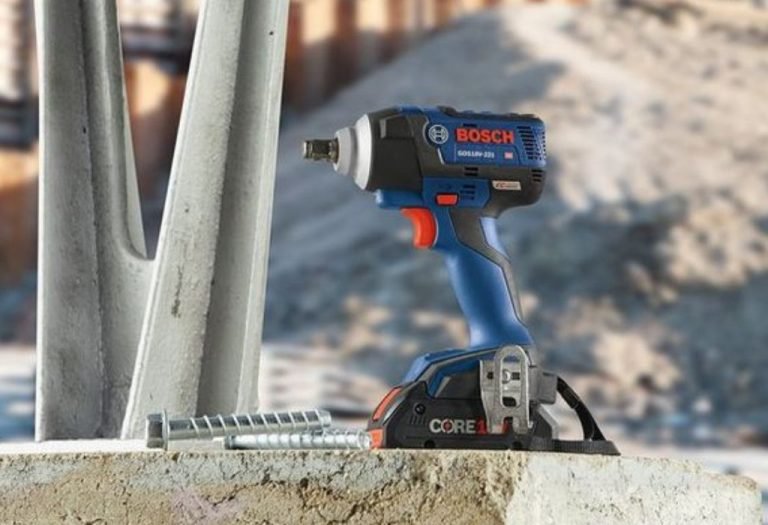
How Big a Compressor for Air Impact Wrench Works
Picture the frustration of trying to remove a stubborn lug nut with an air impact wrench, only to hear the tool sputter and lose power.
The culprit is often not the wrench itself, but an undersized compressor that can’t deliver enough airflow to keep the tool running.
Many DIYers and even small shop owners face this challenge when choosing compressors. The common assumption is that high PSI equals power, yet airflow measured in CFM (cubic feet per minute) at 90 PSI is what truly drives an impact wrench.
Curiosity grows around how big a compressor for air impact wrench use is really needed to get the job done.
The size of the compressor directly influences tool performance, efficiency, and lifespan. A 1/2-inch impact wrench typically requires 4–5 CFM at 90 PSI, while larger 3/4-inch and 1-inch wrenches can demand 8–20+ CFM, which small pancake compressors simply can’t provide (CFM Guide).
Without enough capacity, torque drops sharply, making tough jobs impossible.
Industry reports also show that the global air compressor market is set to exceed $45 billion by 2030, fueled by growing demand for pneumatic tools in automotive and construction (Statista).
This rise means more users are asking the same question: which compressor size ensures reliable performance and safe operation?
This guide explains everything you need to know about matching compressors to impact wrenches. From CFM and PSI ratings to tank size, duty cycle, hose diameter, and shop setups, it provides a step-by-step roadmap to choosing the right compressor for consistent torque and worry-free tool use.
Impact Wrench Air Needs: CFM, PSI, and Real Consumption
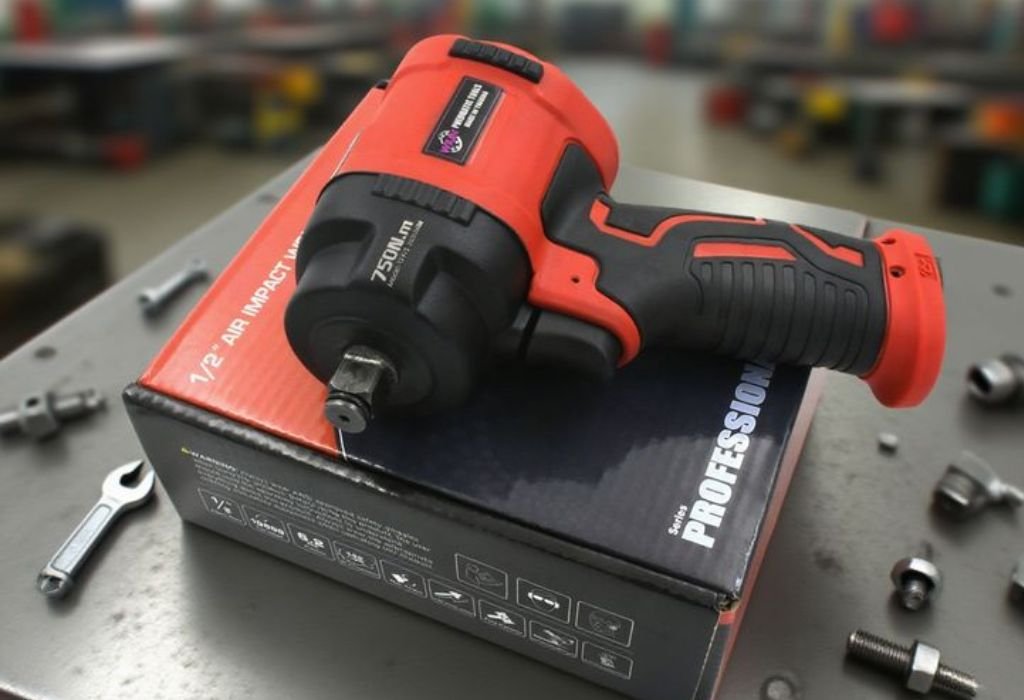
Air impact wrenches are rated for a specific PSI (usually 90), but what truly matters is the CFM delivered at that pressure. CFM measures how much air the compressor can supply, and if it falls short, torque drops.
Real-world consumption is higher than the “average CFM” listed on spec sheets because most ratings assume short bursts, not continuous use. Removing several lug nuts back-to-back requires steady airflow.
What does a 1/2″ impact usually need?
Most require 4–5 CFM at 90 PSI, but heavy-duty models can demand 6+.
Why is SCFM printed on compressors?
SCFM (Standard CFM) is a standardized test value, making it easier to compare compressors.
Do some 1/2″ guns use far more air?
Yes, some high-torque versions need 8–10+ CFM continuously.
Is 90 PSI a hard rule?
Yes, impact wrenches are engineered for 90 PSI at the tool, not just at the tank.
What happens if airflow is below spec?
The wrench spins without torque, stalls under load, and strains the compressor.
How Big a Compressor for Air Impact Wrench? (Quick Picks by Tool Size)
The right compressor depends on the wrench size. Larger drives need significantly more airflow.
Sizing should focus on SCFM at 90 PSI first, then tank size second.
What’s the minimum for 3/8″ impacts?
At least 3 SCFM at 90 PSI with a 10–20 gallon tank.
What about 1/2″ impacts?
Around 4–6+ SCFM at 90 PSI with a 20–30 gallon tank for steady operation.
For 3/4″ and 1″ wrenches?
Expect 8–20+ SCFM and 60+ gallon tanks, plus larger hoses.
Why not size by PSI alone?
Because PSI without enough CFM won’t sustain torque.
Is bigger always better?
Yes, larger compressors provide smoother, longer tool performance.
Tank Size vs Recovery Time: Why 6 Gallons Fails and 20–30 Works
Tank size acts as a buffer. A small tank empties quickly, forcing the pump to cycle often.
With a bigger tank, pressure remains steadier, keeping the wrench effective longer.
Does a bigger tank mean more torque?
Not directly, but it keeps airflow consistent for better results.
Is a 6-gallon pancake enough?
Only for one or two bolts, then long recovery delays.
What’s the sweet spot for 1/2″ wrenches?
A 20–30 gallon tank balances cost, space, and performance.
What about 60-gallon units?
Perfect for small shops and continuous wrenching.
Can recovery time be improved without bigger tanks?
Yes, by choosing a compressor with higher SCFM output.
Duty Cycle: The Hidden Spec That Limits You
The duty cycle determines how long a compressor can run per hour without overheating.
Ignoring this spec causes early wear and frequent cutoffs.
What does 50% duty cycle mean?
It can run 30 minutes out of each hour.
Is 100% duty cycle unlimited?
No, it still requires maintenance and cooling.
Why does this matter for impact wrenches?
Frequent hammering forces long compressor cycles.
What happens with low duty cycle units?
They overheat or shut down mid-job.
Should home users worry?
Yes, even light use can stress a low-duty-cycle compressor.
Hose, Fittings, and Pressure Drop (The Silent Torque Killers)
Even with the right compressor, poor air delivery kills torque.
Hose diameter, length, and fittings must match the tool’s needs.
What hose size for a 1/2″ impact?
At least 3/8-inch ID, under 35 feet long.
What about 1″ wrenches?
They may need 1/2-inch or 3/4-inch hoses.
Do quick-connect couplers reduce power?
Yes, small couplers restrict airflow.
How can pressure drop be minimized?
Use larger hoses, quality couplers, and shorter runs.
Why check pressure at the tool, not tank?
Because line losses lower PSI by the time it reaches the wrench.
Garage Setups: From “Bare Minimum” to “No-Drama”
Not every user needs a shop compressor. Home setups vary by frequency.
Here’s how to match size to usage.
What’s bare minimum for DIY?
4–5 SCFM, 20 gallons, good for occasional lug nuts.
What’s ideal for a home garage?
5–7 SCFM, 30 gallons, with filter and regulator.
What’s best for light shops?
8–12 SCFM, 60+ gallons, steady for multiple tools.
Can cordless tools replace compressors?
Yes, modern cordless impacts rival air tools.
Which setup saves the most time?
Shop compressors with 60+ gallons prevent long waits.
Troubleshooting: “My Impact Won’t Hit Hard”
A weak wrench usually means air supply issues, not tool failure.
Checking airflow at the tool reveals the true problem.
Why is PSI at the tank misleading?
It doesn’t reflect line loss or tool-side pressure.
Why does torque fade quickly?
The tank is too small or SCFM too low.
Why does the tool stall on long hoses?
Airflow drops from friction in narrow lines.
Can moisture affect torque?
Yes, water in lines lowers performance.
What’s the fix for weak performance?
Upsize hoses, add regulators, or upgrade compressors.
Safety & Care: Protecting Tool, Compressor, and Ears
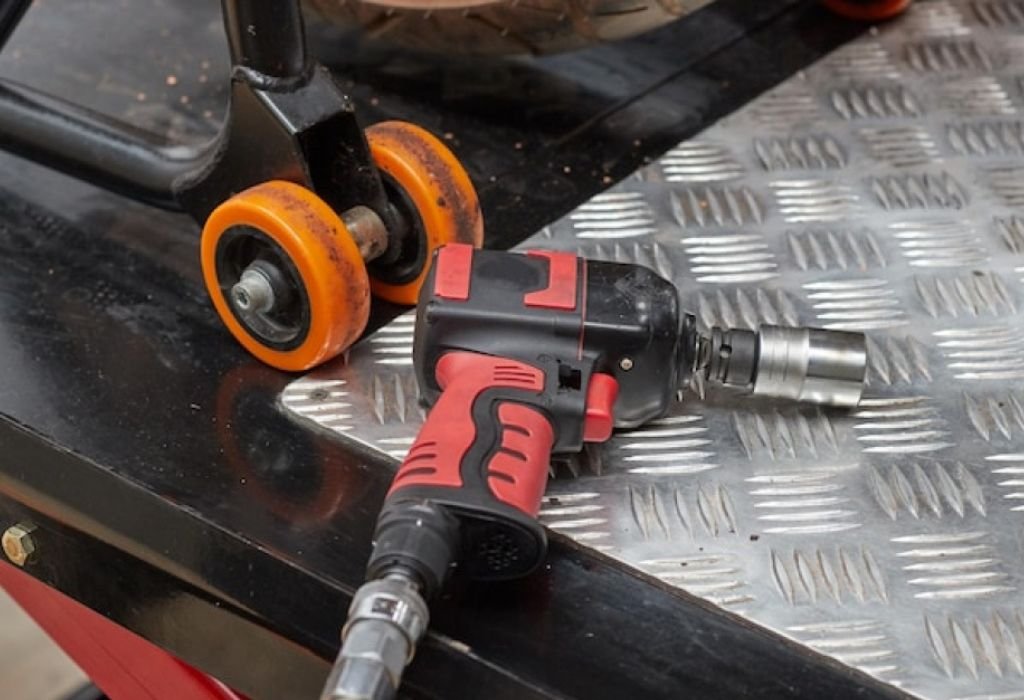
Air tool safety extends beyond torque. Dry, regulated air preserves both tool and compressor.
Proper maintenance reduces failures.
What’s the safe PSI setting?
Keep it at 90 PSI at the tool.
Is oiling important?
Yes, daily oiling keeps seals and rotors healthy.
Can small hoses overheat compressors?
Yes, restrictions make the pump run longer.
What PPE is required?
Safety glasses, gloves, and hearing protection.
Should tanks be drained daily?
Yes, to prevent rust and water buildup.
FAQs
How big a compressor for air impact wrench 1/2″?
At least 4–6 SCFM at 90 PSI with a 20–30 gallon tank.
Will a 6-gallon pancake work?
Only for a bolt or two, then long recovery times.
Best hose for a 1/2″ impact?
3/8-inch ID up to 35 ft, larger if longer.
Do you match SCFM or tank first?
Always match SCFM at 90 PSI first.
What about 1″ wrenches?
They need 10–20+ SCFM and 60+ gallon tanks.
Conclusion
Choosing how big a compressor for air impact wrench use comes down to airflow, not just pressure. Matching SCFM at 90 PSI, tank capacity, duty cycle, and hose size ensures reliable torque and long tool life.
For home garages, a 20–30 gallon compressor works well with 1/2″ wrenches. For shops, 60+ gallon units keep tools running without interruption.
Invest once in the right compressor and setup, and your impact wrench will deliver consistent, powerful results every time.

I’m Michael R. Turner, the founder, lead writer, and passionate DIY enthusiast behind 101diytools.com. With years of hands-on experience in home improvement and power tools, I built this platform to share practical tips, in-depth guides, and honest reviews to help DIYers of all skill levels tackle projects with confidence and the right tools.