Do Safety Glasses Protect From UV Light? Answered
A clear sky can feel harmless until eyes begin to sting hours later, leaving many to wonder if their safety glasses offered real protection.
The invisible threat comes from ultraviolet radiation, which damages eyes even when discomfort is not immediate.
Every year, about 2,000 U.S. workers suffer eye injuries that require medical treatment, many linked to insufficient or incorrect eye protection (CDC).
These incidents highlight how easy it is to underestimate risks that cannot be seen.
The curiosity grows stronger when considering that ordinary lenses may not always block harmful ultraviolet rays.
While tinted lenses look protective, color alone does not guarantee safety.
Long-term UV exposure is linked to cataracts and other eye diseases, making prevention critical (AAO).
Protection depends on whether glasses are rated to filter out UVA and UVB, not simply on their appearance.
Modern polycarbonate lenses are often designed to stop nearly 100% of ultraviolet light.
However, not all safety glasses carry the markings or certifications that confirm this level of protection.
The stakes are high for workers and DIY enthusiasts who spend hours under sunlight or near reflective surfaces. In these settings, invisible rays can cause damage faster than expected.
Understanding how safety glasses are tested and labeled is the only way to be sure they truly shield against ultraviolet radiation.
This knowledge separates effective eyewear from ordinary glasses that give only partial protection.
The journey to safer vision starts with uncovering the truth behind the question: do safety glasses protect from UV light?
UV basics: UVA, UVB, UVC and eye risk
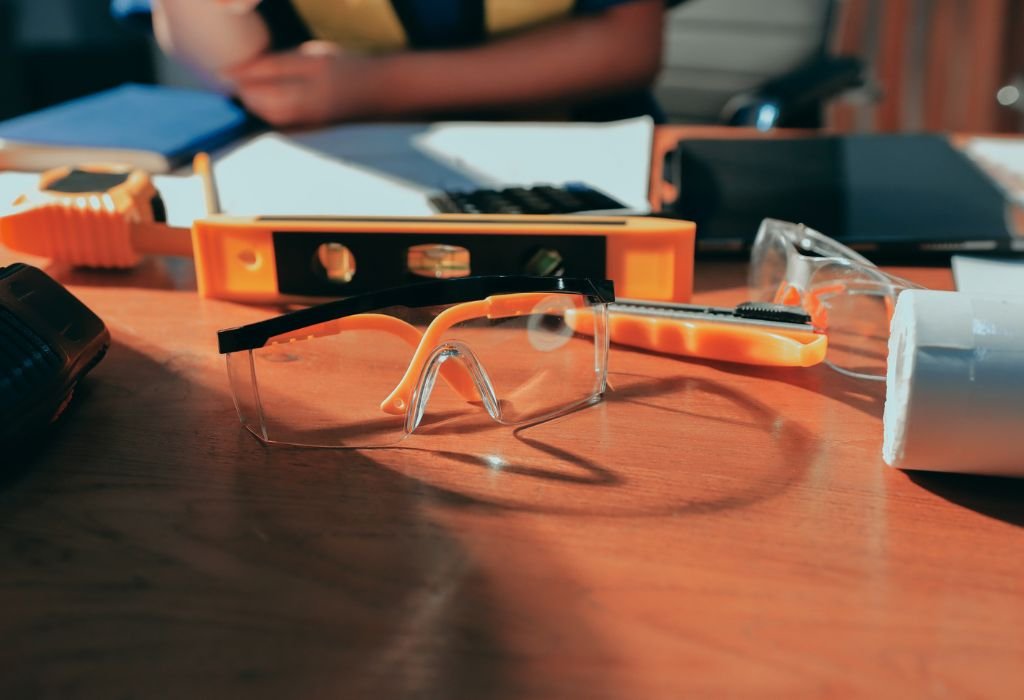
Ultraviolet light is divided into three main bands: UVA, UVB, and UVC. Each interacts with the eyes differently, and understanding them is the first step to protection.
UVA rays (315–400 nm) penetrate deeper into the eye, increasing the risk of cataracts and macular degeneration. These rays account for the majority of UV reaching the Earth’s surface.
UVB rays (280–315 nm) are less prevalent but more energetic. They are the primary cause of painful photokeratitis, also called “eye sunburn.”
UVC rays (100–280 nm) are almost entirely absorbed by the atmosphere. They become a concern only near artificial sources such as germicidal lamps or UV-curing devices.
Reflected UV radiation from water, snow, or metal surfaces can double or triple exposure levels. This reflection makes outdoor workers particularly vulnerable.
What part of UV causes “eye sunburn”?
UVB rays are the main cause of photokeratitis, a painful but temporary eye injury.
Does tint mean UV protection?
No, lens color alone does not block UV; only certified UV ratings guarantee protection.
Is UVC a concern outdoors?
Not from sunlight, but it is a hazard when working near artificial UV sources.
Can reflected UV be stronger?
Yes, water, snow, and shiny surfaces can intensify UV exposure significantly.
Do UVA rays cause long-term problems?
Yes, chronic UVA exposure is linked to cataracts and retinal damage.
So… do safety glasses protect from UV light?
The answer depends on the design and certification of the glasses. Many safety glasses, especially those with polycarbonate lenses, do protect from UV light.
Polycarbonate naturally blocks nearly all UVA and UVB rays. However, UV protection is only assured when eyewear carries a proper rating.
Look for ANSI Z87.1 markings combined with a U-rating (U2 to U6) or the UV400 designation. These markings confirm that lenses have been tested against ultraviolet transmittance standards.
Without these certifications, safety glasses may protect against impact but fail to block invisible radiation. This is why not all clear lenses provide true UV protection.
Which marking should be on the lens?
Look for ANSI Z87.1 with a U-rating or UV400 printed on the lens.
Do all Z87 glasses block UV?
No, Z87 indicates impact protection, while the U-rating specifies UV blocking levels.
Are UV-blocking safety glasses available in clear?
Yes, clear polycarbonate safety glasses often block 99–100% of UVA and UVB.
Is UV400 equivalent to 100% UV protection?
Yes, UV400 blocks wavelengths up to 400 nm, covering both UVA and UVB.
Do cheap glasses always block UV?
Not always; only certified UV-rated models guarantee protection.
How to read ANSI Z87.1 and EN markings for UV protection
Understanding safety markings ensures that eyewear is chosen correctly. ANSI and EN standards specify how UV protection is rated and labeled.
In the U.S., ANSI Z87.1 requires UV protection to be indicated with a “U” followed by a number. U2 means basic protection, while U6 is the highest rating.
The “Z87+” label means the glasses pass high-impact tests. This does not indicate UV protection unless combined with a U-rating.
In Europe, EN 170 defines ultraviolet filter scale numbers. Values such as 2-1.2 or 2-2.5 indicate UV filtering levels along with visible light transmission.
What does “U6” mean?
It represents the highest ANSI UV protection rating.
What’s the difference between Z87 and Z87+?
Z87+ indicates high-impact protection, not UV performance.
What does EN “2-1.2” indicate?
It shows an EN 170 UV filter scale with specific light transmission levels.
Does EN 172 equal UV400?
EN 172 covers industrial solar filters but may not always equal UV400.
Is the marking on packaging enough?
No, the lens itself should be engraved with the correct code.
Materials and coatings: why polycarbonate wins for UV
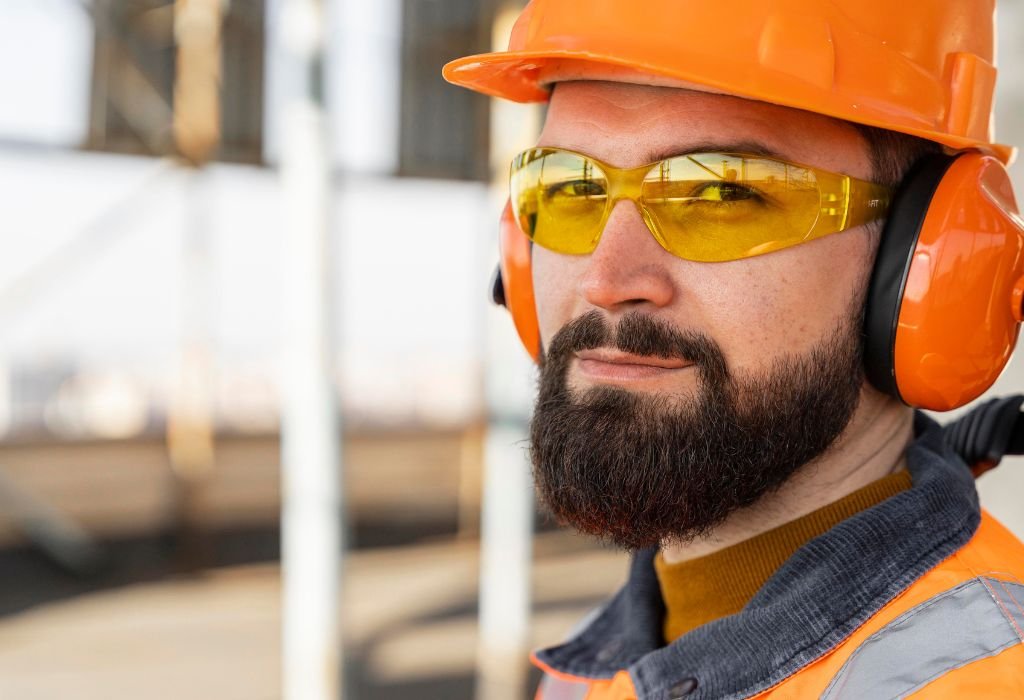
The choice of lens material determines how much UV is blocked. Polycarbonate is the leading material for safety eyewear because of its natural properties.
Polycarbonate lenses filter nearly 100% of harmful UVA and UVB without additional coatings. They are also impact-resistant and lightweight, making them ideal for safety glasses.
Other materials like glass or basic plastic require special UV coatings to achieve the same level of protection. Without certification, these coatings may wear off or prove unreliable.
Coatings such as anti-fog and anti-scratch do not necessarily provide UV protection. Always confirm with ANSI or EN markings.
Are plastic or glass lenses protective?
Only if they include certified UV-blocking coatings.
Do polarized lenses stop UV?
No, polarization reduces glare but does not guarantee UV protection.
Do clear indoor lenses block UV?
Yes, if marked with a UV rating like U6 or UV400.
Do blue-light filters equal UV filters?
No, HEV blue light is different and requires separate certification.
Can coatings wear off over time?
Yes, unless UV protection is built into the lens material.
Fit and coverage: the hidden half of UV protection
Even the best-rated lenses fail if they leave gaps. Coverage and fit are crucial to reducing side-entry UV rays.
Wraparound frames or glasses with side shields provide better coverage than standard frames. They prevent UV from entering around the edges.
Light can also reflect off the back surface of lenses into the eye. Proper curvature and anti-reflective coatings help minimize this risk.
Poorly fitting glasses encourage users to remove them frequently, reducing total protection time. Comfort is as important as certification.
Are side shields necessary outdoors?
Yes, they block lateral UV rays in bright environments.
Do small fashion frames protect well?
No, they often leave gaps that allow UV exposure.
Will a face shield replace safety glasses?
No, face shields should be worn in addition to certified glasses.
How tight should glasses fit?
They should sit snugly without leaving gaps or causing discomfort.
Do curved lenses improve UV protection?
Yes, they reduce side-entry light and improve coverage.
Indoor, outdoor, and special UV sources
Ultraviolet exposure is not limited to the sun. Artificial sources can produce high levels of UV radiation in certain environments.
Outdoors, UV exposure can be up to 20 times higher than indoors, putting construction workers, landscapers, and welders at greater risk (UC ANR). Certified eyewear is essential.
Indoors, most fluorescent lights emit low levels of UV. However, laboratories, hospitals, and workshops using UV curing lamps or germicidal devices require specialized eyewear.
Welding arcs produce extreme UV radiation that standard safety glasses cannot block. Only properly rated welding filters should be used.
Are standard glasses safe for UV-curing lamps?
No, only certified UV-filtering eyewear works against these sources.
Do lab barriers protect eyes?
Not reliably; always wear rated safety eyewear.
What about welding flash?
Use welding helmets with correct shade filters, never standard glasses.
Do face shields block UV indoors?
Only if rated; otherwise, they must be combined with UV-rated glasses.
Can UV pass through windows?
Yes, some UVA can pass through glass unless treated.
Buying checklist: what to look for
Choosing protective eyewear is easier when guided by a checklist. The following criteria ensure maximum UV defense.
- Look for ANSI Z87.1 with a U-rating (U2–U6) or UV400/100% UV protection.
- Choose polycarbonate lenses for built-in UV resistance.
- Select wraparound frames or side shields for coverage.
- Confirm markings on the lens, not just the packaging.
- Consider anti-fog and scratch resistance for usability.
Minimum rating to accept?
U6 or UV400 ensures maximum protection.
Are cheap glasses safe if labeled UV400?
Yes, if genuine and from a trusted seller.
Is Z87+ required?
Only if high-impact resistance is also needed.
What about EN markings in the EU?
EN 170 codes confirm UV filter performance.
Should markings be engraved?
Yes, genuine protective eyewear includes permanent lens markings.
Care, testing, and replacement
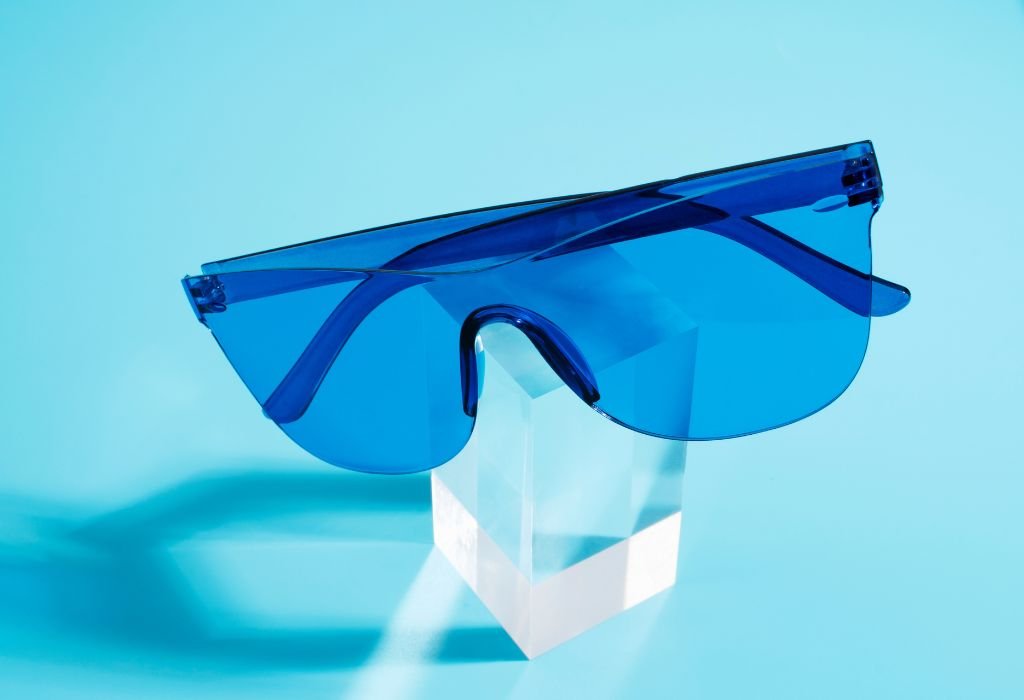
Maintaining safety glasses is essential to preserve UV protection. Damaged or scratched lenses should be replaced promptly.
Some coatings may degrade over time, reducing effectiveness. Polycarbonate lenses, however, maintain UV-blocking properties throughout their lifespan.
If in doubt, lenses can be tested with a UV transmission meter. Many opticians and safety suppliers offer this service.
Always store glasses in a case to prevent scratches and avoid leaving them in hot cars, which can warp materials.
Do coatings wear off?
Yes, unless UV protection is built into the lens itself.
How often to replace?
Replace when scratched, cracked, or no longer comfortable.
Can apps test UV blocking?
No, only certified meters or labs can confirm protection.
Will washing remove UV filters?
No, gentle cleaning will not remove UV properties.
Do expired glasses still protect?
Yes, if undamaged and properly certified.
Quick answers for common scenarios
Do safety glasses protect from UV light?
Yes, if rated UV400 or ANSI Z87.1 with a U-rating.
Are clear safety glasses enough in sunlight?
Yes, if certified with proper UV markings.
Do polarized safety glasses block UV?
Not by themselves; UV protection must be rated separately.
Which rating is best?
U6 provides the highest ANSI UV protection.
What EU code should I see?
EN 170 scale numbers confirm UV protection in Europe.
Is Z87 without U-mark enough?
No, UV protection requires the U-mark in addition to Z87.
Do polycarbonate lenses block UV naturally?
Yes, they filter nearly 100% of UVA and UVB.
Are prescription glasses UV safe?
Not always; only those marked with UV400 or similar are protective.
Conclusion
Safety glasses can protect from UV light when they are properly rated and correctly worn. Polycarbonate lenses, ANSI Z87.1 U-markings, and UV400 certifications are the most reliable signs of full protection.
Fit, coverage, and maintenance are equally important. Side shields, wraparound frames, and regular replacement ensure long-term safety.
Before the next outdoor project or workshop task, check the markings on your glasses. Choosing the right pair means protecting your eyes today and preserving vision for the future.

I’m Michael R. Turner, the founder, lead writer, and passionate DIY enthusiast behind 101diytools.com. With years of hands-on experience in home improvement and power tools, I built this platform to share practical tips, in-depth guides, and honest reviews to help DIYers of all skill levels tackle projects with confidence and the right tools.