Do Safety Glasses Prevent Welding Flash? Truth Revealed
A welding arc is one of the brightest artificial light sources on earth. The sudden flash can burn skin, ignite sparks, and cause serious eye injuries within seconds.
Many workers believe that regular safety glasses provide enough protection against this danger. The reality is more complex and often misunderstood.
Welding flash, also called arc eye or photokeratitis, is one of the most common occupational hazards in metalworking. Studies show that over 40% of welders report eye problems caused by arc radiation (NCBI).
The problem is not just brightness. Ultraviolet (UV), infrared (IR), and visible glare from arcs cause hidden damage that ordinary lenses cannot block. Even a few seconds of unprotected exposure may leave workers in severe pain.
So, do safety glasses prevent welding flash? The answer requires a closer look at how safety glasses function, what welding flash is, and how different types of protective gear compare.
This guide explains the truth, compares safety glasses to helmets and goggles, and shows the right features to look for in personal protective equipment (PPE). It also explores risks, real cases, and emerging safety solutions.
What Is Welding Flash / Arc Eye?

Welding flash, or arc eye, is an eye condition caused by exposure to UV radiation from welding arcs. The cornea absorbs this energy and becomes inflamed, leading to a painful burn.
Infrared radiation and bright visible glare can make the injury worse. The combined effect can cause temporary blindness and long-term strain on the eyes.
Symptoms include redness, watery eyes, blurred vision, swelling, and sensitivity to light. Many describe it as feeling like sand or grit inside the eyes.
In most cases, arc eye heals within a few days. But repeated exposure increases the risk of cataracts, retinal injury, or permanent vision loss.
According to occupational health reports, welding flash is among the leading causes of work-related eye injuries worldwide (PubMed).
What causes welding flash?
Arc eye is caused by UV radiation damaging the cornea during welding.
What are the symptoms of arc eye?
Redness, tearing, swelling, and light sensitivity are the main symptoms.
How quickly can welding flash occur?
It can develop after only seconds of unprotected exposure.
Can welding flash cause permanent damage?
Yes, repeated or severe cases may lead to cataracts or retinal damage.
Are bystanders also at risk?
Yes, anyone nearby without protection can suffer arc eye from reflected light.
How Do Safety Glasses Work? Components of Protection
Safety glasses are designed primarily for physical hazards like flying sparks, dust, and sharp fragments. They use strong polycarbonate lenses that resist impact and breakage.
Many models include UV filters that block a portion of ultraviolet radiation. This helps in outdoor or industrial environments but is often not strong enough for welding arcs.
Infrared and visible glare usually pass through ordinary lenses. This means they do not stop the most dangerous parts of arc radiation.
Some glasses add side shields or wraparound coverage. These features reduce indirect exposure and protect against stray sparks.
ANSI Z87.1 and OSHA certifications confirm glasses meet impact and optical clarity standards. However, these standards do not guarantee welding protection unless shade filters are included.
Do ordinary safety glasses block UV rays?
Yes, but they do not block the full intensity of welding UV radiation.
Can safety glasses stop infrared radiation?
No, they cannot block harmful infrared light from arcs.
Are side shields important?
Yes, they prevent indirect exposure from sparks and reflections.
Does shade number matter?
Yes, shade rating is the key to welding protection.
Are certified glasses enough for welding?
No, certification only proves impact resistance, not arc flash filtering.
Do Safety Glasses Prevent Welding Flash Fully?
Safety glasses provide partial protection but do not fully prevent welding flash. They are excellent against impact hazards but weak against UV and IR radiation.
Welding goggles or helmets use dark filter lenses with specific shade numbers. These filters block nearly all harmful radiation while still allowing visibility of the weld.
For example, a shade 10 or higher filter is often required for arc welding, depending on amperage. Ordinary safety glasses rarely provide this level of filtration.
Auto-darkening helmets add convenience by adjusting lens shade instantly when an arc strikes. This feature ensures the eyes are never exposed during welding.
Therefore, safety glasses alone are only suitable for nearby tasks like grinding, chipping, or observing from a safe distance. Direct welding requires helmets or goggles.
Are safety glasses enough for arc welding?
No, welding requires helmets or goggles with certified filter lenses.
When are safety glasses sufficient?
For grinding, cutting, or working near welders at a safe distance.
When is a helmet required?
Always during active arc welding or when assisting closely.
Do auto-darkening helmets work better than fixed shade?
Yes, they adapt instantly and reduce the risk of flash exposure.
Can tinted glasses replace welding filters?
No, dark sunglasses or tinted glasses do not block UV or IR radiation.
Choosing the Right Safety Glasses / PPE to Prevent Welding Flash
The right PPE depends on the welding method and intensity. Each process, from MIG to TIG, produces different levels of radiation.
Choose safety glasses with the correct filter shade for light-duty tasks like torch cutting or brazing. For arc welding, use a welding helmet or goggles with higher shade levels.
Look for ANSI Z87.1 or equivalent certification to ensure optical clarity and impact resistance. Also, verify that lenses provide full UV and IR protection.
Comfort and fit matter too. Poorly fitted glasses leave gaps where light can enter, reducing effectiveness. Anti-fog and scratch-resistant coatings improve usability.
Replacing damaged lenses is vital. Scratches or wear reduce protection and may allow harmful radiation to pass through.
What shade number should be used for welding?
Arc welding usually requires shade 10 or higher, depending on amperage.
What standards should be checked?
ANSI Z87.1, OSHA, or EN 166 certifications should be verified.
How often should PPE be replaced?
Replace when lenses are scratched, cracked, or lose clarity.
Are additional safety steps needed?
Yes, use full helmets, shields, and ensure bystanders are protected.
Can one pair of glasses cover all welding tasks?
No, different processes require different filter shade levels.
Risks of Insufficient Protection
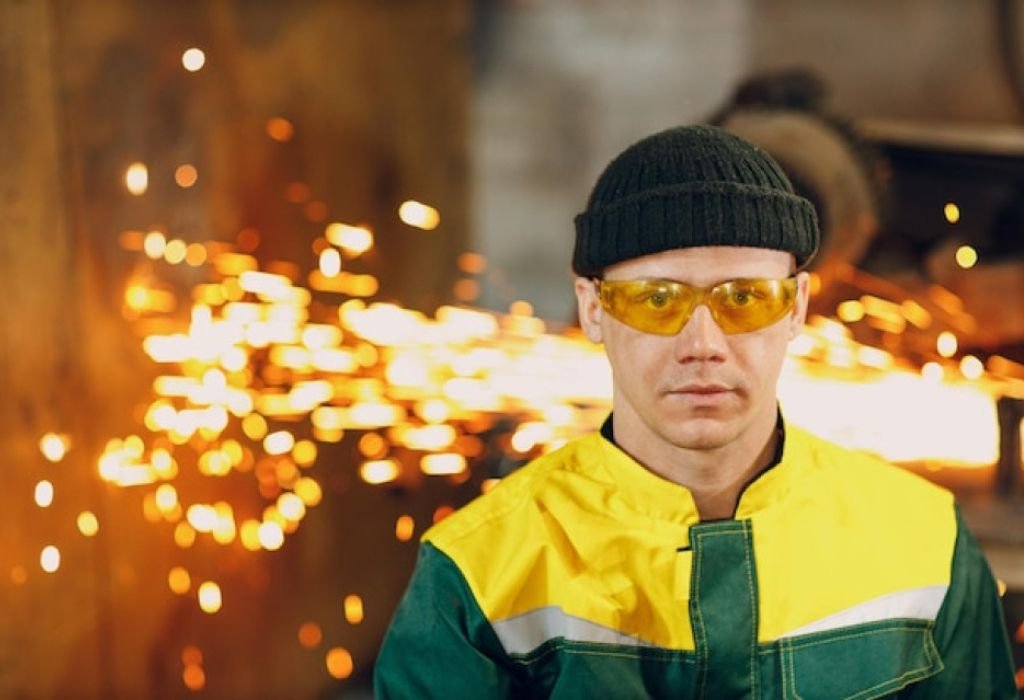
Failing to use proper PPE leads to immediate and long-term eye damage. Arc eye is painful and may keep workers off the job for several days.
Repeated exposure increases the risk of cataracts, retinal injury, and permanent blindness. Even brief flashes build cumulative damage over time.
Non-welders nearby are also at risk. Indirect reflection from shiny surfaces can cause arc eye in bystanders without protection.
According to the American Welding Society, about 25% of welding-related injuries involve the eyes, highlighting the urgent need for proper PPE (AWS).
What happens after repeated exposure?
Chronic exposure can cause cataracts and retinal damage.
Can welding flash cause blindness?
Yes, untreated or repeated injury can result in permanent vision loss.
Are nearby workers at risk?
Yes, indirect exposure can cause flash burns to unprotected eyes.
How fast should medical help be sought?
Immediately, especially if vision is blurred or pain is severe.
Does eye damage heal on its own?
Mild cases heal in days, but severe injuries need medical treatment.
Emerging Solutions and Future Trends
Protective technology is advancing rapidly. Auto-darkening helmets are becoming more affordable and widely used.
These helmets use liquid crystal filters that adjust shade automatically, reducing flash risk. They also improve comfort and efficiency for welders.
New lens materials are being developed to block UV and IR more effectively while maintaining clarity. Coatings also improve durability and reduce fogging.
Some modern PPE integrates smart sensors that monitor exposure and alert workers when radiation reaches harmful levels.
Regulations are also evolving, requiring stricter compliance with shade levels and PPE standards in industrial environments.
What are auto-darkening filters?
They are lenses that adjust shade instantly when an arc starts.
Do new lens materials improve safety?
Yes, advanced coatings and composites block more harmful radiation.
Will smart helmets become common?
Yes, integrated sensors and data logging are future trends.
Are PPE regulations changing?
Yes, agencies are adopting stricter rules on protective standards.
Do new technologies make safety glasses obsolete?
No, glasses remain important for grinding and support tasks.
Conclusion
Safety glasses are valuable but not enough to prevent welding flash. They protect against impact hazards and minor UV exposure but cannot stop the full intensity of arc radiation.
Welding flash is caused by UV, IR, and visible glare, which require certified filter lenses in helmets or goggles. Using the right PPE prevents painful injuries and long-term vision loss.
The safest approach is to combine safety glasses for support work with helmets or goggles for active welding. Certified shade levels, proper fit, and maintenance ensure the highest level of protection.
Protect your eyes. Choose the right PPE. Welding without it is never worth the risk.

I’m Michael R. Turner, the founder, lead writer, and passionate DIY enthusiast behind 101diytools.com. With years of hands-on experience in home improvement and power tools, I built this platform to share practical tips, in-depth guides, and honest reviews to help DIYers of all skill levels tackle projects with confidence and the right tools.