How Does a Circular Saw Differ from Other Power Saws
Walk into any workshop or construction site and you’ll hear the steady hum of power tools cutting wood, metal, or plastic. Among them, the circular saw stands out for its speed, precision, and versatility.
While jigsaws, miter saws, and table saws all have their strengths, the circular saw remains the most widely used because of its balance of power and portability. It’s the tool most carpenters reach for first.
But what exactly makes it different from the other saws on the bench? The answer lies in its design, function, and the types of cuts it can perform.
According to a 2024 woodworking industry survey, more than 60 percent of professionals use circular saws as their primary cutting tool due to their flexibility and efficiency.
In this guide, we’ll break down how a circular saw differs from other power saws and help you decide when to use each one for the best results.
Understanding What a Circular Saw Is

A circular saw is a handheld power tool that uses a rotating toothed blade to cut through materials in straight lines. The blade spins at high speed, typically between 4,000 and 6,000 RPM, powered by an electric motor.
The saw’s base plate, or shoe, helps guide it smoothly over the material for controlled, precise cuts. Users can adjust the blade depth and angle for bevel and plunge cuts.
Circular saws are designed to be portable, making them ideal for on-site work where larger stationary saws aren’t practical.
They can cut wood, metal, plastic, and masonry with the proper blade type, which adds to their versatility.
In short, the circular saw combines raw power, speed, and mobility into one compact cutting tool.
Key Features That Define a Circular Saw
The circular saw’s most defining feature is its round, rotating blade, which allows continuous cutting motion without interruption.
Unlike reciprocating saws, which move the blade back and forth, circular saws maintain constant blade contact with the material for smoother, faster cuts.
Most models allow depth adjustment, letting users control how deep the blade penetrates the material. This makes it useful for partial or plunge cuts.
Another defining feature is its bevel adjustment, enabling angled cuts up to 45 degrees. This feature is especially valuable in construction and furniture work.
Finally, its compact body and balanced weight make it easy to handle, even during long cutting sessions.
How a Circular Saw Differs from a Jigsaw
A jigsaw uses a thin, straight blade that moves up and down rapidly. This motion allows for curved and intricate cuts that a circular saw cannot achieve.
Circular saws, on the other hand, specialize in straight cuts. Their round blades spin continuously, making them faster but less suitable for curves.
Jigsaws are ideal for cutting complex shapes in thin materials like plywood, laminate, or sheet metal. Circular saws are better for large, straight cuts in thick materials such as framing lumber or particleboard.
In terms of speed, a circular saw can cut ten times faster than a jigsaw but lacks its fine control for detailed patterns.
Choosing between the two depends on whether you prioritize precision curves or straight power cuts.
How a Circular Saw Differs from a Miter Saw
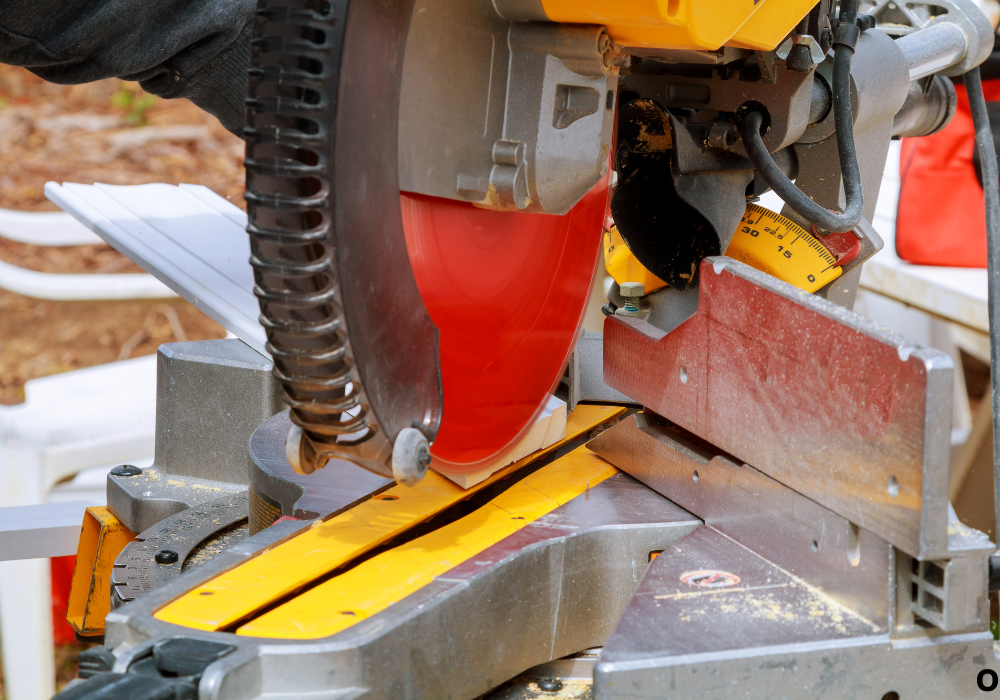
A miter saw is a stationary tool mounted on a pivoting arm that allows angled or cross cuts. It’s perfect for cutting trim, molding, and frames at precise angles.
A circular saw, by contrast, is handheld and mobile. It requires more manual control but offers greater flexibility for long rip cuts and general-purpose work.
Miter saws are unmatched for repetitive angle cuts because of their accuracy and built-in measuring guides. Circular saws are better for cutting large sheets or framing boards that can’t fit under a miter saw’s blade.
While a miter saw is more precise, it’s limited by its fixed cutting range. A circular saw can travel freely across large materials with ease.
Professionals often use both tools together — the circular saw for rough sizing and the miter saw for final accuracy.
How a Circular Saw Differs from a Table Saw
A table saw features a stationary circular blade that protrudes from the surface of a workbench. Instead of moving the saw, the user moves the material through it.
Circular saws flip this idea around: the blade moves, and the material stays in place. This makes circular saws more portable and easier to use on large panels.
Table saws are known for unmatched accuracy and repeatability in workshops. They’re ideal for long, straight rip cuts and production environments.
However, they require more setup space and safety precautions. Circular saws are better suited for fieldwork and quick jobs.
In essence, a circular saw is the mobile version of a table saw, trading a bit of precision for total convenience.
How a Circular Saw Differs from a Reciprocating Saw
A reciprocating saw, often called a “Sawzall,” uses a push-pull blade motion to cut through materials quickly. It’s primarily used for demolition or rough cutting.
Circular saws, with their spinning blades, provide much smoother and cleaner results.
While a reciprocating saw can handle wood, metal, or even pipes, it leaves rough edges and requires more control for straight lines.
Circular saws are preferred when you need accuracy, speed, and clean edges on large workpieces.
Simply put, a reciprocating saw destroys, while a circular saw crafts.
How a Circular Saw Differs from a Band Saw
A band saw uses a continuous metal blade loop that runs around two pulleys. It excels at curved cuts and resawing thick pieces of wood into thinner slabs.
Circular saws can’t make curved cuts but deliver straighter and faster results on long materials.
Band saws are bulky and designed for workshops, while circular saws are compact and perfect for job sites.
The band saw offers greater precision for shaping and intricate woodworking. The circular saw offers speed and versatility for framing and construction.
Both tools serve different purposes — one shapes details, the other builds structures.
Advantages of Using a Circular Saw
The biggest advantage of a circular saw is versatility. It can perform rip cuts, crosscuts, bevel cuts, and plunge cuts with ease.
Its high cutting speed ensures clean edges with minimal tear-out when paired with the right blade.
Circular saws are also highly portable, making them the go-to choice for outdoor or on-site projects.
They are more affordable than most stationary power saws and require less space for operation and storage.
Finally, they’re available in corded and cordless versions, giving users flexibility depending on work conditions.
Disadvantages Compared to Other Power Saws
Despite its strengths, a circular saw isn’t perfect for every task.
It lacks the fine precision of a miter saw for exact angle cuts and the curved cutting ability of a jigsaw.
Its handheld design means users rely on steady hands and guide rails for straight cuts, which takes practice.
Circular saws also generate more dust and noise than most smaller tools, requiring protective gear.
In short, they’re ideal for versatility, but not for specialized precision work.
Choosing Between a Circular Saw and Other Saws
When deciding which saw to use, consider your material type, cut style, and workspace.
If you’re cutting framing lumber, large plywood sheets, or decking, a circular saw is unmatched in speed and power.
For trimming moldings, window frames, or crown edges, a miter saw is your best option.
If you need curved or detailed cuts, go with a jigsaw or band saw. For heavy demolition, nothing beats a reciprocating saw.
Each saw has its specialty, but the circular saw remains the best all-around choice for general construction.
Power and Blade Comparison
Circular saws use blades ranging from 6½ to 7¼ inches, while miter and table saws often use 10 to 12-inch blades.
The smaller blade gives circular saws faster spin speeds and greater portability.
In terms of power, most corded models run between 13 and 15 amps, while cordless versions operate from 18V to 60V.
These specs give them enough power to cut through wood up to 2½ inches thick at a 90-degree angle.
This balance of size and strength makes the circular saw a universal cutting solution for professionals and hobbyists alike.
Market Statistics and Industry Insights
Circular saws account for nearly 40 percent of total power-saw sales worldwide as of 2024.
The demand for cordless brushless models continues to rise, with growth projected at 5 percent annually through 2030.
Professional users cite cutting power, portability, and blade versatility as the top three reasons for choosing circular saws over other tools.
Entry-level models are becoming lighter and more ergonomic, making them easier to use for beginners.
The circular saw’s combination of power and adaptability ensures its dominance in both home workshops and construction sites.
FAQs
1. What makes a circular saw unique among power saws?
It uses a spinning round blade for continuous motion, providing straight, fast cuts with portable convenience.
2. Can a circular saw replace a miter saw?
For general straight cuts, yes. But for accurate angled or repetitive cuts, a miter saw is still better.
3. What saw should I use for cutting curves?
A jigsaw or band saw is ideal for curved cuts. A circular saw is made for straight lines only.
4. Is a circular saw safe for beginners?
Yes, with proper training. Using guides, clamps, and safety gear makes it beginner-friendly.
5. Can a circular saw cut metal or concrete?
Yes, with the correct blade type. Use carbide-tipped or diamond blades designed for those materials.
6. Are cordless circular saws as powerful as corded ones?
Modern 36V and 60V brushless cordless models now match corded saws in torque and cutting speed.
7. Which is the most versatile power saw overall?
The circular saw is the most versatile due to its portability, speed, and compatibility with multiple materials.
Conclusion
A circular saw differs from other power saws through its design, portability, and all-around cutting ability. It delivers unmatched speed and efficiency while remaining compact enough for on-site use.
While jigsaws, miter saws, and table saws each serve their own specialties, the circular saw bridges the gap between them all.
It’s the tool that can go anywhere, cut almost anything, and handle both precision and power when used correctly.
For anyone building, remodeling, or crafting, the circular saw remains the one essential tool every workshop should have.
.

I’m Michael R. Turner, the founder, lead writer, and passionate DIY enthusiast behind 101diytools.com. With years of hands-on experience in home improvement and power tools, I built this platform to share practical tips, in-depth guides, and honest reviews to help DIYers of all skill levels tackle projects with confidence and the right tools.