Can You Sand Out Power Wash Damage on a Deck?
Deck boards that once felt smooth under bare feet can suddenly become rough, fuzzy, and splintery after what seemed like a simple cleaning. The low hum of a power washer that promised a spotless surface can sometimes leave behind uneven textures and lifted fibers.
Pressure washers set above 1200 PSI can strip softwood fibers instead of dirt, creating irreversible surface wear. When this happens, staining or sealing the deck becomes frustrating, as the coating fails to absorb evenly.
But before assuming the deck is ruined, you might wonder: can you sand out power wash damage on a deck? The short answer is yes—if the damage is only surface-level, sanding can restore the wood’s smoothness and prep it for a long-lasting finish.
This guide explains exactly what power-wash damage looks like, when sanding works, how to do it properly, when repair or replacement is better, and how to prevent the same mistake again. By the end, you’ll know how to bring your deck back to life safely and effectively.
What Is Power-Wash Damage on a Deck?

Power washing uses a stream of pressurized water to remove dirt, mold, and grime. However, when done incorrectly, it can roughen and erode the top layer of the wood.
The result is power-wash damage — a surface with raised grain, fuzziness, or even visible gouges. It’s most common on softer woods like pine, cedar, and redwood because their fibers are easily torn.
In extreme cases, the power washer cuts into the surface, leaving uneven grooves that no amount of stain can hide. Many homeowners experience this after using high pressure or holding the nozzle too close to the boards.
What does raised grain from power washing look like?
It appears as fine, lifted fibers that make the wood feel fuzzy or splintery.
Why does a power washer lift wood fibers on a deck?
Because high-pressure water digs into the soft layers of wood, separating the grains.
Is the damage from power washing always structural?
No. Most of it is cosmetic and can be fixed with light sanding.
Which deck materials are most at risk?
Softwoods such as pine and cedar are the most vulnerable, while composites and hardwoods are more resistant.
How soon after power washing will damage appear?
The rough texture usually shows once the deck dries—within a few hours.
Can You Sand Out Power Wash Damage on a Deck?
Yes, in most cases you can sand out power wash damage on a deck. Sanding removes the raised fibers, smooths the surface, and helps stain absorb evenly again.
If the boards only have surface fuzz or minor gouges, sanding will likely restore them completely. However, deep cuts or pressure gouges that remove too much wood may need replacement instead.
The goal of sanding is to remove just enough material to level the damaged fibers without thinning the boards. Using 60–80-grit sandpaper for rough cleaning damage and 100–120-grit for fine finishing gives the best result.
Proper sanding not only smooths the surface but also increases stain adhesion, ensuring the finish lasts longer and looks uniform.
Will sanding completely remove fuzzy wood fibers after power washing?
Yes, sanding removes the lifted grain and returns a smooth texture.
Can sanding repair deep gouges or pressure washer marks?
Minor marks can be reduced, but deep gouges may require board replacement.
How much wood do you remove when sanding a deck?
Usually less than 1 mm—just enough to eliminate surface damage.
Does sanding improve stain adhesion after power washing?
Yes, sanding opens wood pores and helps stain bond evenly.
Are there risks to sanding too much?
Yes, oversanding can thin boards, expose nails, or create uneven color.
How to Properly Sand Out Power Wash Damage on a Deck
Before sanding, allow the deck to dry completely. Moisture trapped in the wood clogs sandpaper and prevents even sanding.
Inspect each board for cracks or deep grooves, marking any severe spots for later repair. Tighten loose screws and countersink nails so the sanding pad glides smoothly.
Start with a coarse 60–80 grit paper to remove fuzz and raised fibers, then finish with 100–120 grit to smooth the surface. For large decks, use a random orbital or floor sander for consistency.
Always sand with the wood grain to avoid cross-scratches. After sanding, vacuum or sweep thoroughly and wipe with a damp cloth to remove all dust before staining.
How long should you wait after power washing before sanding?
Let the deck dry at least 24–48 hours, longer in humid conditions.
What grit sandpaper is best for smoothing out power-wash damage?
Start with 60–80 grit, finish with 100–120 grit.
Should you sand the entire deck or only damaged boards?
For even color and texture, sanding the entire surface is best.
Are there special tools recommended for deck sanding after power washing?
An orbital sander for edges and a floor sander for open surfaces give the best results.
How should you prepare the deck after sanding?
Remove all dust, test for dryness, and apply a quality wood stain or sealer.
When Not to Rely on Sanding – Replacement or Repair Needed
Sanding cannot fix every kind of damage. If pressure washing has created deep gouges or removed large chunks, sanding may only make them more visible.
Structural damage, rot, or soft spots indicate the need for replacement. Attempting to sand rotten boards risks spreading mold and weakening the deck further.
Check the board’s surface for deep cracks or splitting near fasteners. If your screwdriver sinks easily into the wood, it’s no longer safe to restore.
In these cases, replacing boards will save time and create a safer deck long-term. Repairing a few boards is often cheaper than rebuilding the entire structure.
What signs show a deck board needs replacement instead of sanding?
Soft spots, large splinters, or severe gouges that go below the surface.
Can sanding hide underlying rot or moisture?
No, sanding only smooths the surface—it won’t solve structural problems.
How does power-wash damage speed up replacement needs?
By exposing raw fibers, it allows more moisture penetration and decay.
Are new boards more durable than sanded ones?
Yes, especially when sealed and maintained correctly.
How to budget for sanding vs. replacement?
Estimate the cost of new lumber versus labor hours—often sanding is cheaper if boards are still solid.
Future Maintenance & Prevention to Avoid Power-Wash Damage Again
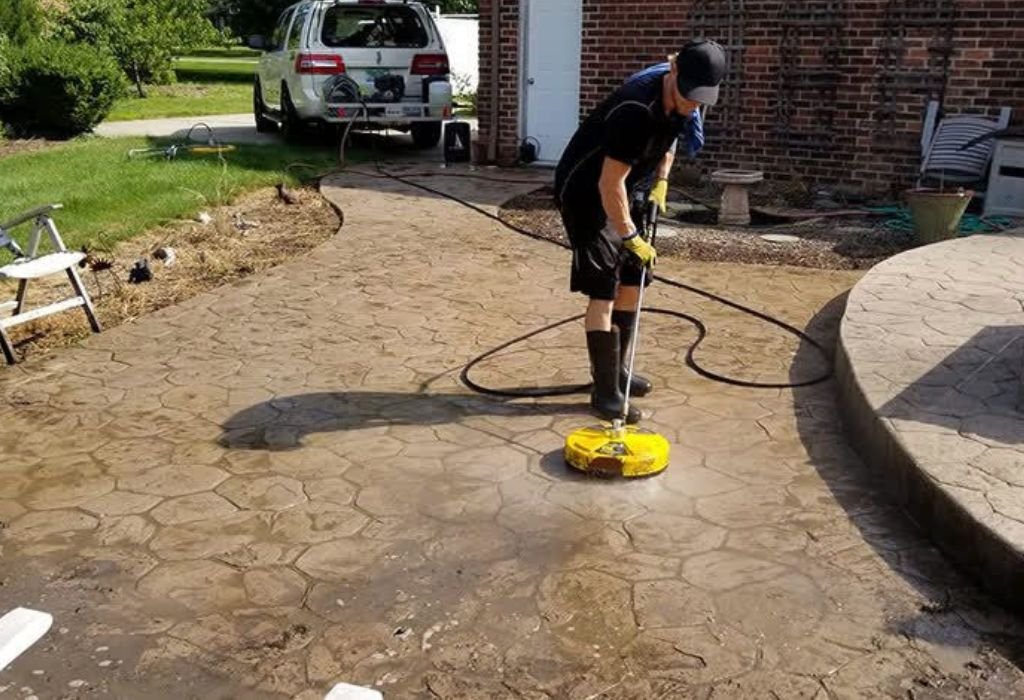
To avoid repeating the same problem, start by adjusting your cleaning method. Use a wide-angle fan tip and keep the nozzle at least 12 inches from the surface.
Limit pressure to 500–1,200 PSI for wood decks and move the spray evenly along the grain. Avoid stopping in one spot or angling the jet directly at the boards.
Once a year, clean your deck with a wood-safe cleaner and soft brush instead of a power washer. Gentle washing helps remove dirt and mildew without damaging the fibers.
Seal or stain your deck every 2–3 years to protect the surface from moisture and UV damage. Regular inspection for raised grain, mildew, and peeling finishes helps catch issues before they worsen.
What pressure setting is safe for wood decks?
Between 500–1,200 PSI, depending on the wood type.
How often should a deck be cleaned?
Once per season is enough for most climates.
Which method cleans gently without damage?
Use a deck cleaner solution and soft bristle brush.
How do you know if the deck is ready for sealing?
Perform a water test—if water beads, it’s sealed; if it soaks in, it’s time to reseal.
What regular checks prevent future damage?
Inspect annually for raised fibers, loose fasteners, or faded sealant.
Conclusion
In most cases, you can sand out power wash damage on a deck if the harm is only surface deep. Sanding restores smoothness, evens texture, and prepares the wood for new stain or sealant.
The key is timing—wait until the deck dries fully, use the right grit, and sand consistently with the grain. Avoid oversanding, and always inspect boards for deeper issues before proceeding.
Power washing can rejuvenate a deck, but only when done carefully. By learning proper pressure levels, cleaning angles, and follow-up sanding, homeowners can enjoy spotless decks without sacrificing durability.
If your deck shows roughness or fuzz after washing, grab the sander instead of the saw. With patience and the right approach, that worn surface can look brand new again.

I’m Michael R. Turner, the founder, lead writer, and passionate DIY enthusiast behind 101diytools.com. With years of hands-on experience in home improvement and power tools, I built this platform to share practical tips, in-depth guides, and honest reviews to help DIYers of all skill levels tackle projects with confidence and the right tools.