Can You Run Impact Wrench with a Pancake Compressor
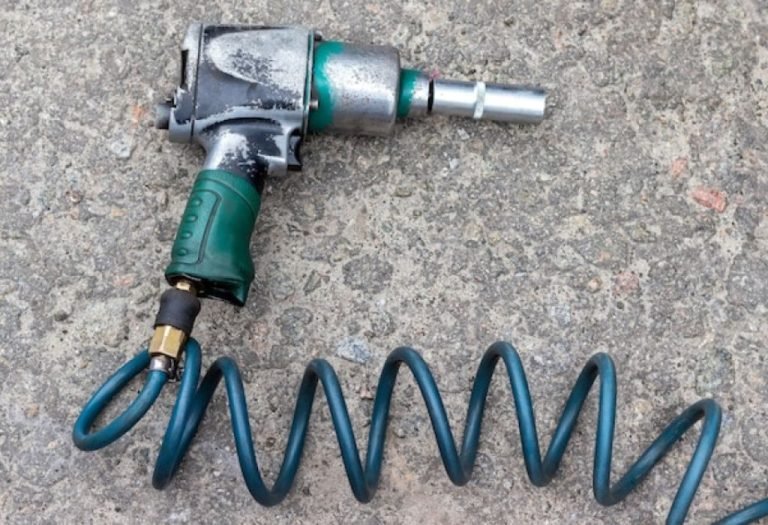
Picture this: you are ready to rotate your car’s tires and reach for your impact wrench, but the only compressor nearby is a small pancake model.
The question instantly arises—can you run an impact wrench with a pancake compressor, or is it wishful thinking?
At first glance, the answer seems simple. A compressor delivers air, and an impact wrench consumes it, so the pairing should work. But when the air supply is too limited, tools designed for heavy torque fail to perform as expected.
A typical 1/2-inch pneumatic impact wrench requires 4–6 CFM at 90 PSI to run effectively Ingersoll Rand Specs. By contrast, most 6-gallon pancake compressors provide only 2–3 SCFM at 90 PSI, creating an instant mismatch Home Depot Compressor Guide.
This performance gap quickly shows in real-world use.
The wrench may start strong, but within seconds the tank empties, pressure drops, and the tool stalls.
Instead of effortlessly loosening lug nuts, you end up waiting for the tank to refill, stretching a five-minute task into half an hour.
The appeal of pancake compressors is clear—they are compact, affordable, and perfect for nailers, staplers, or inflating tires. But using them with air-hungry tools like impact wrenches creates more frustration than efficiency.
The difference between pressure (PSI) and airflow (CFM) becomes critical, and understanding this distinction helps DIYers avoid wasted time and money.
This article breaks down whether a pancake compressor can power an impact wrench, explores its limitations, and reveals safer, more effective alternatives for both DIY projects and automotive repair.
Understanding Pancake Compressors
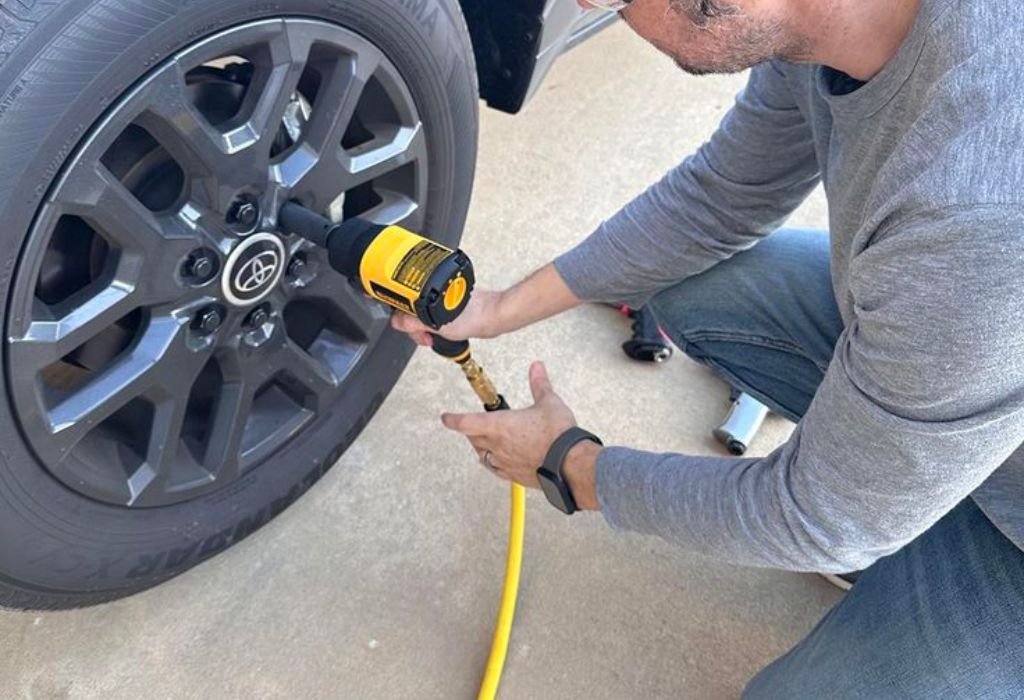
Pancake compressors are popular among homeowners for their portability and low cost. Their flat, round tanks usually hold 6 gallons and are easy to carry around a garage or workshop.
The trade-off is output. Most pancake compressors provide 2–3 SCFM at 90 PSI, which is enough for brad nailers or airbrushes but not for high-demand tools. Their small tanks empty quickly, forcing the motor to cycle repeatedly, creating downtime and wear.
What is a pancake compressor?
It is a compact, portable compressor with a flat tank, commonly used for light-duty tasks.
How much CFM does it produce?
Most models generate 2–3 SCFM at 90 PSI, which is below impact wrench requirements.
Is it designed for heavy air tools?
No, it is best suited for low-consumption tools like nailers and blow guns.
Why do DIYers like them?
They are lightweight, affordable, and often oil-free for easy maintenance.
How long can it run continuously?
Only for short bursts, as the tank size and duty cycle are limited.
Air Requirements of an Impact Wrench
Impact wrenches rely on consistent airflow rather than just high pressure. Without enough CFM, they cannot deliver their rated torque.
A 1/2-inch impact wrench typically requires 4–6 CFM at 90 PSI, while smaller 3/8-inch models still need 3–4 CFM. This exceeds what most pancake compressors can sustain, especially during continuous use.
How much air does a 1/2-inch impact wrench need?
Around 4–6 CFM at 90 PSI for reliable torque.
Will pressure alone run it?
No, both PSI and airflow are required for performance.
Do smaller 3/8-inch models need less?
Yes, but they still exceed the limits of a pancake compressor.
What happens if CFM is too low?
The wrench loses torque, stalls, and fails to remove tough fasteners.
How much reserve capacity is ideal?
At least 15–20 gallons of tank capacity for steady wrench performance.
Can You Run an Impact Wrench with a Pancake Compressor?
The short answer is yes, but the results are disappointing. You may loosen one or two lug nuts before the compressor runs out of air.
The small tank size and low SCFM rating make continuous use impossible. Instead of efficient work, you spend most of the time waiting for the compressor to recharge.
Will it remove lug nuts?
Possibly a few, but not without long pauses between each.
Does tank size matter?
Yes, the 6-gallon tank drains in seconds under load.
What about short bursts?
It works better for quick, light fastening tasks than for heavy bolts.
Is it practical for auto repair?
No, the constant waiting cancels out any productivity.
What is the main drawback?
The compressor cannot supply enough airflow for continuous wrench use.
Real-World Performance & Limitations
DIY forums are full of users trying this setup, and most share the same conclusion: it works only in emergencies. The wrench may spin briefly but lacks the power to deliver full torque.
Even if the regulator is set at 90 PSI, airflow drops below the required threshold as soon as the tank empties. Longer hoses and quick-connect fittings further reduce efficiency.
Will the wrench reach full torque?
No, it usually delivers far less torque than rated.
Can regulator settings help?
Slightly, but CFM is the true limiting factor.
Does hose length affect performance?
Yes, longer hoses cause additional air loss.
What about duty cycle?
Frequent cycling overheats and strains small pancake compressors.
Will electric impact wrenches perform better?
Yes, cordless or corded models eliminate compressor limitations.
Safety Considerations
Using a pancake compressor for demanding tools carries risks. Overheating, unstable torque, and under-tightened bolts can all create safety hazards.
Noise is another concern, as small compressors often operate at high decibels. Prolonged use increases strain on both the tool and the user.
Can the motor overheat?
Yes, frequent cycling can cause overheating.
Could air hoses burst?
If regulators are bypassed or hoses are undersized, yes.
Does torque inconsistency cause accidents?
Yes, fasteners may be dangerously under-tightened.
Is it safe indoors?
Yes, but noise levels can be disruptive.
What’s the vibration concern?
Low torque combined with extended operation increases user fatigue.
Workarounds & Alternatives
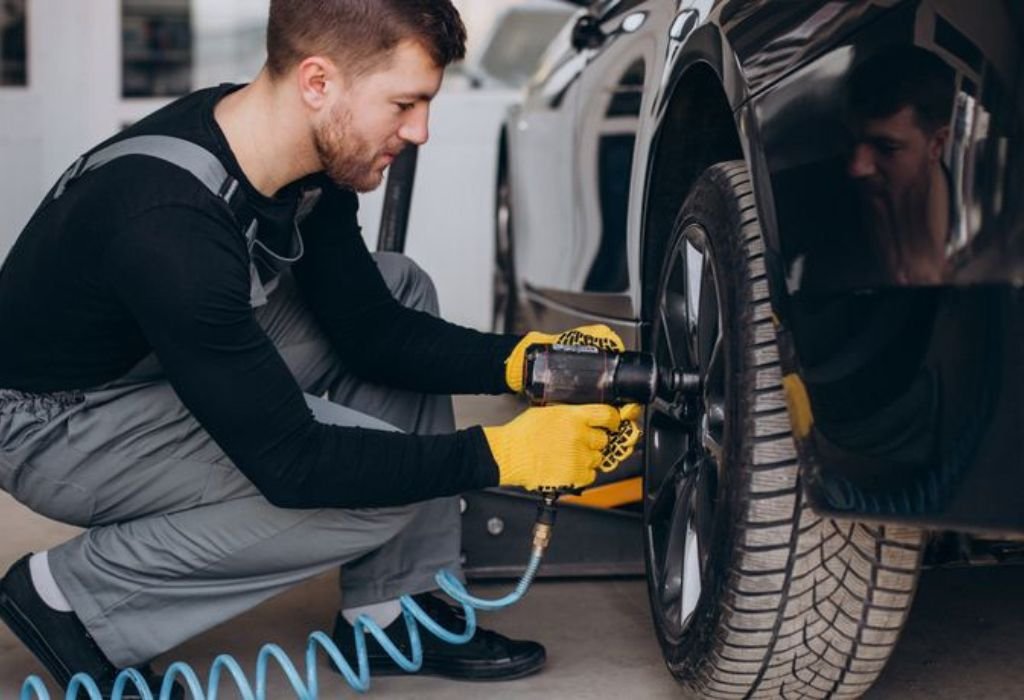
If a pancake compressor is all you have, there are ways to minimize frustration. Smaller impact wrenches consume less air, and short hoses reduce airflow losses.
However, the most practical alternatives are cordless impact wrenches or renting a larger compressor for big jobs.
Can a smaller impact wrench work better?
Yes, 3/8-inch models are less demanding but still limited.
Will a larger compressor fix it?
Yes, 20–30 gallon compressors with higher CFM are ideal.
Can you use air tool oil to help?
Yes, lubrication improves tool efficiency and lifespan.
What about cordless impact wrenches?
They bypass airflow limits entirely and work anywhere.
Should you upgrade or rent?
Renting a mid-size compressor is cost-effective for occasional projects.
Buyer’s Guide: Choosing the Right Setup
When matching compressors with air tools, tank size and CFM are critical. A 20–30 gallon compressor with at least 4–6 CFM at 90 PSI is ideal for impact wrenches.
Oil-lubricated compressors last longer and handle continuous workloads better than oil-free pancake models.
What’s the minimum compressor size for impact wrenches?
At least 20 gallons and 4–6 CFM at 90 PSI.
Are oil-lubricated models better?
Yes, they are more durable for long-term use.
Do you need short hoses?
Yes, shorter hoses improve air delivery efficiency.
What features to look for?
High SCFM, larger tank, and a reliable duty cycle.
How long does a 6-gallon tank last with a wrench?
Often less than 15 seconds of continuous operation.
FAQs
Can you run an impact wrench with a pancake compressor?
Yes, but it is highly limited and impractical for continuous work.
What size compressor do you need for a 1/2-inch impact wrench?
At least 20 gallons with 4–6 CFM at 90 PSI.
Can a pancake compressor loosen lug nuts?
Maybe a few, but the tank empties quickly.
What is better than a pancake compressor for impact wrenches?
A mid-size compressor or cordless impact wrench.
Is it worth trying with a pancake compressor?
Only for very light, occasional tasks.
Conclusion
So, can you run an impact wrench with a pancake compressor? The answer is yes, but only in short bursts, and the performance will fall short of expectations.
For DIY projects, pancake compressors shine with nailers and inflation tasks. But for automotive repair or continuous fastening, a larger compressor or cordless wrench is the smarter choice.
Investing in the right setup saves time, ensures safety, and delivers the torque you need without frustration. When it comes to powering an impact wrench, size really does matter.

I’m Michael R. Turner, the founder, lead writer, and passionate DIY enthusiast behind 101diytools.com. With years of hands-on experience in home improvement and power tools, I built this platform to share practical tips, in-depth guides, and honest reviews to help DIYers of all skill levels tackle projects with confidence and the right tools.