Find Out If Your Brad Nailer Can Use Staples Safely
No, your brad nailer generally cannot use staples safely or effectively. These tools are specifically engineered for brad nails, with distinct mechanisms for magazine alignment, driver blades, and firing that are incompatible with staples. Attempting to force staples can lead to frequent jams, permanent tool damage, unsafe operation, and poor fastening results, making a dedicated stapler or a combination nailer/stapler the proper solution.
Find Out If Your Brad Nailer Can Use Staples Safely
Hey there, fellow DIYer! Ever stared at your trusty brad nailer and wondered, “Can this thing just use staples too?” It’s a common thought, especially when you’re trying to streamline your toolkit or just have a few staples lying around. We’ve all been there, looking for that one tool to do it all. So, let’s get right to it: generally, *no*, a standard brad nailer is not designed to use staples. Trying to force it can lead to safety risks, tool damage, and a whole lot of frustration.
It might seem like a simple swap, but these tools are engineered quite differently. Think of it like trying to put diesel in a gasoline engine – it just won’t work correctly, and it could cause serious problems. Your brad nailer is a specialist, and it excels at its intended job: delicate, precise brad nailing.
Can a brad nailer use staples, and what important things should I know about it?

Alright, let’s dive deep into why a brad nailer can’t safely or effectively use staples. It’s a question I get a lot, and understanding the differences is key to successful, safe projects.
First off, the fundamental design. A brad nailer is built to fire thin, straight brads – essentially headless nails. These are perfect for small trim work, crafts, and anything where you want a minimal hole. Staples, on the other hand, are U-shaped fasteners, designed to hold materials together with two legs, offering a wider clamping surface. This basic shape difference is where all the issues begin.
Here’s why your brad nailer and staples are a mismatch:
- The Magazine: Picture the magazine on your brad nailer. It’s narrow, designed to snugly hold a strip of straight brads. Staples, even narrow crown ones, are wider and often thicker. They simply won’t fit correctly into the brad nailer’s magazine. If you try to force them, they’ll jam immediately.
- The Driver Blade: Every nail gun has a driver blade that strikes the fastener, pushing it into your material. In a brad nailer, this blade is thin and shaped to push a single brad. It’s not designed to strike two staple legs evenly. If it somehow managed to hit a staple, it would likely push one leg in, bend the other, or simply crumple the staple. You’d end up with a mangled fastener and potentially a damaged driver blade. Trust me, replacing that blade isn’t fun or cheap!
- Safety Hazards: This is a big one. Trying to use the wrong fasteners dramatically increases the risk of misfires. A staple could jam, causing the tool to kick back, or it might fire erratically, sending a partially driven or bent staple flying unpredictably. We never want flying projectiles in the workshop! Your safety and the longevity of your tool are paramount.
- Tool Damage: Forcing staples into a brad nailer isn’t just ineffective; it can cause significant damage to the tool itself. Jams can bend internal components, break the feeder spring, or even warp the magazine. Repairs can be costly, and sometimes the tool is simply ruined. I once saw a friend try to “adapt” a brad nailer for staples. It ended in a loud *thunk*, a twisted staple, and a nailer that never quite worked the same again. It was a tough lesson learned about sticking to manufacturer guidelines.
- Substandard Work: Even if, by some miracle, you managed to get a staple out, it wouldn’t be properly seated. You’d have proud staples, uneven finishes, and a project that looks sloppy. For delicate work, which is what brad nailers excel at, precision is everything.
So, what should you use?
If your project calls for staples, you need a dedicated staple gun or stapler. These tools come in various forms:
- Manual Staple Guns: Great for light upholstery, attaching paper, or small craft projects.
- Electric Staple Guns: Offer more power for things like insulation or light sheathing.
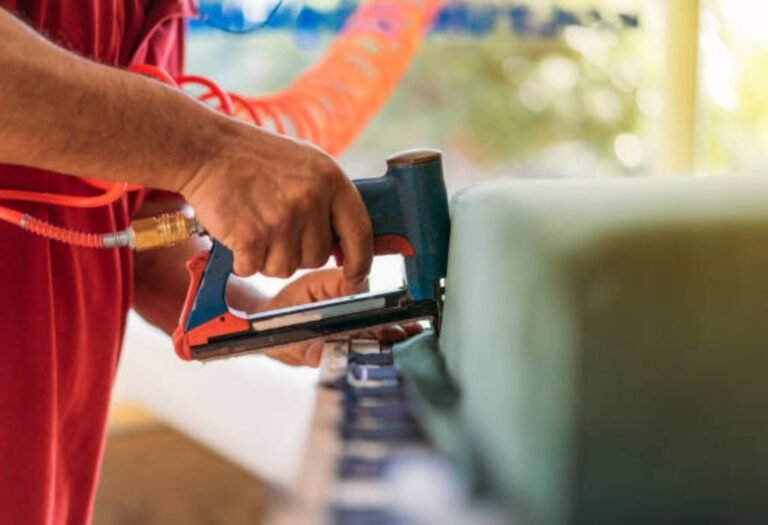
- Pneumatic Staple Guns: These are the heavy hitters, often called staple nailers, and they’re designed for serious framing, subflooring, or attaching roofing felt. They use compressed air, just like many brad nailers, but their internal mechanisms and magazines are built specifically for staples.
- Combination Nailers: It’s worth noting that some specialized tools are designed to fire *both* brads and narrow crown staples. However, these tools are explicitly advertised for this dual function and have specific mechanisms to handle both fastener types. Your standard brad nailer won’t be one of these. Always, always check your tool’s manual – it’s your best friend for understanding what fasteners your specific model can handle.
In my experience, having the right tool for the job always pays off. It saves time, prevents headaches, ensures safety, and results in a much higher quality finish. For delicate trim work, picture frames, or attaching small decorative pieces, my brad nailer is indispensable. But when I need to secure fabric, insulation, or even some light paneling, I reach for my staple gun. Each tool has its purpose, and respecting that will make your DIY journey much smoother.
In conclusion, while the idea of a brad nailer using staples might sound convenient, the reality is that it’s just not practical, safe, or effective. Stick to what each tool is designed for. Investing in the correct staple gun for your projects will save you frustration, protect your tools, and most importantly, keep you safe. Happy building!

I’m Michael R. Turner, the founder, lead writer, and passionate DIY enthusiast behind 101diytools.com. With years of hands-on experience in home improvement and power tools, I built this platform to share practical tips, in-depth guides, and honest reviews to help DIYers of all skill levels tackle projects with confidence and the right tools.