Do You Sand or Power Wash a Deck First? Find Out
A faded, splintered deck can make even the most beautiful backyard look tired and neglected. Many homeowners stand with a power washer in one hand and a sander in the other, wondering which should come first to restore that smooth, golden finish.
Choosing the wrong sequence can waste hours of work and even damage the wood. Power washing at the wrong time or sanding too soon can lead to raised fibers, blotchy stain absorption, and uneven color. That confusion is why “do you sand or power wash a deck first” has become one of the most debated questions in home maintenance circles.
Proper surface preparation determines how long your deck stain or seal lasts. Nearly 80% of premature deck failures occur because of improper prep or moisture issues. The key lies in understanding how water, wood fibers, and sanding interact to create a finish that resists peeling and weather damage.
A deck’s surface may look clean, but dirt, mildew, and old finish can block new stain from penetrating. Power washing clears those layers quickly, while sanding smooths the rough texture left behind. The challenge is finding the right balance so cleaning doesn’t damage the wood and sanding doesn’t seal in moisture.
Before lifting your washer or sander, it’s essential to know how each step affects the final result. This guide explains whether to sand or power wash first, when to do each, and how to prepare the perfect surface for long-lasting protection and beauty.
Understanding Deck Surface Preparation
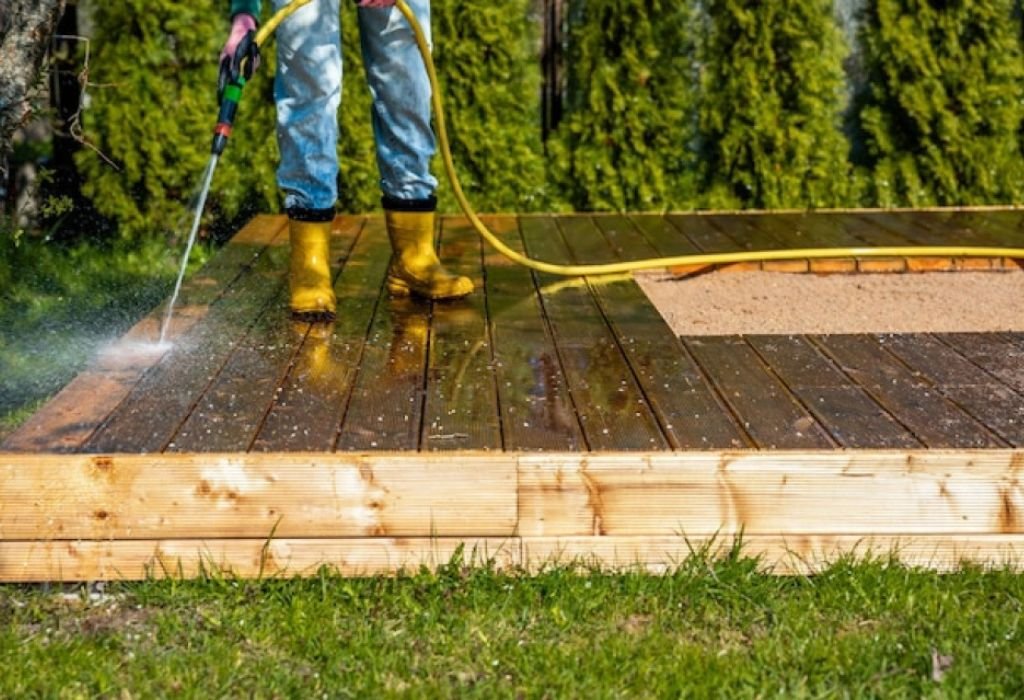
A deck takes constant abuse from rain, sunlight, and foot traffic, causing its surface to lose color and texture over time. To restore durability and a clean finish, preparation becomes the foundation of any successful refinishing project.
Surface preparation refers to the process of cleaning and smoothing the deck boards before applying a new stain or sealer. This step removes dirt, mildew, and old coatings while opening the wood grain for better stain penetration and adhesion.
Skipping or rushing this stage often leads to uneven coloring or peeling finish within months. Deck surfaces that are properly cleaned and sanded before staining can extend finish life by up to 50%.
Preparation isn’t just about appearance—it’s about protecting the wood fibers and preventing water from soaking in. A well-prepared surface ensures that every coat of stain locks firmly into the grain, sealing out moisture and UV damage.
What does “power wash a deck” mean?
It involves using pressurized water to remove dirt, mildew, and loose coatings from the deck surface, restoring a clean base for further treatment.
What does “sanding a deck” involve?
Sanding smooths out splinters, raised fibers, and imperfections left after cleaning, creating a uniform surface ready for staining or sealing.
Why is preparation important for a deck finish?
Without proper preparation, stain or sealer cannot bond deeply, leading to patchy color and reduced protection from the elements.
How do wood fibers and grain impact deck staining?
Open wood grain allows stain to penetrate evenly, while closed or damaged fibers can cause blotches and poor adhesion.
When is deck surface cleaning enough without full sanding?
If the existing finish is intact and the wood feels smooth after cleaning, light washing and spot sanding may be sufficient before restaining.
Benefits and Risks of Power Washing Your Deck First
Power washing offers one of the fastest ways to strip away years of grime, mildew, and loose finish. It instantly reveals the natural wood color beneath the dirt, giving you a clean surface ready for restoration.
However, power washing is not without risk. Too much pressure or the wrong nozzle angle can gouge soft wood fibers and raise splinters that make sanding more difficult.
Wood decks should be washed using 500–600 PSI for softwoods and up to 1200 PSI for hardwoods. Using higher pressure may cause irreversible damage or fiber tearing.
When done correctly, power washing prepares the surface better than scrubbing alone. It opens pores in the wood grain and removes contaminants that sanding alone cannot reach.
Does power washing remove old stain and finish?
It removes loose and flaking coatings, but not deep or fully cured stains, which may still require chemical strippers or light sanding.
Can power washing damage wood fibers or boards?
Yes, if pressure exceeds recommended levels or if the nozzle is held too close to the wood, it can erode the surface and create uneven texture.
How long should the deck dry after power washing?
Typically, 24–48 hours of drying time is recommended before sanding or staining, depending on weather and humidity.
What pressure and nozzle settings are safe for wood decks?
Use a fan nozzle between 25°–40° and keep the tip at least 12 inches from the surface to avoid damage.
Is power washing enough to prepare the deck for stain or sealer?
No, while it cleans deeply, sanding may still be needed to smooth raised fibers and ensure even stain absorption.
Benefits and Risks of Sanding Your Deck First
Sanding transforms rough, splintered boards into a smooth, even surface ready for finishing. It helps open wood pores and removes stubborn coatings that water cannot lift.
The biggest advantage of sanding is control—it targets problem spots precisely without risking gouges or fiber lifting. A smooth deck also enhances stain color uniformity and improves sealer adhesion.
However, sanding before cleaning can trap dirt, mold, and contaminants deeper into the wood. This can lead to uneven staining or adhesion failure later on.
Sanding before power washing often seals contaminants into the grain, reducing stain penetration. Therefore, sanding is best done only after a deck has been properly cleaned and dried.
Why sand a deck before applying stain or sealant?
It removes roughness and raised fibers, giving the finish a professional and polished look.
Does sanding remove mold, mildew, or dirt like cleaning does?
No, sanding only removes surface imperfections; organic growth or deep grime must be washed away first.
What grit sandpaper is suitable for deck boards?
A 60–80 grit paper is ideal for removing splinters without polishing the wood too smooth, which can reduce stain absorption.
When might sanding be unnecessary for a deck?
If boards are new, recently refinished, or already smooth after cleaning, heavy sanding may not be needed.
How should sanding affect the adhesion of new finish?
Proper sanding opens the wood grain, allowing stains and sealers to penetrate deeply and bond longer.
Which Should Come First: Sanding or Power Washing?
Most experts agree that power washing should always come before sanding. Cleaning first removes dirt and old coatings so sanding can smooth the raised fibers without grinding in debris.
If sanding is done first, moisture and dirt can settle into freshly exposed pores, weakening the wood and causing premature peeling. The correct sequence ensures both cleanliness and smoothness without compromising adhesion.
You should wait at least 24–48 hours after power washing before sanding, ensuring the deck is completely dry. Moisture trapped in the wood during sanding can quickly cause blotching and cracking once sealed.
Following the proper order—clean, dry, then sand—creates a surface that looks better and lasts longer.
Should you power wash before sanding?
Yes, cleaning first removes contaminants, making sanding smoother and preventing dust contamination.
Is sanding before power washing ever recommended?
Only for new, untreated wood with no grime or coating buildup, where light surface sanding may improve stain adhesion.
What steps ensure the deck is ready for sanding after washing?
Check for dryness by taping plastic overnight; condensation indicates trapped moisture.
What happens if you skip drying time before sanding?
Moisture will clog sandpaper, tear fibers, and leave uneven patches that absorb stain inconsistently.
Does the type or condition of wood affect the sequence?
Yes, softwoods like cedar and pine require gentler washing and lighter sanding than hardwoods like ipe or mahogany.
Step-by-Step Process: Clean, Dry, Sand, Finish
A systematic approach helps ensure long-lasting results. Each stage builds on the previous one to protect and enhance the deck surface.
- Inspect the deck and repair damaged boards.
- Power wash carefully using proper PSI and nozzle angle.
- Allow the surface to dry completely for 24–48 hours.
- Sand with 60–80 grit to remove roughness and raised fibers.
- Clean off dust before applying stain or sealer.
- Apply finish evenly for a uniform, durable look.
Cleaning and sanding before staining helps extend deck life and prevents water intrusion.
What tools and materials are needed for cleaning and sanding a deck?
A pressure washer, deck cleaner, orbital sander, sandpaper, safety gear, and brushes for staining are essential.
How long should the deck dry before sanding or finishing?
Wait 24–48 hours, or until the wood feels completely dry when touched.
What checks should be made before applying stain or sealer?
Ensure no dust remains and the surface feels smooth with open grain visible.
How should you deal with loose boards, raised nails or damage before finishing?
Replace damaged boards and reset nails to prevent water entry beneath the surface.
What finish options exist after preparation and how do they benefit?
Penetrating stains highlight natural color, while sealers create a protective layer against moisture and UV rays.
Maintenance & Future Trends in Deck Care
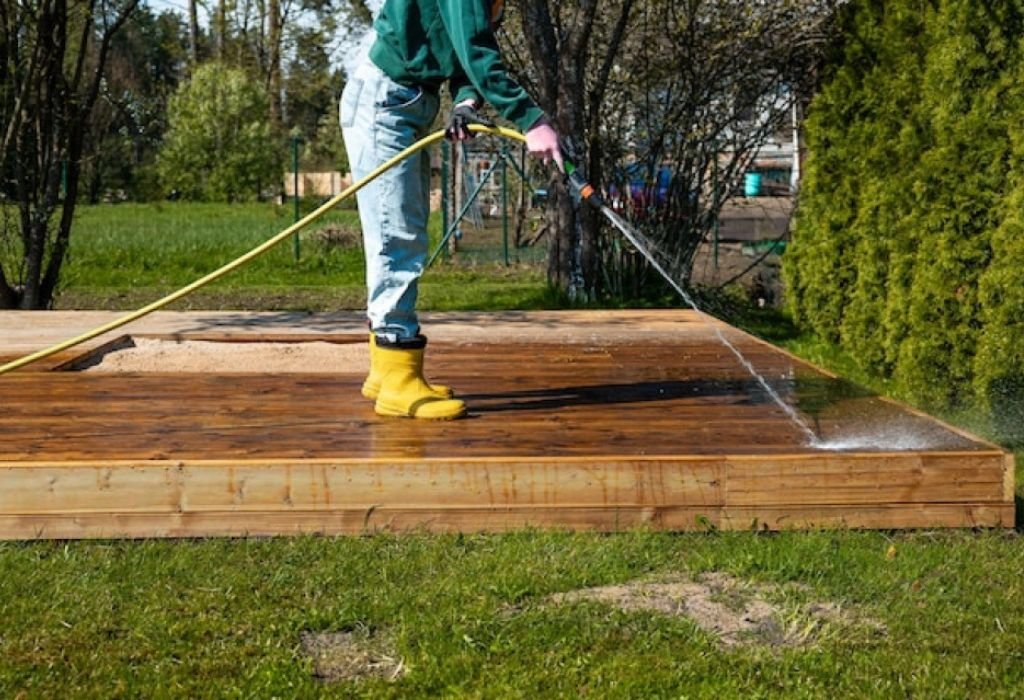
Deck maintenance doesn’t stop after staining. Consistent cleaning and resealing keep the wood healthy for years.
Seasonal washing removes pollen, dirt, and mildew that can shorten the life of a finish. Annual inspections allow early repair of cracks or loose boards before they worsen.
Decks should be cleaned at least once a year and resealed every 2–3 years depending on exposure.
Future trends in deck care focus on sustainability and efficiency. Eco-friendly cleaning solutions, low-pressure systems, and smart moisture sensors are becoming more common for safer and greener maintenance.
How often should a deck be cleaned or washed after finishing?
Clean at least once per year or after pollen-heavy seasons to maintain color and protection.
When is it time to reseal or restain a deck?
If water no longer beads on the surface, it’s time to reapply sealer or stain.
Are there eco-friendly alternatives to power washing or heavy sanding?
Yes, oxygen-based cleaners and biodegradable soaps provide gentle cleaning without harsh chemicals.
What role does moisture measurement play in deck maintenance?
Moisture meters help determine when wood is dry enough for refinishing, preventing trapped water under coatings.
Will composite decking change the preparation process in future?
Yes, composite materials require less sanding and only mild washing, shifting focus to low-maintenance care methods.
Conclusion
So, do you sand or power wash a deck first? The answer is clear—power wash first, allow full drying, then sand lightly before finishing. This sequence ensures a smooth surface, strong stain adhesion, and longer-lasting protection.
By respecting the preparation steps, homeowners can avoid peeling finishes, splintered boards, and wasted effort. A properly cleaned and sanded deck not only looks brand new but also resists weather damage for years to come.
For the best results, follow the clean-dry-sand-seal method every few years and maintain regular washing to preserve color and structure. Your deck will reward you with years of beauty, comfort, and durability.

I’m Michael R. Turner, the founder, lead writer, and passionate DIY enthusiast behind 101diytools.com. With years of hands-on experience in home improvement and power tools, I built this platform to share practical tips, in-depth guides, and honest reviews to help DIYers of all skill levels tackle projects with confidence and the right tools.