Can You Sand a Deck After Power Washing? Answered
A freshly power-washed deck often looks brand new, but it doesn’t always feel that way. Once the water dries, the surface can turn rough and full of splinters that make staining nearly impossible.
Water and high pressure raise wood fibers, leaving the boards fuzzy. According to the Paint Quality Institute, about 65% of premature stain failures happen because the wood wasn’t sanded or fully dried before finishing (Paint Quality Institute). Proper sanding not only smooths the surface but also ensures the stain penetrates evenly and lasts longer.
Timing is the key to success. Sanding too soon can damage softened fibers or clog sandpaper, while waiting for the deck to dry completely results in a clean, consistent finish. Experts recommend waiting at least 48 hours after washing and checking that the wood’s moisture level is below 15% before sanding (Wood Magazine).
Sanding after power washing is not just about aesthetics — it’s essential for deck protection, durability, and slip resistance. This guide explains when and how to sand your deck safely, the right grit levels to use, and what to avoid so your deck stays smooth and strong for years.
Quick Answer — Yes, But Only After the Deck Is Fully Dry

You absolutely can sand a deck after power washing — but only when the wood is completely dry. Sanding damp boards tears the fibers and ruins the surface.
Experts suggest waiting a minimum of 48 hours, but the real test is the moisture content. If it reads below 15%, it’s safe to proceed. Anything higher traps moisture under the stain and leads to peeling or mildew later.
Light sanding removes raised grain and restores smoothness, while preserving enough texture for stain adhesion. Always start with medium grit and avoid heavy passes that could damage softwood.
Is it safe to sand right after power washing?
No, wait until the deck is dry — usually 48 to 72 hours, depending on humidity and sun exposure.
How can you check if it’s dry enough?
Use a moisture meter and ensure readings are ≤15% before sanding.
Why does sanding matter after washing?
It removes raised grain, smooths the surface, and improves stain bonding.
Can aggressive sanding hurt the wood?
Yes, over-sanding can seal the pores and prevent stain absorption.
Does sanding extend the deck’s lifespan?
Yes — smoother wood resists water penetration and weathering.
What Power Washing Does to Wood
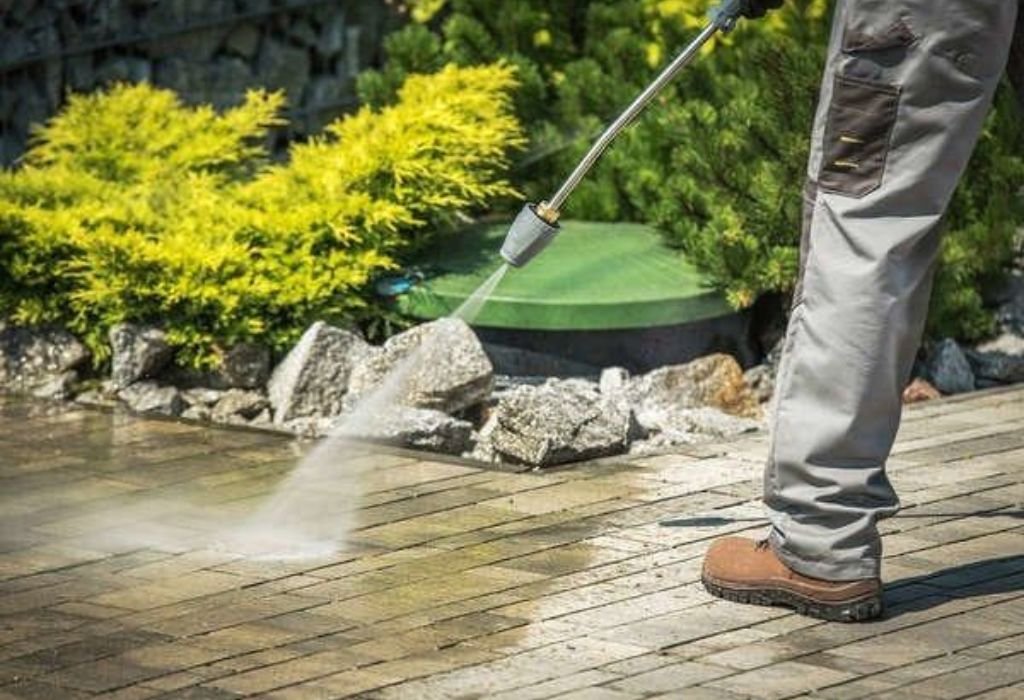
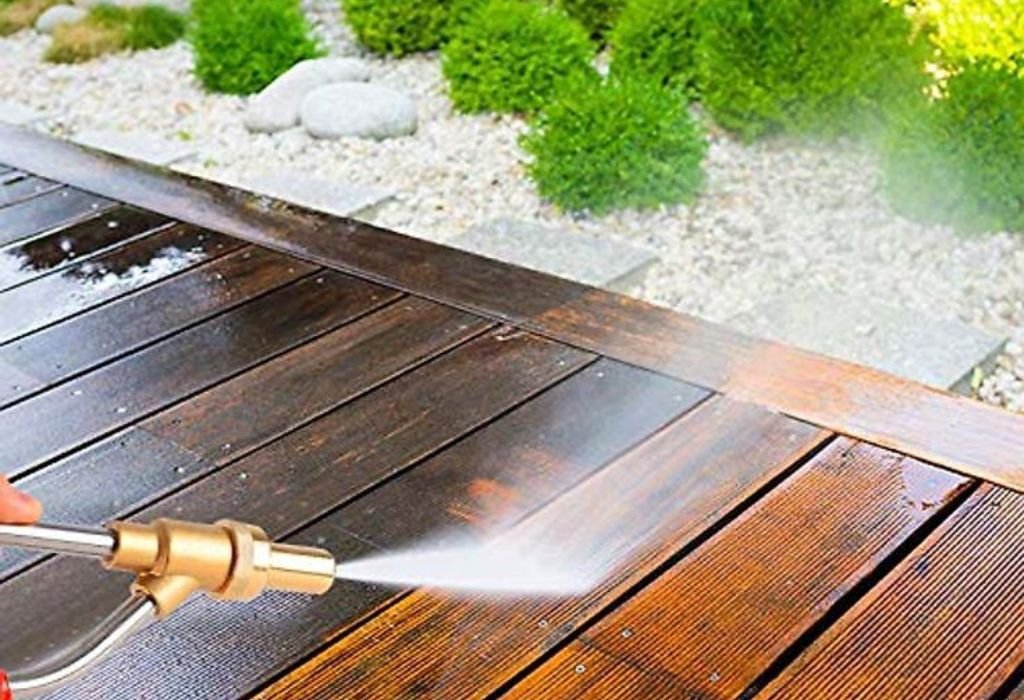
Power washing strips dirt, mildew, and old finish from the deck surface. But it also forces water deep into the fibers, causing swelling and fiber lift.
As the boards dry, these swollen fibers harden and stand upright, creating a rough, uneven texture often called “fuzzies.” If you stain without sanding, those raised fibers absorb stain unevenly, leaving blotches or dull patches.
The right sanding process removes the top layer of fuzzy fibers without thinning the deck boards. It also helps blend areas where the pressure washer hit harder or longer.
Why does wood get fuzzy after power washing?
Because high-pressure water raises and separates surface fibers.
What PSI causes the most damage?
Anything above 1,500–2,000 PSI can erode softwood or leave gouges.
Should you sand if the deck feels rough?
Yes — roughness indicates fiber lift that needs leveling before sealing.
Can you prevent fuzziness during washing?
Use wider spray tips (25°–40°) and keep the wand 12–18 inches away.
Will sanding fix uneven color from washing?
Yes, light sanding helps blend discoloration and prepares for staining.
Dry-Time and Weather Conditions Before Sanding
Moisture is the biggest factor determining when it’s safe to sand after washing. Even if the surface feels dry, the inner fibers can still hold water.
Allow the deck to dry for at least 48 hours in sunny, breezy weather. For humid climates or shaded areas, 72 hours or more may be necessary. A moisture meter reading below 12–15% is your best confirmation (Wood Magazine).
Temperature and humidity matter too. Sanding or staining in cold or damp weather can cause uneven finishes and adhesion issues. Always choose a dry forecast with temperatures between 50°F and 90°F and no rain expected for two to three days.
How long should you wait after power washing?
At least 48 hours, or longer if humidity is high.
Does sunlight speed up drying?
Yes, UV and airflow help moisture evaporate from within the boards.
Can you sand in the morning when dew is present?
No — wait until surfaces are bone-dry later in the day.
What happens if you sand wet wood?
The paper clogs and the surface tears, leading to uneven texture.
What if it rains after washing?
Restart the drying countdown and recheck moisture before sanding again.
Tools and Sandpaper Grits That Work Best
Choosing the right sanding tools makes the job faster and safer. Random-orbital sanders, floor buffers with sanding screens, and pole sanders work well for large flat areas. Use detail sanders or corner blocks for rails and edges.
Stick to 60–80-grit paper for main deck boards to remove raised fibers without sealing the pores. Finish with 100-grit for railings or softer woods. Avoid ultra-fine grits above 120, which close pores and reduce stain absorption.
Always vacuum or blow off dust afterward; leftover dust can interfere with stain adhesion.
What’s the best grit after power washing?
Start with 60–80 grit; follow with 100 grit for finishing.
Can you use a belt sander?
Avoid it — it can dig into boards and cause uneven marks.
Are sanding screens better for large decks?
Yes, they provide even abrasion and are less likely to gouge.
Do you need to sand the entire deck?
Focus on areas that feel rough or were heavily power-washed.
What about railings and steps?
Use finer grit (100–120) to smooth without polishing the surface.
Step-by-Step Process: Sanding a Deck After Power Washing
Following a structured process ensures professional results. Preparation and patience are key.
- Wait for complete drying. Allow 48–72 hours minimum; confirm moisture below 15%.
- Inspect the boards. Replace rotted or warped sections before sanding.
- Choose your tools. Random-orbital or pole sander for boards, detail sander for corners.
- Start sanding. Work with the grain, using 60–80 grit, then refine with 100 grit.
- Clean the surface. Vacuum or leaf-blow to remove dust; rinse lightly only if necessary.
Can you sand all boards at once?
Yes, but divide large decks into sections for consistent pressure and results.
Should you sand before or after replacing boards?
Replace first, then sand everything together for even color.
Can sanding remove mold stains?
It can lighten mild discoloration, but deep stains may need wood brightener.
Is another rinse required after sanding?
Only if dust is heavy; let it dry again before staining.
How long to wait before staining after sanding?
You can stain immediately once dust-free and moisture is below 15%.
Staining or Sealing After Sanding
Sanding opens the wood pores and prepares them for stain or sealer. Apply finish soon after sanding — ideally the same day — before moisture or dust settles.
Both oil- and water-based stains work, but they behave differently. Oil-based stains penetrate deeper and highlight grain, while water-based formulas dry faster and resist mildew. Always read the manufacturer’s instructions for ideal temperature and humidity.
Never skip the cleaning step before staining; leftover dust can cause blotchy color or early peeling.
When should you stain after sanding?
Within 24 hours for best absorption and color uniformity.
Can you skip sanding and go straight to stain?
No, raised fibers will prevent even coverage and reduce longevity.
Do you need both stain and sealer?
Many modern stains include sealing agents; separate sealer isn’t usually required.
Can sanding affect stain color?
Yes, smoother surfaces absorb less pigment, slightly lightening the tone.
What’s the ideal weather for staining?
Dry weather between 50°F and 90°F with moderate humidity.
Safety and Preparation Tips
Deck sanding creates dust that can irritate lungs and eyes, so always wear protection. Use safety glasses, hearing protection, and a dust mask or respirator.
Clear the area of furniture, plants, and decorations. Mask nearby walls or siding to prevent accidental scratches or dust coating. Keep cords clear of the sanding path.
What protective gear should you use?
Safety glasses, gloves, ear plugs, and a dust mask.
Can sanding damage metal fasteners?
Yes, it can dull sandpaper; tighten or countersink screws before starting.
Should you tape off edges or siding?
Yes, especially near rail posts or house siding to avoid accidental contact.
Is it safe to sand treated lumber?
Yes, but wear a respirator to avoid inhaling treated dust.
Should you sand barefoot or by hand?
No — always use tools and footwear for safety.
When Not to Sand a Deck After Power Washing
Not every deck should be sanded. Composite, PVC, or capped-polymer decks can be permanently damaged by sanding. Always check your manufacturer’s care guide before attempting.
Heavily weathered or rotted boards may crumble under a sander. Replacement is safer than trying to smooth unstable surfaces. Similarly, never sand if the deck remains damp or if rain is forecast within 24 hours.
Can you sand composite decking?
No — it voids warranties and exposes internal plastic fibers.
Should you sand if the wood is cracking?
Replace deep-cracked or soft boards instead of sanding them down.
Is sanding needed on new pressure-treated lumber?
Yes, but lightly — new lumber often has a hard mill glaze that needs to be scuffed.
Can rain affect sanding plans?
Yes, moisture resets the drying clock; wait for clear weather.
How to fix an over-sanded deck?
Rewash lightly, let dry, and refinish with a penetrating stain to restore color.
Frequently Asked Questions
Can you sand a deck after power washing the same day?
No — the deck must dry completely for at least 48 hours.
What grit should you use after power washing?
Use 60–80 for main boards and 100 for finishing rails.
How long to wait before staining after sanding?
As soon as dust-free and moisture is below 15%.
Does sanding make stain last longer?
Yes, it improves adhesion and color depth.
Do you need to rinse again after sanding?
Only if heavy dust remains; dry again before staining.
Conclusion
So, can you sand a deck after power washing? Yes — and you should, once the surface is fully dry. Sanding smooths raised fibers, improves stain adhesion, and gives your deck a professional finish.
Wait at least 48–72 hours after washing, check for ≤15% moisture, and sand with medium grit for best results. Then stain or seal promptly under the right weather conditions.
Proper timing and technique turn a rough, washed deck into a smooth, durable, and beautiful outdoor surface. A little patience after power washing pays off with years of protection and curb appeal.

I’m Michael R. Turner, the founder, lead writer, and passionate DIY enthusiast behind 101diytools.com. With years of hands-on experience in home improvement and power tools, I built this platform to share practical tips, in-depth guides, and honest reviews to help DIYers of all skill levels tackle projects with confidence and the right tools.