When Was the Power Sander Invented and Why It Mattered
In the early days of woodworking, sanding meant long hours of manual labor. Craftsmen relied on hand blocks, sandpaper sheets, and sheer endurance to smooth surfaces.
Each finished board carried not just a shine but the weight of effort behind it. The idea of automating this process felt distant until a small electrical breakthrough changed everything.
The question many woodworkers ask today—when was the power sander invented—leads back to the 1920s, a period of rapid industrial innovation. Factories demanded faster production, and inventors sought ways to replace physical strain with mechanical precision.
In 1926, Art Emmons of Porter-Cable designed the first handheld belt sander, marking a pivotal moment in workshop history. The invention allowed craftsmen to bring the machine to the wood, revolutionizing efficiency and quality.
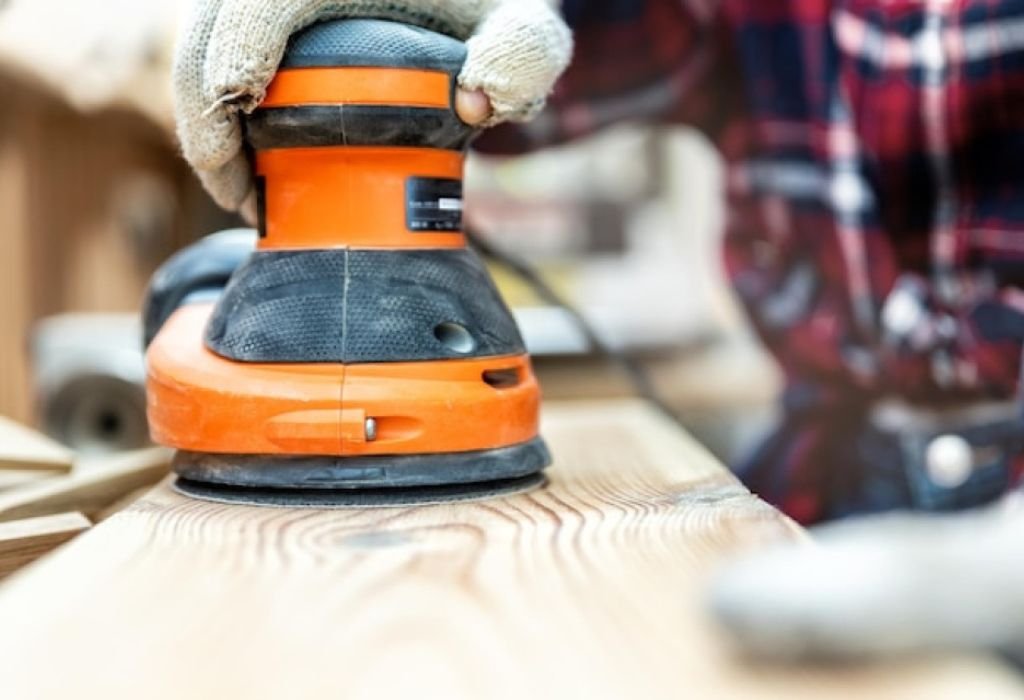
What began as a simple motorized concept evolved into an industry of precision tools. Within decades, orbital and random orbital sanders followed, refining both power and control.
These tools not only reshaped woodworking but influenced metal fabrication, automotive finishing, and home improvement industries worldwide.
Before Electricity — From Natural Abrasives to Mechanization
Before the invention of the power sander, sanding was one of the most time-consuming steps in woodworking. Craftsmen depended entirely on natural abrasives such as sand, sharkskin, and pumice stones.
The process was slow, physically demanding, and inconsistent, as each material left a different texture and finish. Early workshops echoed with the sound of scraping rather than the hum of motors.
By the late 19th century, industrialization brought the first steps toward mechanized sanding. Factories began using large stationary sanders driven by belts and steam engines to smooth furniture parts and flooring.
These massive machines offered speed but lacked portability, limiting their use to large-scale manufacturing. Craftsmen in smaller shops continued to rely on hand blocks, accepting slower production for greater precision.
The introduction of coated abrasive paper in the early 1900s marked a major shift. With sand glued to paper using resin or animal glue, abrasives became more durable and easier to use.
This advancement laid the groundwork for portable sanders by creating a reliable sanding surface that could withstand motorized friction.
Yet, portability remained out of reach. Early motors were bulky and inefficient, and no one had yet developed a system to keep sanding belts aligned during high-speed operation. The idea of a handheld sander existed, but the technology to make it safe and practical did not.
It would take the innovations of the 1920s to finally unite abrasives, compact motors, and mechanical precision—leading to the birth of the first true power sander.
1920s Breakthrough — The First Handheld Belt Sander
The 1920s marked a turning point in workshop innovation as the first handheld belt sander emerged. This decade was defined by industrial expansion, and manufacturers sought tools that could increase productivity while reducing manual strain.
Woodworkers and carpenters, once limited by fixed machines, needed portable equipment capable of delivering consistent results on-site. The demand for mobility and precision created the perfect environment for invention.
In 1926, Art Emmons, an engineer at Porter-Cable, introduced a groundbreaking solution—the first handheld belt sander. The design combined two rotating drums connected by a continuous abrasive belt, driven by a compact electric motor.
This simple yet effective mechanism allowed workers to sand large surfaces quickly and evenly, transforming the way woodworking was done. For the first time, power sanding became a tool anyone could carry rather than a stationary machine confined to a factory.
The impact was immediate. Craftsmen discovered they could remove old finishes, shape rough boards, and smooth panels in a fraction of the time. The innovation bridged the gap between industrial machinery and personal craftsmanship.
Although heavy and somewhat noisy by today’s standards, Emmons’ design introduced the concept of portable precision—a foundation that every future sander would build upon.
This invention also marked the birth of a new tool category: handheld power sanders. What began as a single innovation quickly evolved into an essential workshop staple, paving the way for decades of mechanical refinement and technological progress in surface finishing.
1950s Precision — Orbital Finish Sanders Arrive
By the 1950s, woodworking had entered a new phase of refinement. The demand for smoother finishes and greater control led engineers to rethink how sanding motion worked.
Belt sanders excelled at material removal, but their linear motion often left visible marks and uneven textures on fine wood surfaces. The next challenge was to design a sander that could deliver precision rather than brute power.
The solution appeared in 1951 when Festool (then Festo) introduced the first commercial orbital finish sander, known as the Rutscher.
This innovative design replaced the continuous belt motion with an orbital pattern—tiny circular movements that sanded surfaces evenly without leaving directional scratches. The result was a smoother, swirl-free finish ideal for furniture, cabinetry, and delicate woodwork.
This development represented a fundamental shift from heavy sanding to fine finishing. Craftsmen now had a tool capable of delivering consistent results with minimal effort.
The orbital sander also set a new standard for ergonomics, as its compact shape and reduced vibration allowed for longer, more comfortable operation.
By the late 1950s and early 1960s, orbital sanders had become a staple in both professional and hobbyist workshops. The innovation not only enhanced quality but also improved efficiency by reducing the amount of manual sanding needed before staining or painting.
With its precision and ease of use, the orbital sander defined the beginning of modern finishing tools, inspiring further advancements in sanding technology that would follow in the coming decades.
1960s–1970s Innovation — Random Orbital Changes Everything
As woodworking evolved through the 1960s and 1970s, craftsmen demanded a tool that combined the power of a belt sander with the finesse of an orbital model.
Standard orbital sanders were effective for finishing but often left circular patterns that became visible under certain lighting or stain colors.
The challenge was to create a tool that could sand aggressively while maintaining a flawless, scratch-free surface.
This problem led to one of the most significant advancements in sanding history: the random orbital sander. The innovation blended two motions—orbital rotation and random spinning—to produce a non-repetitive sanding pattern.
This eliminated swirl marks and gave woodworkers the perfect balance between speed and smoothness.
Early prototypes appeared in the late 1960s, and by the 1970s, manufacturers like RUPES and Bosch were introducing commercial electric models that changed workshop standards forever.
The random orbital sander quickly gained popularity among professionals and hobbyists alike. Its dual-action motion not only improved surface quality but also made sanding safer by reducing heat buildup and clogging. It worked effectively on wood, metal, and plastic, turning it into a versatile finishing powerhouse.
This era also saw the introduction of hook-and-loop sanding discs, which made grit changes faster and more efficient. The random orbital design, paired with improved dust collection and user comfort, marked the beginning of the modern sander we know today.
What started as an experiment in motion control became the benchmark for professional finishing tools across industries.
Patents and Productization — From Concepts to Catalogs
Once the power sander proved its value in workshops, innovation moved rapidly from experiment to commercial standard.
The mid-20th century became a golden era for sanding patents as engineers refined mechanisms, reduced vibration, and improved belt and pad control.
What began as a mechanical novelty evolved into a reliable product category through incremental innovation and mass production.
Throughout the 1960s and 1970s, inventors focused on solving key technical challenges such as belt tracking, tensioning systems, and motor durability.
Early patents revealed solutions for automatic belt centering, spring-loaded tension arms, and cooling systems that prevented motor overheating.
These improvements made sanders more efficient, lighter, and easier to maintain, giving professionals the reliability needed for continuous operation.
Manufacturers also began offering combination sanders that merged belt and disc functionality into one unit. This dual-purpose design gave users flexibility to switch between aggressive stock removal and precise edge finishing without changing tools.
Companies like Porter-Cable, Black & Decker, and Makita were instrumental in bringing these designs to market, establishing competition that accelerated global innovation.
As the tool market expanded, catalogs featured specialized models for wood, metal, and automotive finishing.
The sander’s evolution mirrored broader industrial trends—smaller motors, safer housings, and improved ergonomics made high-quality sanding accessible to everyday craftsmen.
By the late 1970s, power sanders had evolved from niche machinery into an essential tool for both professionals and DIY enthusiasts, setting the stage for the next wave of electronic precision and dust-control technology.
Who Gets Credit — Inventors, Brands, and Disputed “Firsts”
The invention of the power sander does not belong to a single person or company—it’s a story of multiple innovators solving different parts of the same challenge.
While some developed the first portable sanders, others refined the motion, improved dust control, or made the tool compact enough for everyday use.
The question of who deserves credit for inventing the power sander depends on which version of the tool you consider the true “first.”
Most historians agree that Art Emmons of Porter-Cable holds the distinction for inventing the first handheld belt sander in 1926. His design marked the birth of portable power sanding, introducing a mechanism that combined speed, efficiency, and precision.
However, the story didn’t stop there. In 1951, the German company Festool (then Festo) released the RTE “Rutscher”, the first commercial orbital finish sander, which revolutionized fine surface preparation and finishing.
Later, in the 1960s and 1970s, innovation took another leap when RUPES and other European manufacturers introduced the first electric random orbital sanders, blending orbital and rotary motion for swirl-free results.
Each of these milestones represented a distinct phase in the evolution of sanding—from rough shaping to fine finishing.
Disputes still arise among tool historians and manufacturers over “who was first,” but most agree that the invention of the power sander was not a single breakthrough—it was an ongoing collaboration between engineers, craftsmen, and toolmakers who continually pushed the limits of efficiency and surface perfection.
How Milestones Changed the Shop — From Removal to Finish
Each major development in the power sander’s history reshaped the way workshops operated. The introduction of the belt sander in the 1920s turned what was once slow, hand-intensive labor into a high-speed operation.
Large wooden panels, doors, and tabletops could finally be leveled and smoothed in minutes instead of hours. The ability to bring the machine to the material—rather than the other way around—redefined productivity across carpentry, furniture making, and construction.
The arrival of the orbital sander in the 1950s shifted the focus from power to precision. Craftsmen now had a tool capable of fine, uniform finishing without the risk of gouging the surface.
This innovation established the foundation of modern finishing work, where consistency and surface quality mattered as much as speed. Shops could now produce smoother finishes with less effort and lower risk of surface defects.
By the 1970s, the random orbital sander had bridged the gap between removal and refinement. Its dual-motion pattern made sanding virtually mark-free while maintaining strong material removal capacity.
This balance allowed workshops to combine multiple sanding steps into one, reducing time while improving results.
These milestones also changed how sanding was perceived. What was once a tedious, dusty, and manual chore became a precise, mechanized process that required skill and understanding rather than brute force.
Each new generation of sanders not only improved the quality of work but also elevated craftsmanship, proving that innovation and artistry could coexist in every smooth, polished surface.
The Modern Ecosystem — Pads, Holes, Vacs, and Interfaces

Today’s power sanders have evolved far beyond the early prototypes of the 1920s. Modern models are engineered as part of a complete sanding ecosystem, where every component—from pad design to dust collection—plays a crucial role in achieving professional results. Precision, efficiency, and cleanliness are now as important as power and speed.
At the heart of this ecosystem is pad technology. Manufacturers have introduced interchangeable pads with different densities for flat, curved, or contoured surfaces.
The introduction of multi-hole pad designs has revolutionized dust extraction, allowing air to flow through the sanding disc and remove particles directly at the source.
This improvement not only enhances air quality but also prevents clogging, keeping abrasives cutting cleanly for longer periods.
Vacuum systems are now integral to sanding performance. Instead of relying on built-in bags, professional-grade sanders connect directly to HEPA-filtered vacuums that capture up to 99.9% of airborne dust.
The use of antistatic hoses prevents dust buildup inside the system, reducing static shocks and maintaining steady suction.
Meanwhile, hook-and-loop sanding discs have streamlined workflow by allowing quick grit changes between sanding stages.
Combined with interface pads, these discs maintain flexibility on curved surfaces and prevent over-sanding on edges.
Together, these innovations create a tool system that is cleaner, quieter, and more precise than ever before.
Modern sanding is no longer just about smoothing wood—it’s about controlling every variable for a perfect finish. The modern ecosystem ensures consistency, safety, and efficiency with every pass of the pad.
Future Trends — Brushless, Connected, and Near-Zero Dust
The future of power sanders is being defined by technology that prioritizes efficiency, connectivity, and environmental safety.
What began as a purely mechanical tool is now evolving into a smart, data-driven system capable of adjusting to material type, grit level, and even user habits. The next generation of sanders is not only more powerful but also cleaner, quieter, and far more intelligent.
Brushless motors are leading this transformation. Unlike traditional brushed designs, brushless motors run cooler, last longer, and deliver consistent torque under heavy loads. This means smoother finishes, fewer mechanical failures, and lower energy consumption.
Many high-end sanders already use brushless technology to reduce vibration and noise while maintaining stable performance across various materials.
Another growing trend is connectivity and automation. Some modern sanders integrate with mobile apps or digital monitoring systems, allowing users to track tool performance, motor speed, and maintenance schedules in real time.
This smart functionality ensures consistent results and reduces downtime, especially in professional workshops or automated production lines.
Environmental safety is also a top priority. Manufacturers are moving toward near-zero dust emission systems by combining multi-hole pad designs, sealed housings, and HEPA-level extraction. The goal is to create work environments where sanding produces almost no airborne contamination.
The trajectory of innovation suggests that future sanders will require less physical effort and maintenance while delivering flawless results.
From the early belt-driven prototypes to today’s smart tools, the evolution of sanding continues to reflect a simple truth: precision and safety always drive progress.
Conclusion
Tracing the timeline of when the power sander was invented reveals a remarkable story of innovation and craftsmanship. What began in 1926 with Art Emmons’ handheld belt sander at Porter-Cable transformed a labor-intensive task into a precise, mechanized process.
That single invention redefined efficiency in woodworking and sparked nearly a century of continuous improvement in design, safety, and performance.
Each milestone built upon the last. The 1950s orbital sander refined surface finishing, the 1970s random orbital sander perfected swirl-free precision, and modern brushless models have elevated control and durability to new heights.
The evolution of the power sander mirrors the evolution of craftsmanship itself—moving from raw muscle power to ergonomic mastery and digital precision.
Today’s power sanders are more than just tools; they’re complete systems integrating dust extraction, vibration reduction, and smart connectivity.
These advancements not only improve quality but also protect the health and comfort of those who use them daily. Workshops around the world now rely on sanders that are cleaner, quieter, and more efficient than ever before.
Ultimately, understanding when the power sander was invented is not just about history—it’s about appreciation. Each upgrade, from belts to random orbits to HEPA vacs, represents decades of problem-solving and dedication to craftsmanship.
The story of the power sander is a story of innovation shaped by the hands of those who demanded better results, smoother finishes, and tools that worked as hard as they did.

I’m Michael R. Turner, the founder, lead writer, and passionate DIY enthusiast behind 101diytools.com. With years of hands-on experience in home improvement and power tools, I built this platform to share practical tips, in-depth guides, and honest reviews to help DIYers of all skill levels tackle projects with confidence and the right tools.