How to Use an Impact Wrench Correctly and Safely
It starts with a stubborn lug nut on the side of the road. A standard wrench slips, muscles strain, and frustration builds—until the impact wrench makes quick work of the job.
This powerful tool delivers sudden bursts of torque, breaking free bolts that ordinary tools can’t budge.
But with its speed and strength comes risk: used incorrectly, it can over-tighten fasteners, damage sockets, or even cause injury.
The difference between safe use and costly mistakes lies in understanding setup and technique.
An impact wrench isn’t a drill, and it isn’t an impact driver—it’s designed for heavy-duty fastening where torque control is critical.
Industry guidelines stress using impact-rated sockets, proper retention pins, and final tightening with a torque wrench.
These steps prevent stripped threads, broken hardware, or dangerous wheel failures on the road (Power Tool Institute / NHTSA).
Cordless, air, and corded models all operate slightly differently, but the principles are the same: align squarely, use short bursts, and never rely on the tool alone for final torque.
Done correctly, an impact wrench saves time, effort, and ensures professional results.
In this guide, you’ll learn how to use an impact wrench step by step. From choosing the right sockets and accessories to mastering safe handling and torque control, every section provides clear instructions backed by expert safety practices.
By the end, you’ll know how to harness its power without damaging parts—or yourself.
Impact Wrench vs. Impact Driver vs. Drill — What’s the Difference?
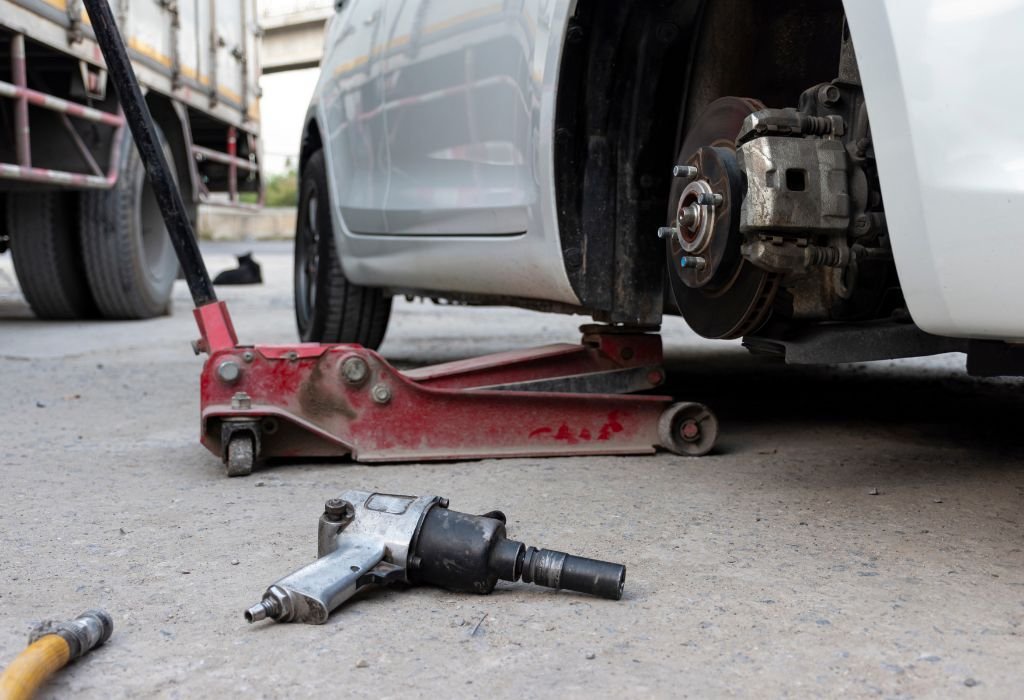
An impact wrench is built for heavy-duty torque. It uses a square drive, usually 3/8″ or 1/2″, to handle large nuts and bolts.
An impact driver uses a 1/4″ hex chuck. It is lighter, faster, and best for driving screws or smaller fasteners.
A drill provides steady rotation, not percussive torque. It is useful for drilling holes but lacks the power to free stubborn bolts.
Knowing the difference helps prevent using the wrong tool. Each has a purpose, and only an impact wrench is designed for lug nuts and large hardware.
What job needs an impact wrench?
Large nuts, bolts, and lug nuts where high torque is required.
Can an impact driver replace it?
Not for heavy jobs—it’s for screws and light fasteners.
Can a drill remove bolts?
No, drills don’t provide impact torque.
What sizes do wrenches come in?
Commonly 3/8″ and 1/2″, with 3/4″ or 1″ for industrial work.
Which is best for automotive?
A 1/2″ impact wrench is standard for lug nuts.
Pick the Right Impact Wrench (Air vs. Cordless vs. Corded)
Air impact wrenches are powerful and reliable in shops. They require 90 PSI and adequate airflow from a compressor.
Cordless impact wrenches are popular for mobility. They rely on lithium-ion batteries and are ideal for roadside or field repairs.
Corded electric models are less common but provide steady power without air supply. They are useful for home garages with access to electricity.
Brushless motors in cordless models deliver longer runtime and greater efficiency. Compact models fit tight spaces, while high-torque models handle rusted bolts.
When is air best?
In shops with compressors for unlimited runtime.
When is cordless best?
For mobile work or quick jobs outside the shop.
Are brushless tools worth it?
Yes, they last longer and run cooler.
Which size for home use?
A 1/2″ cordless covers most needs.
Do corded models still matter?
Yes, where air is unavailable and batteries are impractical.
Use Only the Right Sockets and Accessories
Impact wrenches require impact-rated sockets made of chrome-molybdenum (Cr-Mo). Standard chrome sockets can shatter under impact force.
Always use six-point sockets for stronger grip. Twelve-point sockets slip more easily and round off fasteners.
Retention pins or detents secure sockets safely. Never use makeshift retainers.
Thin-wall sockets are useful for alloy wheels where clearance is tight. Adapters and extensions must also be impact-rated.
Why not chrome sockets?
They crack or shatter under impact stress.
Which sockets grip better?
Six-point sockets hold fasteners securely.
What about extensions?
Use only impact-rated ones to avoid breakage.
Can I use adapters?
Yes, but only impact-rated adapters.
Do wheel sockets matter?
Yes, thin-wall sockets prevent wheel damage.
Step-by-Step — How to Use an Impact Wrench
For Removal
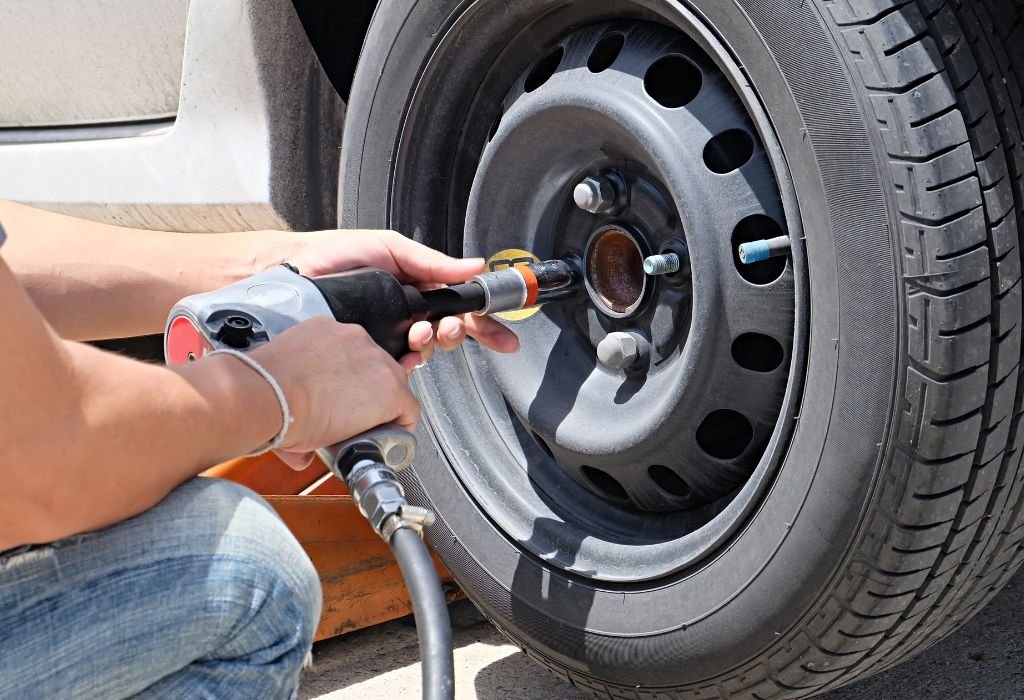
- Select the correct socket and check retention.
- Place the socket squarely over the fastener.
- Hold the wrench with both hands for control.
- Apply short trigger bursts until the fastener loosens.
For Installation
- Start threads by hand to prevent cross-threading.
- Run the nut down snugly with the wrench on low power.
- Finish tightening with a torque wrench to spec.
Should I angle the tool?
No, keep it square to avoid rounding.
Why use short bursts?
They give better control and reduce damage.
Do I need a torque wrench after?
Yes, always finish with a torque wrench.
Can I cross-thread with an impact wrench?
Yes, which is why threads must be started by hand.
Why two hands?
To control recoil and prevent slips.
Torque Sticks & Torque Wrenches — Prevent Over-Torquing
Torque sticks flex to limit torque when using an impact wrench. They help prevent overtightening in high-volume service work.
But torque sticks are not substitutes for torque wrenches. Only a calibrated torque wrench ensures exact torque values.
Manufacturers recommend tightening fasteners to 20% under target with a torque stick, then verifying with a wrench.
Re-torque wheels after driving a short distance to ensure safety.
Do torque sticks replace torque wrenches?
No, they only limit but don’t measure torque.
When are torque sticks useful?
In busy tire shops for quick tightening.
Why re-torque after driving?
Fasteners can settle or loosen.
What torque should lug nuts be?
Follow manufacturer specifications.
Can overtightening damage wheels?
Yes, it can warp rotors or stretch studs.
Safety Essentials Most People Skip
Impact wrenches are powerful tools. Safety precautions must always be followed.
Wear safety glasses and hearing protection. Noise and flying debris are common hazards.
Use both hands to control torque reaction. Always check socket retention before use.
Manage hoses or cords to avoid trips. Never exceed rated pressure or dwell too long on the trigger.
What PPE is required?
Glasses and hearing protection.
Can gloves help?
Yes, they reduce vibration and improve grip.
Why avoid overpressure?
Excess pressure damages the tool and increases risk.
What causes most injuries?
Slips from angled use or poor control.
Can cords be dangerous?
Yes, they create trip hazards and sudden pulls.
Common Mistakes and How to Avoid Them
Beginners often use chrome sockets. This is unsafe and can lead to breakage.
Cross-threading happens when fasteners are started with the gun. Always thread by hand first.
Overtorquing with the gun is another error. Only torque wrenches provide accurate tightening.
Ignoring air supply requirements causes weak performance. Low PSI or airflow stalls air wrenches.
Why do sockets break?
Because chrome sockets aren’t impact-rated.
Why do bolts seize?
Overtorque and lack of anti-seize on hubs.
Why does the tool stall?
Insufficient air pressure or low battery charge.
Can studs snap?
Yes, overtorquing can shear them.
What’s the biggest rookie mistake?
Relying on the gun for final torque.
Maintenance 101 — Keep Your Impact Wrench Performing
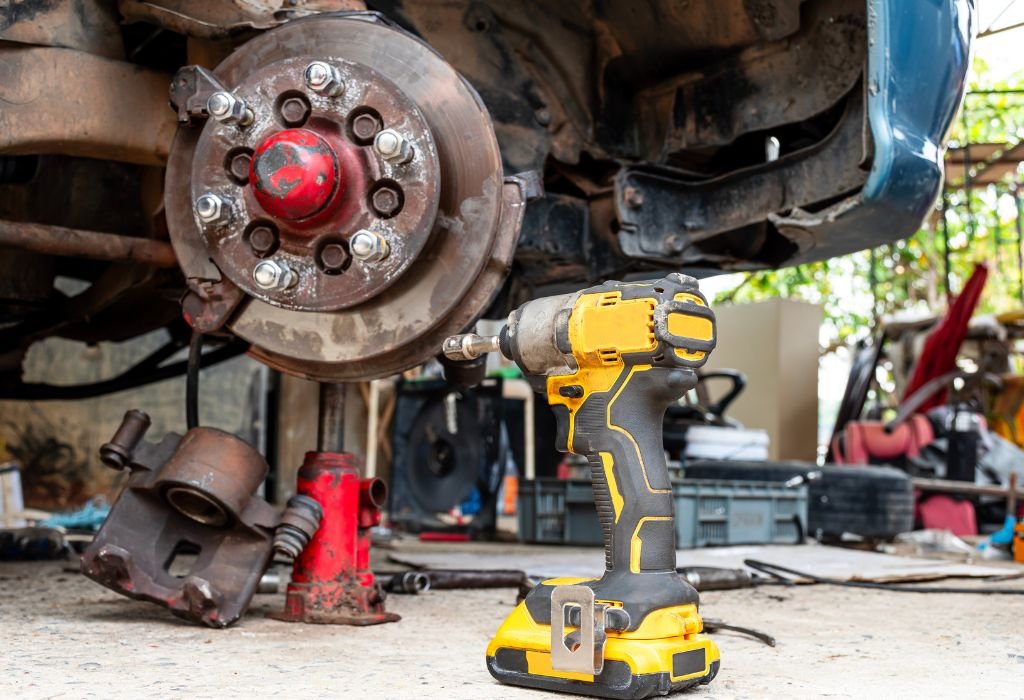
Air tools need oil daily. A few drops in the air inlet prevent wear.
Drain compressors to remove moisture that corrodes internals. Use correct hose diameter and length.
Cordless tools need battery care. Store batteries cool and dry, partially charged if unused for months.
Check anvils, retainers, and sockets regularly. Replace cracked or worn parts.
How often to oil air tools?
Before each day’s use.
Do batteries need special care?
Yes, avoid heat and full discharge.
What causes sockets to wear?
Heavy use or improper fit.
Should the anvil be greased?
Follow manufacturer guidance.
Can maintenance extend lifespan?
Yes, it prevents costly breakdowns.
Real-World Use Cases
Impact wrenches shine in automotive work. Lug nuts, suspension bolts, and mower blades are common tasks.
In construction, they secure large anchors and fasteners quickly. Heavy equipment maintenance also relies on high-torque wrenches.
Use penetrants or heat on rusted hardware. Combine short bursts with correct sockets for best results.
Best way to remove lugs?
Use the wrench for removal, torque wrench for final tightening.
How to handle rusted bolts?
Apply penetrant and use short bursts.
Do thin-wall sockets help?
Yes, on alloy wheels.
What about mower blades?
Yes, impact wrenches remove stubborn blade bolts.
Do they replace breaker bars?
Yes, in most cases.
Conclusion — Use It Right, Torque It Right
Knowing how to use an impact wrench is about more than squeezing a trigger. It’s about safety, control, and respecting torque limits.
Impact-rated sockets, proper alignment, and torque wrenches keep jobs safe and professional. Skipping steps risks broken tools and unsafe fasteners.
What’s the golden rule?
Snug with the wrench, torque with the torque wrench.
Can an impact wrench replace all tools?
No, it complements drills and drivers.
Is it safe to torque with the gun?
Never—use a calibrated wrench.
Used correctly, the impact wrench is one of the most valuable tools in any shop or garage. It saves time, reduces strain, and ensures reliable fastening when handled with care.

I’m Michael R. Turner, the founder, lead writer, and passionate DIY enthusiast behind 101diytools.com. With years of hands-on experience in home improvement and power tools, I built this platform to share practical tips, in-depth guides, and honest reviews to help DIYers of all skill levels tackle projects with confidence and the right tools.