What is the difference between circular saw and miter saw
Circular saws are versatile, handheld power tools excellent for straight cuts across various materials, offering unmatched portability for job site flexibility and cutting large sheet goods. In contrast, miter saws are stationary, bench-mounted machines engineered for superior precision and repeatable angled crosscuts, making them indispensable for accurate trim work, molding, and specific woodworking projects. Your choice hinges on prioritizing mobility and general cutting tasks versus pinpoint accuracy for repetitive, angled cuts.
Ever found yourself staring at a bewildering array of power tools at the hardware store, wondering which one is the right fit for your next big project? It’s a common dilemma, especially when trying to decide between tools that seem to do similar jobs. Two of the most frequently confused, yet fundamentally different, cutting tools for woodworking and home improvement are the circular saw and the miter saw. They both cut wood, sure, but their specialties, portability, and precision are worlds apart.
Perhaps you’re dreaming of building a beautiful deck, or maybe you’re tackling an intricate crown molding installation in your living room. Understanding the strengths and weaknesses of each tool is absolutely crucial for success, safety, and saving yourself a lot of frustration. Knowing the core difference between circular saw and miter saw will not only guide your purchase but also empower you to choose the perfect tool for the task at hand, ensuring cleaner cuts and more professional results.
So, let’s clear up the confusion once and for all. In this friendly guide, we’ll dive deep into what makes a circular saw different from a miter saw, exploring their unique features, best applications, and helping you confidently decide which saw belongs in your workshop (or both!). Get ready to demystify these essential tools and unlock your DIY potential!
Key Takeaways
- Circular Saw: Portable Power: Best for breaking down large sheets and rough cuts anywhere.
- Miter Saw: Precision Station: Perfect for repeatable, accurate angled crosscuts on lumber.
- Choose Circular for Versatility: Handles various cuts, ideal for framing and general construction.
- Opt for Miter for Finish Work: Essential for precise trim, molding, and decking applications.
- Consider Space and Mobility: Circular is handheld and mobile; Miter is stationary and dedicated.
- Match Saw to Task: Select based on cut type, required accuracy, and project location.
📑 Table of Contents
- Understanding the Circular Saw: Your Portable Powerhouse
- Unveiling the Miter Saw: The Precision Angle Master
- Key Differences in Portability and Setup
- Accuracy and Cut Types: Where They Shine
- Cost, Maintenance, and Safety Considerations
- When to Choose Which: Making Your Decision
- Comparison Table
- Conclusion
Understanding the Circular Saw: Your Portable Powerhouse
Think of the circular saw as the workhorse of the construction site and the DIY world. It’s the tool you grab when you need to make quick, powerful cuts on a variety of materials. It’s incredibly versatile and often one of the first power saws many people buy.
What it is and how it works
A circular saw is a handheld electric saw with a round, toothed blade that spins at high speed. You typically guide it across the material you’re cutting. The blade is mounted to a base plate, which rests on your workpiece, allowing you to set the cutting depth and sometimes even the bevel angle. Its portability is a huge selling point, letting you bring the saw directly to the material, no matter how big or awkwardly shaped.
Key Strengths
- Portability: It’s lightweight and easy to carry, making it perfect for job sites or cutting large sheets of material where a stationary saw just isn’t practical.
- Cutting Large Sheets: A circular saw truly shines when you need to break down full sheets of plywood, MDF, or OSB into smaller, more manageable pieces.
- Rip Cuts: It’s excellent for making long cuts parallel to the grain of the wood (rip cuts), which are common in framing and general construction.
- Versatility: With the right blade, it can cut wood, plastic, metal, and even masonry.
Common Uses
You’ll find a circular saw indispensable for tasks like:
- Framing walls and building decks.
- Cutting plywood for shelving or cabinets.
- Trimming lumber for various construction projects.
- Making rough cuts quickly and efficiently.
Limitations
While powerful, a circular saw isn’t perfect for everything. Achieving perfectly straight, precise cuts, especially across the grain, often requires the use of guides or clamps. It’s also not ideal for very fine detailed work or repetitive angled cuts, which is where the miter saw really takes over.
Unveiling the Miter Saw: The Precision Angle Master
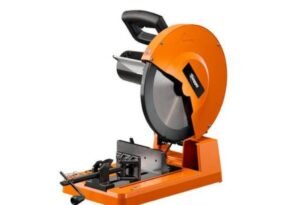
If the circular saw is your all-around construction buddy, the miter saw is your precision specialist, particularly when it comes to making exact angled cuts. Understanding this fundamental difference between circular saw and miter saw is key for anyone doing finish work.
What it is and how it works
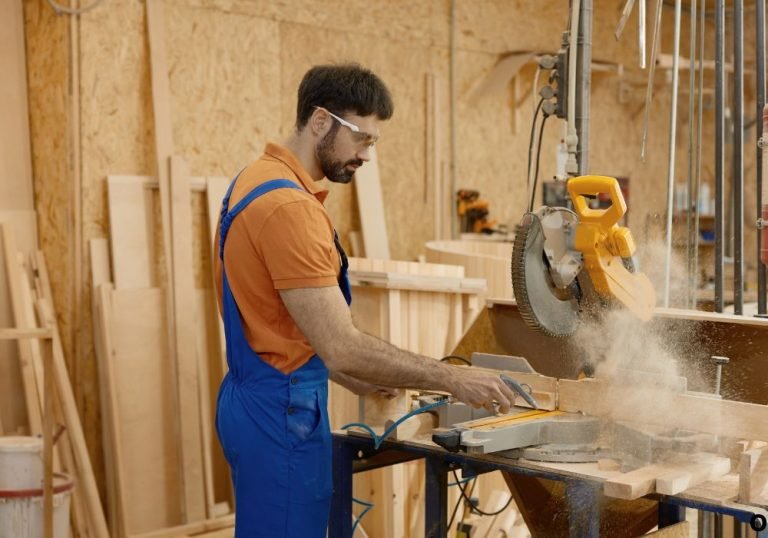
A miter saw is a stationary tool, usually mounted on a workbench or a dedicated stand. It features a blade attached to a pivoting arm that swings down to cut the material. The magic of a miter saw lies in its ability to precisely adjust the angle of the cut (miter cuts) and often the tilt of the blade (bevel cuts). This makes it incredibly accurate for repetitive cuts and for joining pieces at specific angles.
Key Strengths
- Unmatched Accuracy for Angles: This is where the miter saw truly shines. Its built-in fences and stops allow you to dial in precise miter and bevel angles with ease.
- Repeatable Cuts: If you need to make 20 pieces of trim exactly 10 inches long, a miter saw will deliver that consistency every time.
- Clean Crosscuts: It excels at making clean, square cuts across the grain of a board.
- Compound Cuts: Many miter saws can make both miter and bevel cuts simultaneously (compound cuts), essential for things like crown molding.
Common Uses
The miter saw is the preferred tool for:
- Installing baseboards, crown molding, and window casings.
- Building picture frames, furniture, or small decorative items.
- Cutting decking boards or fence pickets to exact lengths.
- Any project requiring precise, angled joints.
Limitations
Because it’s stationary, a miter saw can’t easily cut very large, wide pieces of material like full sheets of plywood (unless you have a very large sliding miter saw). Its cutting depth and width are limited by the blade size and arm design. It’s also not designed for rip cuts.
Key Differences in Portability and Setup
One of the most obvious differences between circular saw and miter saw becomes apparent the moment you consider where you’ll be doing your cutting. It’s a fundamental aspect that dictates where and how you use each tool.
On-the-go with a Circular Saw
The circular saw is the king of portability. You can easily pick it up, carry it across a job site, or even take it to a friend’s house to help with a project. Its compact size means you can set up a cutting station almost anywhere, even just on a couple of sawhorses. This “bring the tool to the material” approach is incredibly efficient when you’re working with large, unwieldy pieces of wood or need to make cuts in various locations.
Stationary Precision of a Miter Saw
A miter saw, on the other hand, demands a more permanent home. While many models are technically portable (you can move them), they aren’t designed for casual “grab-and-go” cutting. They need a stable surface, like a workbench or a dedicated miter saw stand, to ensure accuracy and safety. Once set up, the material is brought to the saw, which is crucial for repetitive and precise cuts. This setup difference between circular saw and miter saw means you’ll typically have a dedicated space for your miter saw, whereas a circular saw can be tucked away until needed.
Accuracy and Cut Types: Where They Shine
The primary reason woodworkers and DIYers invest in both a circular saw and a miter saw is because they excel at entirely different types of cuts, especially when it comes to precision and angles. Understanding this is central to knowing the difference between circular saw and miter saw.
Circular Saw: The Straight-Line Workhorse
The circular saw is your go-to for making long, straight cuts. It’s fantastic for “ripping” a sheet of plywood down its length or quickly crosscutting a 2×4 for framing. While you can make angled cuts with a circular saw (by tilting the blade), achieving consistent and highly accurate angles, especially miter cuts, can be challenging without specialized jigs or guides. For rough framing or breaking down large stock, its power and ability to cut through thick materials quickly are paramount.
Miter Saw: The Angle and Crosscut Champion
When you need pinpoint accuracy, especially for angles and crosscuts, the miter saw is the undisputed champion. Its design, with a pivoting fence and a blade that swings down, is built for repeatable precision. Trying to cut perfect 45-degree angles for trim or a picture frame with a handheld circular saw would be an exercise in frustration and likely inaccuracy. The miter saw ensures every cut is identical, making it indispensable for finish carpentry, cabinetry, and any project where perfectly fitting joints are a must. This sharp difference between circular saw and miter saw capabilities is why many advanced DIYers own both.
Cost, Maintenance, and Safety Considerations
Beyond their cutting capabilities, other practical factors like initial investment, ongoing care, and safe operation also highlight the difference between circular saw and miter saw.
Initial Investment
Generally, a good quality entry-level circular saw will be less expensive than a comparable entry-level miter saw. This often makes the circular saw a more accessible first power tool for many beginners. However, the price range for both tools can vary widely depending on features, brand, and power. A basic miter saw might be affordable, but a high-end sliding compound miter saw with laser guides will certainly be a significant investment.
Maintenance
Both tools require similar basic maintenance: keeping them clean, checking cords, and ensuring blades are sharp and appropriate for the material. Blade changes are straightforward on both. Miter saws might have more moving parts (like the sliding rails on a sliding miter saw) that need occasional cleaning and lubrication to maintain smooth operation. Always follow the manufacturer’s guidelines for specific maintenance routines.
Safety First
Any power tool demands respect and adherence to safety protocols. With a circular saw, kickback (when the blade binds and the saw violently jumps back) is a primary concern, emphasizing the need for proper workpiece support and sharp blades. The open blade guard on a circular saw also means extra caution is needed. For a miter saw, ensuring the workpiece is properly clamped and not trying to cut material beyond the saw’s capacity are key. Always wear safety glasses, hearing protection, and appropriate clothing, regardless of which saw you’re operating. Understanding these distinct safety considerations is another important difference between circular saw and miter saw operation.
When to Choose Which: Making Your Decision
Now that we’ve explored the ins and outs of both tools, let’s summarize when each one is your best friend. Choosing wisely often comes down to the specific demands of your project and the kind of cuts you need to make. This section will help clarify the practical difference between circular saw and miter saw for your specific needs.
Opt for a Circular Saw if…
- You need portability: If your projects move around, or you’re working on large, stationary materials like decking or framing.
- You’re breaking down sheet goods: For cutting full sheets of plywood, MDF, or OSB, a circular saw is unmatched.
- You’re doing rough carpentry or framing: When precise angles aren’t the absolute top priority, but powerful, fast cuts are.
- You’re on a tighter budget: Generally, the entry point for a quality circular saw is lower.
- You primarily need to make rip cuts: Long cuts along the grain are its specialty.
Go for a Miter Saw if…
- You require high precision for angles: For trim work, crown molding, picture frames, or any project needing perfect miter and bevel cuts.
- You need repeatable cuts: Making many pieces of the exact same length or angle is effortless.
- You work with dimensional lumber and trim: Ideal for cutting 2x4s, 4x4s, and various types of molding.
- You have a dedicated workshop space: A miter saw thrives in a stationary setup.
- You prioritize clean, square crosscuts: For joining pieces flush and accurately.
Practical Tip: The Power of Having Both
For many serious DIY enthusiasts and professionals, the ultimate solution isn’t choosing one over the other, but rather owning both. The circular saw handles the initial breakdown of materials and rough cuts, while the miter saw steps in for all the precision, finish work. They complement each other perfectly, covering a vast range of woodworking and construction tasks. Understanding the distinct difference between circular saw and miter saw ensures you utilize each tool to its maximum potential.
Comparison Table
| Feature | Circular Saw | Miter Saw |
|---|---|---|
| Portability | Highly Portable | Stationary (less portable) |
| Primary Cuts | Rip cuts, breaking down sheet goods, rough crosscuts | Precise crosscuts, miter cuts, bevel cuts, compound cuts |
| Accuracy (Angles) | Lower (requires guides) | High (built-in fences and scales) |
| Material Size | Large sheets (plywood, MDF) | Smaller dimensional lumber, trim, molding |
| Versatility | Good all-rounder for general construction | Specialized for precise angle cuts |
| Cost (Entry-level) | Generally lower | Generally higher |
Conclusion
Hopefully, by now, the fog of confusion has lifted, and you clearly see the significant difference between circular saw and miter saw. Both are incredibly valuable tools, but they excel in different arenas. The circular saw is your rugged, portable companion for breaking down large materials and making essential straight cuts, a true generalist in the power tool world. The miter saw, on the other hand, is the precision artist, delivering repeatable, perfect angles and clean crosscuts for all your finish carpentry and fine woodworking needs.
There’s no single “better” tool; it all comes down to your project requirements. If you’re building a fence or framing a wall, reach for the circular saw. If you’re installing intricate trim or crafting a perfect picture frame, the miter saw is your champion. Often, as your DIY journey progresses, you’ll find immense benefit in having both, allowing you to tackle any project with confidence and the right tool for the job. So, go forth, make smart choices, and enjoy the satisfaction of a job well done!
Frequently Asked Questions
What is the fundamental difference between a circular saw and a miter saw?
A circular saw is a portable, handheld power tool primarily used for making straight cuts across various materials, excelling at breaking down large sheets of lumber or plywood. In contrast, a miter saw is a stationary benchtop tool specifically designed for precise crosscuts and angled cuts on narrower workpieces, commonly used for trim, molding, and framing.
When should I use a circular saw versus a miter saw for my projects?
You should use a circular saw for tasks requiring portability, making long rip cuts, or cutting large sheets of material on-site. A miter saw is ideal for repetitive, accurate crosscuts, miter cuts (angled horizontally), and bevel cuts (angled vertically) on dimensional lumber, perfect for projects like deck building, crown molding, or picture frames.
Is one saw more portable than the other when comparing a circular saw and a miter saw?
Yes, the circular saw is significantly more portable, being a handheld tool that can easily be moved around a job site or large workpieces. A miter saw, while some compact models exist, is fundamentally a stationary tool that requires a workbench or stand for stable operation, prioritizing precision over mobility.
Which saw offers greater precision for angled cuts: a circular saw or a miter saw?
The miter saw offers far greater precision for angled cuts, including miter, bevel, and compound cuts, due to its fixed fence, stable base, and accurate angle adjustment mechanisms. While a circular saw can make angled cuts with guides and practice, it cannot match the consistent accuracy and ease of a dedicated miter saw for these specific tasks.
Can a circular saw effectively replace a miter saw for most home improvement projects?
While a circular saw is versatile and can perform many basic cuts, it cannot fully replace a miter saw for projects demanding repetitive, precise crosscuts and accurate compound angles. For trim work, framing, and tasks requiring consistent, clean angled cuts, a miter saw is specifically engineered to deliver superior results.
What’s the typical cost difference when considering a circular saw vs a miter saw?
Generally, a basic circular saw is less expensive than a miter saw, making it a more accessible entry-level power tool for many DIYers. Miter saws, especially compound and sliding models, typically represent a larger investment due to their more complex mechanics, larger motors, and precision features.

I’m Michael R. Turner, the founder, lead writer, and passionate DIY enthusiast behind 101diytools.com. With years of hands-on experience in home improvement and power tools, I built this platform to share practical tips, in-depth guides, and honest reviews to help DIYers of all skill levels tackle projects with confidence and the right tools.