How to Cut a Door with a Circular Saw Without Chipping or Splintering
Cutting a door might sound simple — it’s just trimming off a bit of wood, right?
But one wrong move with your circular saw, and you could end up with a chipped veneer, splintered edge, or uneven bottom that ruins the entire look of your doorway.
Whether you’re trimming a door to fit new flooring, adjusting it for a tighter seal, or resizing it for a frame replacement, precision and technique are everything.
A circular saw is one of the best tools for this task, offering fast, straight, and clean results when used correctly.
This guide will teach you how to cut a door with a circular saw like a professional carpenter — without splintering the finish, ruining the edge, or taking off too much.
You’ll learn how to measure accurately, mark and tape your line, set the blade depth, and make clean, controlled passes that leave your door smooth and ready for installation.
When You Need to Cut a Door
There are several reasons why cutting a door becomes necessary during home projects:
- New flooring installation: Carpet or hardwood increases floor height, requiring door trimming.
- Old door swelling: Humidity can cause doors to expand and stick in the frame.
- Frame adjustments: Renovations or replacements may alter doorway dimensions.
- New hinges or hardware: Sometimes you need to align old doors with new hardware.
- Custom designs: Adding glass panels or trimming for decorative purposes.
Regardless of the reason, the technique remains the same: measure, secure, and cut slowly with a properly prepared circular saw.
Tools and Materials You’ll Need
To get professional-quality results, you’ll need the right tools and preparation.
Here’s everything you’ll need to cut your door cleanly and safely.
Tools and Supplies:
- Circular saw (corded or cordless)
- Fine-tooth carbide-tipped blade (at least 40 teeth)
- Measuring tape and pencil
- Straightedge or guide rail
- Clamps
- Painter’s tape or masking tape
- Sawhorses or sturdy support surface
- Sandpaper (120–220 grit)
- Safety goggles and ear protection
- Dust mask or respirator
- Door sealer, varnish, or paint (for finishing)
Optional but helpful: a scoring knife for pre-scoring veneer and a hand plane for minor smoothing.
Step 1: Remove the Door from Its Hinges
Before cutting, take the door off the frame to work on it horizontally.
Use a screwdriver or hammer and nail set to remove the hinge pins, starting from the bottom up.
Lay the door flat across two sawhorses or a sturdy table, ensuring it’s well-supported on both sides of where you’ll make the cut.
If cutting the bottom off, position it so the cut section extends slightly beyond the sawhorses for blade clearance.
Working on a flat surface prevents binding, splintering, or the saw catching mid-cut.
Step 2: Measure and Mark the Cutting Line
Accurate measurement is key to getting a perfect fit.
Measure the amount you need to remove — typically between ⅛ inch and 1 inch — depending on how much clearance you need.
Use a tape measure and mark both edges of the door with a pencil.
Then use a straightedge or square to connect the marks into one continuous, straight cutting line.
If the door is hollow-core, never remove more than 1 inch from the top or bottom, as this can expose the hollow area.
For solid-core doors, you have more flexibility, but precision still matters for a clean appearance.
Double-check your measurement — remember the carpenter’s rule: “Measure twice, cut once.”
Step 3: Apply Painter’s Tape to Prevent Chipping
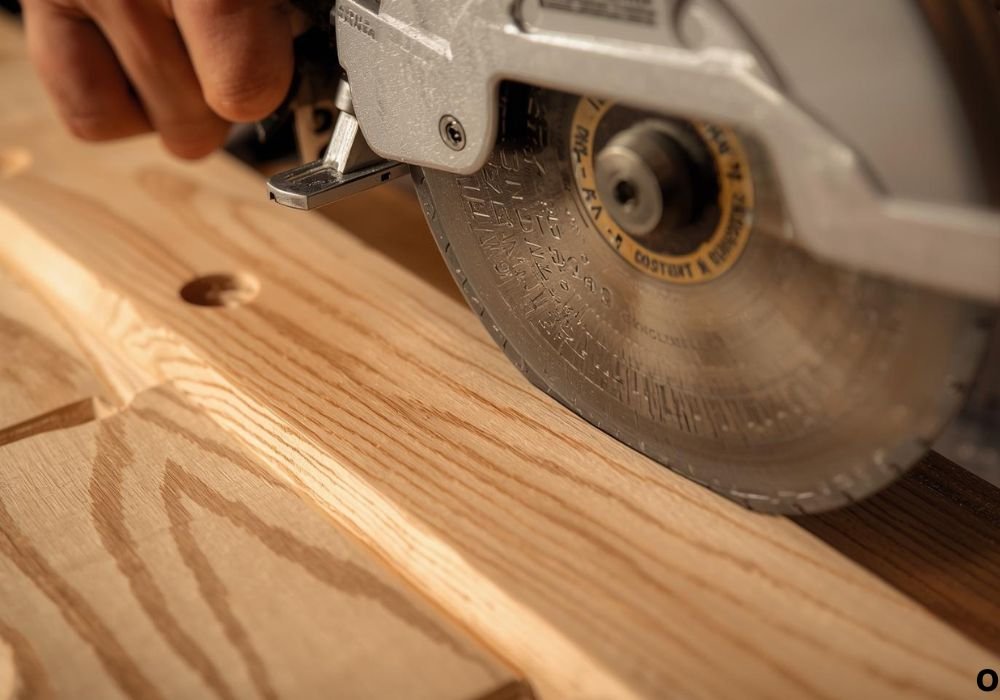
Most modern doors have a thin veneer finish that can easily splinter when cut.
To protect the surface, apply painter’s tape along both sides of your cut line.
Press it down firmly and re-draw your cutting line directly on top of the tape.
This helps hold the wood fibers in place as the blade passes through and gives a clean, professional finish.
If you want extra protection, score the line gently with a utility knife or scoring blade before cutting.
This method ensures the laminate or veneer doesn’t tear away under the saw teeth.
Step 4: Choose the Right Blade and Set Cutting Depth
Switch to a fine-tooth blade (carbide-tipped, 40 to 60 teeth).
Coarse blades designed for framing will leave rough edges and tear the veneer.
Unplug the saw (or remove its battery), then adjust the blade depth so the teeth extend about ¼ inch below the door’s thickness.
This allows the blade to cut cleanly without tearing through the material.
Setting the correct depth is critical for stability — too shallow, and the blade won’t cut evenly; too deep, and it can splinter the wood or damage your sawhorses.
Step 5: Clamp the Straightedge Guide
For a perfectly straight cut, use a straightedge or guide rail.
Measure the distance from the edge of your saw’s base plate to the blade, then clamp the straightedge parallel to your cutting line at that distance.
Ensure it’s tight and perfectly aligned — the saw’s base will ride along this edge, keeping your cut straight and smooth.
If you don’t have a guide rail, a long, straight board can serve the same purpose.
Always clamp from both ends to prevent movement while cutting.
Step 6: Make the Cut
Now that your door is secured, the line is marked, and the guide is clamped, you’re ready to cut.
Put on your safety goggles, ear protection, and dust mask before starting.
Position the saw at one end of the cut line with the base plate flat on the door.
Start the saw and let it reach full speed before gently pushing it forward along the guide.
Move slowly and steadily, maintaining firm downward pressure on the saw to keep it stable.
Let the blade do the work — forcing it will increase splintering and reduce accuracy.
If your saw has a directional blade (teeth pointing upward), cut with the good side facing down since the blade exits through the bottom.
Once you reach the end, release the trigger and let the blade stop completely before lifting it off the surface.
Peel off the painter’s tape carefully to reveal a crisp, clean edge.
Step 7: Sand and Finish the Edge
Even with a clean cut, the door edge will have minor rough spots or burrs.
Use 120-grit sandpaper to smooth the surface, then switch to 220-grit for a polished finish.
If you exposed any raw wood or veneer, seal the edge with wood sealer, varnish, or paint to prevent moisture absorption and swelling.
For hollow-core doors, apply wood filler to any exposed edge gaps and sand smooth once dry.
This finishing step not only improves appearance but also increases durability over time.
Step 8: Rehang and Test the Door
Once the edge is smooth and sealed, reattach the hinges and hang the door back in place.
Test how it swings — it should move freely without scraping the floor or sticking at the top.
If you need to make further adjustments, remove a little more wood gradually instead of trying to fix everything in one pass.
Fine-tuning ensures precision and prevents irreversible mistakes.
Check the alignment of the latch and hinges too — sometimes trimming the bottom can slightly shift the balance.
Tips for Perfect Door Cuts
- Always cut the good side down. Circular saw blades cut upward, so this prevents splintering on the visible side.
- Use sharp blades only. Dull blades tear veneer and leave burn marks.
- Score before cutting. Scoring helps prevent laminate from chipping.
- Work slowly. Rushing increases heat, vibration, and splintering.
- Use clamps and guides. Freehand cuts rarely stay straight on long surfaces like doors.
- Avoid deep cuts in hollow-core doors. You can compromise the structure if you remove too much.
- Sand immediately. Fresh cuts smooth more easily before the fibers harden again.
- Seal the edge. Always seal to prevent moisture damage or swelling.
Common Mistakes to Avoid
Even a small mistake can ruin a door’s finish or fit.
Here are the most common pitfalls to avoid when cutting doors with a circular saw:
- Cutting too much at once instead of trimming gradually.
- Using a rough framing blade instead of a fine-tooth finish blade.
- Forgetting to support the door properly during cutting.
- Ignoring the veneer direction and cutting the wrong side up.
- Skipping painter’s tape or scoring, leading to splintered edges.
- Failing to reseal the cut edge, causing moisture absorption later.
Taking a few extra minutes to prepare saves hours of frustration and costly replacements.
FAQs
Can I cut a door without removing it from the hinges?
You can, but it’s not recommended. Removing the door allows for cleaner, safer, and more controlled cuts.
Which side should face up when cutting a door?
For circular saws, place the finished side down since the blade cuts upward.
What blade should I use to cut a door?
A 40–60 tooth carbide-tipped fine-finish blade gives the smoothest results.
How much can I cut off a hollow-core door?
Typically, you can remove up to 1 inch total (½ inch from top and bottom). More than that may expose the hollow section.
Do I need to tape the cut line?
Yes. Painter’s tape prevents veneer chipping and gives a smoother edge.
Can I use a straightedge or just cut freehand?
Always use a straightedge for accuracy — freehand cuts on long edges are risky and uneven.
How do I fix small chips after cutting?
Use fine wood filler or matching edge banding, then sand and refinish the surface.
Do I need to reseal the edge after cutting?
Yes. Unsealed wood absorbs moisture, causing warping or swelling over time.
Can I trim the sides of a door instead of the bottom?
Yes, but ensure you maintain hinge alignment and frame fit before cutting side edges.
What should I do if I overcut the door?
You can glue on a matching strip of wood veneer to rebuild the edge and sand it flush before repainting.
Conclusion
Cutting a door with a circular saw might seem intimidating, but with proper preparation, patience, and precision, anyone can do it cleanly and confidently.
The key is to plan your cut, protect the surface, and guide the saw slowly using the right blade and tools.
From marking your measurements to sealing the final edge, every step plays a role in achieving professional, splinter-free results.
Whether you’re trimming a swollen door, adjusting for new flooring, or resizing for a frame, this method ensures accuracy and safety every time.
A perfectly cut door not only fits beautifully but also gives your space a polished, finished look — proof that craftsmanship lies in the details.

I’m Michael R. Turner, the founder, lead writer, and passionate DIY enthusiast behind 101diytools.com. With years of hands-on experience in home improvement and power tools, I built this platform to share practical tips, in-depth guides, and honest reviews to help DIYers of all skill levels tackle projects with confidence and the right tools.